
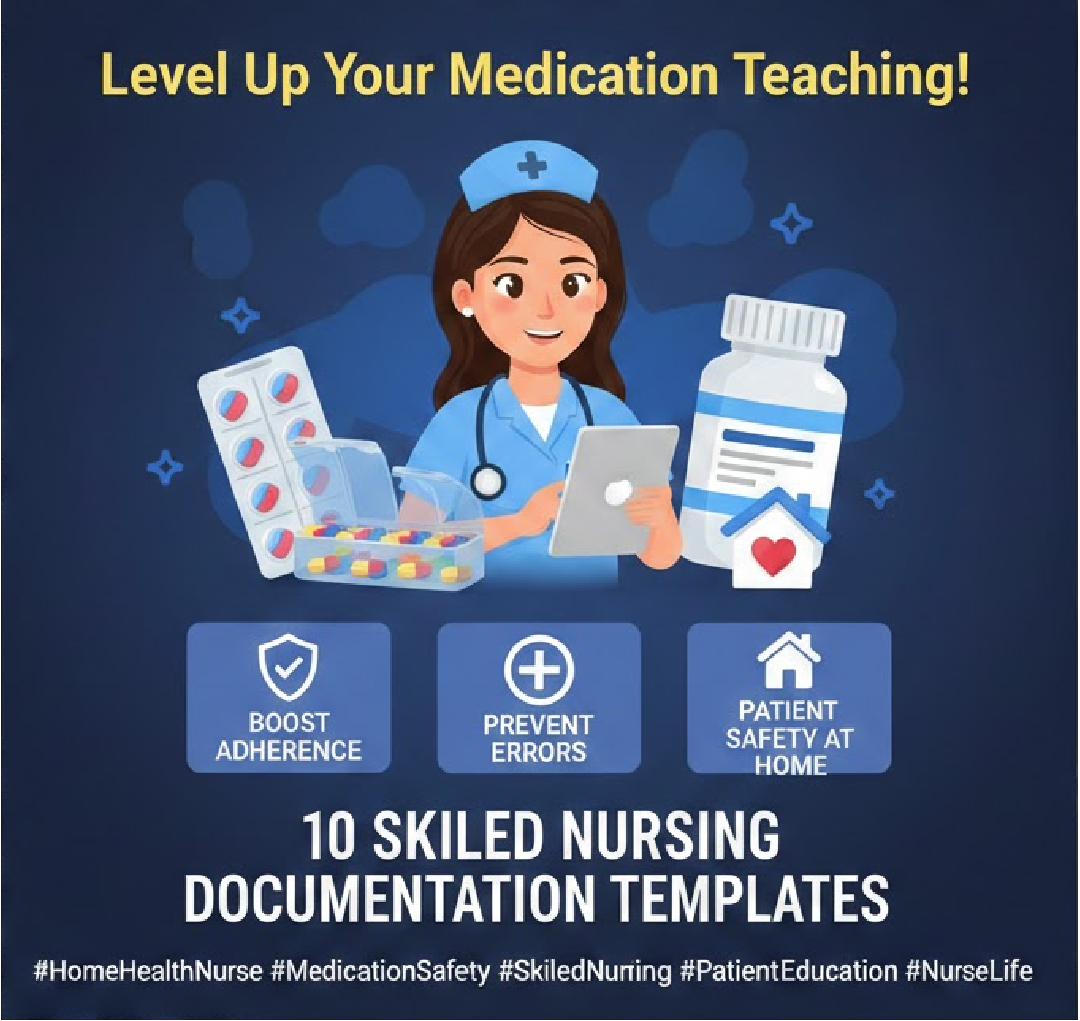
Medication teaching is a foundational skilled nursing intervention in home health. Clear medication education improves adherence, reduces medication errors, supports early identification of adverse effects, and helps prevent avoidable complications and rehospitalization. In the home setting, patients manage complex medication regimens independently, often with multiple prescribers, limited support, and varying levels of health literacy.
In this guide, you’ll find 10 practical medication teaching areas home health nurses commonly address during SN visits. Each section includes a simple teaching focus, teach-back prompts, and documentation examples that should be individualized to patient condition, provider orders, medication profile, agency policy, payer requirements, and skilled nursing judgment.
For more copy-friendly teaching scripts, PCG checklist support, quick charting phrases, and downloadable medication safety tools, see the Medication Safety Resource Pack in the Premium Library.
Why Medication Teaching in Home Health Requires Skilled Nursing Judgment
Medication education in home health is not simply reviewing a medication list. Skilled nursing judgment is required to assess adherence barriers, evaluate side effects and safety risks, reinforce correct technique and timing, identify red flags requiring provider notification, and document teach-back in a way that supports medical necessity. Effective medication teaching must be individualized based on cognition, mobility, comorbidities, health literacy, caregiver support, and current symptoms.
The templates below are designed to help you deliver consistent, patient-centered education while keeping documentation compliant, accurate, and clinically meaningful.
Medication Teaching Table of Contents
- Purpose and Dose Frequency
- Missed Dose Safety
- Side Effects Monitoring and Reporting
- Medication-Related Fall Precautions
- Blood Thinner Teaching: Bleeding Precautions
- Diuretic Teaching: Timing and Monitoring
- Diabetes Medication Teaching: Hypoglycemia Safety
- Antibiotic Teaching: Complete Course and Reactions
- OTC and Supplement Safety: Drug Interactions
- Medication List and Refill Planning
Free Home Health Nurse Starter Pack
Get four practical printable tools for home health skilled nursing visits, including SN documentation review, patient/PCG teaching follow-through, escalation guidance, and an end-of-visit review sheet.
Free download. No credit card required.
How to Use These Templates
- Choose the section that matches today’s risk/topic (missed doses, side effects, blood thinners, etc.).
- Deliver the Teaching Script in plain language.
- Use Teach-Back (patient/caregiver repeats or demonstrates).
- Paste the EMR Documentation Template (Copy/Paste) and customize: medication names if appropriate, symptoms, level of cueing, and patient response.
- Document follow-up: what you will reassess next visit and any coordination needed.
- Purpose and Dose Frequency
Use this when: start of care, new regimen, patient unsure why medications are taken, caregiver is managing meds.
Teaching Script:
SN instructed patient and caregiver on medication purpose and dose frequency. Reinforced taking medications as prescribed and maintaining consistent schedule. Encouraged use of pill organizer and reminders to support adherence and reduce medication errors. Reinforced keeping updated medication list available for appointments and emergencies.
EMR Documentation Sample:
SN provided skilled medication teaching on medication purpose and dose frequency to support safe administration and adherence. Patient/caregiver instructed on consistent scheduling and use of reminders/pill organizer. Teach-back method used; patient/caregiver verbalized medication purpose and dosing schedule. SN will reassess adherence, symptom response, and medication safety on follow-up visit.
Patient Teach-Back Questions:
- “Tell me what this medication is for and when you will take it.”
- “Show me how you will set up your medications for the week.”
- “Where will you keep your updated medication list?”
Tags: Medication Teaching, Medication Adherence, Teach-Back, EMR Documentation.

Medication Safety Resource Pack
Medication safety teaching support for compliance, organization, refill planning, side effect monitoring, high-risk medication awareness, and PCG follow-through.


2. Missed Dose Safety
Use this when: missed doses, confusion with timing, complex regimens, inconsistent routine.
Teaching Script:
SN instructed patient not to double doses. Reinforced following PCP/pharmacy instructions for missed doses and asking for clarification before making changes. Encouraged using alarms, written schedule, and caregiver support when needed.
EMR Documentation Sample:
SN provided skilled teaching on missed-dose precautions to prevent medication errors. Patient instructed not to double doses and to follow PCP/pharmacy guidance for missed doses. Teach-back method used; patient verbalized correct actions for missed dose. SN will reinforce medication schedule and reassess adherence next visit.
Patient Teach-Back Questions:
- “What will you do if you miss a dose?”
- “Who will you contact if you are unsure about a missed dose?”
- “What reminder will you use to help prevent missed doses?”
Tags: Medication Safety, Medication Adherence, Teach-Back.
3. Side Effects Monitoring and Reporting
Use this when: new medication started, dose changes, patient reports symptoms, high-risk profile.
Teaching Script:
SN instructed patient on monitoring for medication side effects and reporting persistent or severe symptoms. Reviewed dizziness, drowsiness, nausea, rash, confusion, shortness of breath, and unusual bleeding or bruising as symptoms requiring prompt notification. Reinforced avoiding alcohol if it increases drowsiness or dizziness.
EMR Documentation Sample:
SN provided skilled teaching on medication side effect recognition and reporting for early intervention. Patient instructed on expected vs concerning side effects and when to notify PCP versus seek emergency care. Teach-back method used; patient verbalized reportable symptoms. SN will monitor for adverse effects and reinforce teaching on follow-up visit.
Patient Teach-Back Questions:
- “Name two side effects you will report to your PCP.”
- “Which symptoms would mean you should call 911?”
- “How will you track new symptoms after medication changes?”
Tags: Side Effects, Symptom Monitoring, Teach-Back, Red Flags.
Use this when: dizziness, sedating medications, BP medications, unsteady gait, fall history.
Teaching Script:
SN instructed patient on fall prevention strategies related to medication effects. Reinforced rising slowly from sitting/lying position, pausing before ambulation, and using assistive device as ordered. Patient advised to request assistance when weak or lightheaded and to avoid rushing. Reinforced keeping pathways clear and wearing non-skid footwear.
EMR Documentation Sample:
SN provided skilled medication safety teaching focused on fall risk reduction related to medication effects. Patient instructed to rise slowly, pause before ambulation, and request assistance as needed. Teach-back method used; patient demonstrated safe sit-to-stand technique and verbalized fall prevention plan. SN will continue to assess gait/transfer safety and reinforce techniques to prevent falls.
Patient Teach-Back Questions:
- “Show me how you will stand up safely if you feel lightheaded.”
- “When will you ask for help instead of walking alone?”
- “What safety changes will you make if dizziness occurs?”
Tags: Fall Risk, Medication Safety, Teach-Back, Home Safety.
5. Blood Thinner Teaching: Bleeding Precautions
Use this when: anticoagulant/antiplatelet therapy, bruising, fall risk, bleeding history.
Teaching Script:
SN instructed patient on bleeding precautions and safe medication use. Reviewed monitoring for bleeding gums, nosebleeds, unusual bruising, blood in urine, and black or bloody stools. Reinforced injury prevention strategies and consulting PCP/pharmacist prior to new OTC medications due to interaction risk.
EMR Documentation Sample:
SN provided skilled teaching on blood thinner safety and bleeding precautions to prevent complications. Patient instructed on monitoring for bleeding symptoms and implementing injury prevention strategies. Teach-back method used; patient verbalized bleeding signs to report and safety measures to reduce injury risk. SN will monitor for bleeding risk and reinforce teaching on follow-up visit.
Patient Teach-Back Questions:
- “Tell me two signs of bleeding you will report right away.”
- “What OTC medications should you avoid unless approved?”
- “What will you do if you notice black stools or blood in urine?”
Tags: Blood Thinner Teaching, Bleeding Risk, Medication Safety, Teach-Back.
6. Diuretic Teaching: Timing and Monitoring
Use this when: CHF/edema, diuretic prescribed, dizziness risk, frequent urination concerns.
Teaching Script:
SN instructed patient on safe diuretic use as prescribed. Education included timing medication to reduce nighttime urination and monitoring for dehydration symptoms such as dizziness, dry mouth, weakness, and reduced urine output. Reinforced monitoring for fluid retention symptoms including swelling and increased shortness of breath. Fall precautions reinforced if lightheaded.
EMR Documentation Sample:
SN provided skilled diuretic teaching focused on adherence, timing, and symptom monitoring to reduce risk of complications. Patient instructed to monitor for dehydration and fluid retention symptoms and report changes promptly. Teach-back method used; patient verbalized reportable symptoms and safety precautions. SN will reassess response to therapy and reinforce teaching on follow-up visit.
Patient Teach-Back Questions:
- “When will you take your diuretic and why?”
- “What symptoms would you report that may mean dehydration?”
- “What symptoms would you report that may mean fluid retention?”
Tags: Diuretic Teaching, CHF Teaching, Symptom Monitoring, Teach-Back.
7. Diabetes Medication Teaching: Hypoglycemia Safety
Use this when: insulin/oral diabetes medications, inconsistent meals, low Blood Sugar risk.
Teaching Script:
SN instructed patient on safe diabetes medication use and hypoglycemia prevention. Reinforced taking medications as prescribed, not skipping meals, and monitoring Blood Sugar as ordered. Reviewed low Blood Sugar signs including shakiness, sweating, dizziness, confusion, weakness, and headache. Patient instructed to follow provider plan for treatment and to report repeated low readings.
EMR Documentation Sample:
SN provided skilled teaching on diabetes medication safety and hypoglycemia recognition to prevent complications. Patient instructed on meal consistency, Blood Sugar monitoring as ordered, and actions to take for low Blood Sugar symptoms per provider plan. Teach-back method used; patient verbalized symptoms and action plan. SN will monitor Blood Sugar trends and reinforce teaching on next visit.
Patient Teach-Back Questions:
- “Tell me three signs of low Blood Sugar.”
- “What will you do if your Blood Sugar is low?”
- “Why is it important not to skip meals with diabetes medication?”
Tags: Diabetes Medication Teaching, Hypoglycemia, Blood Sugar Monitoring, Teach-Back.
8. Antibiotic Teaching: Complete Course and Reactions
Use this when: active infection treatment, antibiotic started, history of stopping early.
Teaching Script:
SN instructed patient to take antibiotic exactly as prescribed and complete full course even if symptoms improve. Reinforced spacing doses as directed and not sharing medications. Reviewed reporting rash, swelling, breathing difficulty, and monitoring for severe diarrhea.
EMR Documentation Sample:
SN provided skilled antibiotic teaching focused on adherence and side effect monitoring to reduce risk of treatment failure and complications. Patient instructed to complete full course and report allergic reaction symptoms and severe diarrhea. Teach-back method used; patient verbalized importance of completing course and symptoms to report. SN will monitor response and reinforce teaching on follow-up visit.
Patient Teach-Back Questions:
- “Why is it important to finish the antibiotic course?”
- “What symptoms would you report right away?”
- “What will you do if you feel better before the antibiotic is finished?”
Tags: Antibiotic Education, Medication Adherence, Teach-Back, Infection Control.
9. OTC and Supplement Safety: Drug Interactions
Use this when: polypharmacy, blood thinners, frequent OTC use, supplements.
Teaching Script:
SN instructed patient on safe OTC and supplement use to prevent drug interactions. Reinforced consulting PCP/pharmacist before starting any new OTC medication or supplement. Reviewed reading labels and avoiding duplicate ingredients in combination cold/flu products.
EMR Documentation Sample:
SN provided skilled teaching on OTC/supplement safety and drug interaction prevention. Patient instructed to consult PCP/pharmacist prior to new OTC medication or supplement use and to read labels for duplicate ingredients. Teach-back method used; patient verbalized plan to consult provider prior to OTC use. SN will reinforce medication safety on follow-up visit.
Patient Teach-Back Questions:
- “What will you do before taking a new OTC medication?”
- “Why can OTC medications cause problems with prescriptions?”
- “What will you look for on the label before taking a cold/flu medicine?”
Tags: Drug Interactions, OTC Safety, Polypharmacy, Teach-Back.
10. Medication List and Refill Planning
Use this when: multiple medications, missed refills, caregiver managing meds, medication confusion.
Teaching Script:
SN instructed patient and caregiver to maintain updated medication list including purpose and dose frequency and to request refills early to prevent missed doses. Reinforced using one pharmacy when possible and bringing medication list to all appointments. Encouraged reviewing regimen routinely for accuracy.
EMR Documentation Sample:
SN provided skilled education on medication list maintenance and refill planning to support adherence and reduce medication errors. Patient/caregiver instructed to request refills early and maintain updated medication list for all appointments. Teach-back method used; patient/caregiver verbalized plan for refills and medication list updates. SN will reassess medication management and reinforce teaching on follow-up visit.
Patient Teach-Back Questions:
- “Where will you keep your medication list so it is easy to find?”
- “When will you request refills so you do not run out?”
- “Who will help you if you have questions about your medications?”
Tags: Medication Management, Medication Adherence, Caregiver Teaching, Teach-Back.
Clinical Red Flags & Emergency Protocols
Notify PCP/Home Health Agency if:
- repeated missed doses or medication confusion
- persistent dizziness, excessive drowsiness, new weakness
- rash, itching, swelling, or GI symptoms that do not improve
- unusual bruising or minor bleeding
- worsening symptoms after medication changes
Call 911 if:
- trouble breathing or facial swelling
- chest pain, severe shortness of breath
- fainting, seizure, severe confusion
- fall with injury or head impact
- uncontrolled bleeding, vomiting blood, or black stools with weakness
Ready to access the full Premium Library?
Get teaching packs, patient handouts, charting sheets, PCG checklists, documentation examples, and premium downloads for home health practice.
Related Related Medication Teaching Posts
You may also find these resources helpful:
- Insulin Lispro Indication and Home Health Teaching
- Glipizide Indication and Home Health Teaching
- Empagliflozin Indication and Home Health Teaching
- Insulin Glargine Indication and Home Health Teaching
- Metformin Indication and Home Health Teaching
- Diltiazem Indication and Home Health Teaching
- Isosorbide Mononitrate Indication and Home Health Teaching
- Nitroglycerin Indication and Home Health Teaching
Premium Library members can access the full resource content, documentation support, and downloadable tools inside each pack.
Related Home Health Teaching Resources
You may also find these resources helpful:
- Medication Safety Resource Pack for Home Health Nurses
- Diabetes Teaching Resource Pack for Home Health Nurses
- Emergency Signs and Escalation Pack for Home Health Nurses
- Blood Pressure Teaching Resource Pack for Home Health Nurses
- Medicare-Compliant Skilled Nursing Documentation Pack
Premium Library members can access the full resource content, documentation support, and downloadable tools inside each pack.
Need More Medication Safety Documentation Support?
The Medication Safety Resource Pack gives home health nurses more copy-friendly support for medication compliance teaching, refill planning, side effect reporting, high-risk medication awareness, PCG follow-through, and SN documentation support.
Use this free post as a teaching framework. Use the Premium Library resource pack when you need printable tools, PCG checklists, nurse quick charting support, and more detailed documentation examples.
Important Use Note
This post is for educational and home health documentation support only. It does not replace provider orders, medication profile, pharmacy guidance, discharge instructions, agency policy, payer requirements, or skilled nursing judgment. Medication teaching, monitoring needs, side effect reporting, missed dose instructions, and emergency instructions should be individualized to patient condition, provider order, medication profile, plan of care, agency policy, and clinical judgment.
This content does not provide dosing advice, medication adjustment instructions, universal medication parameters, or emergency treatment instructions beyond calling 911 for emergency symptoms. This content does not guarantee payment, claim approval, survey compliance, or regulatory compliance.
Premium Library
For home health nurses and agency leaders
Ready-to-use teaching packs, documentation tools, patient handouts, PCG checklists, nurse quick charting sheets, and premium downloads.
– Premium teaching packs
– Patient handouts
– Nurse quick charting sheets
– PCG monitoring checklists
– Skilled documentation examples
– Teach-back prompts
– Red flag guidance
– New resources added regularly
$9/month
Cancel anytime. New resources added regularly.
Free Resource Library
Coming Soon
Free
Leave a Reply