
Tag: fall risk
-
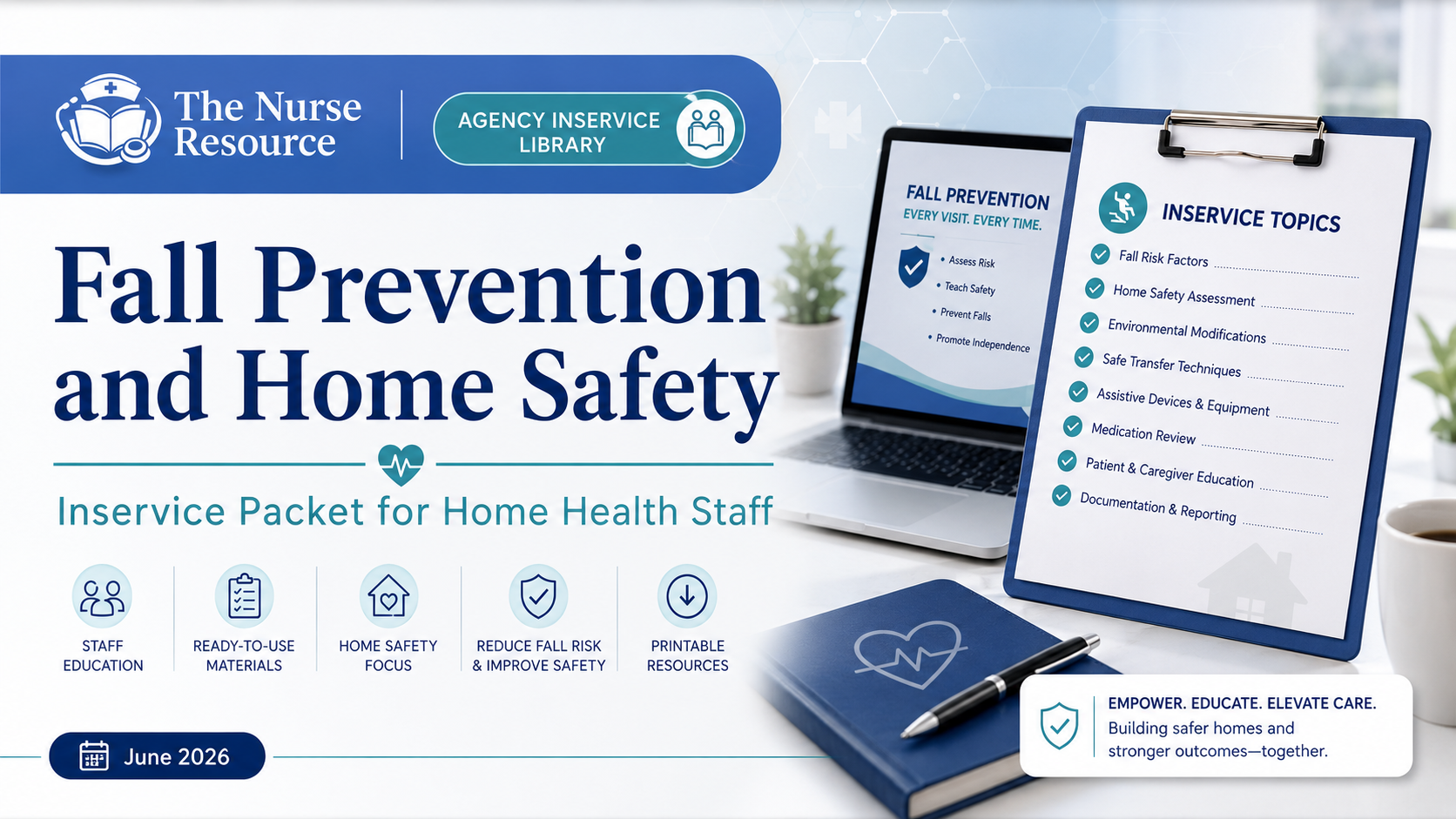
Fall Prevention and Home Safety Inservice Packet for Home Health Staff
Agency-ready fall prevention and home safety inservice for home health staff, with practical education on fall risks, home safety, staff responsibilities, competency support, and QAPI documentation tools.
-
Medication Safety Teaching in Home Health: What Nurses Should Teach and Document
Medication teaching is a foundational skilled nursing intervention in home health. Clear medication education improves adherence, reduces medication errors, supports early identification of adverse effects, and helps prevent avoidable complications and rehospitalization. In the home setting, patients manage complex medication regimens independently, often with multiple prescribers, limited support, and varying levels of health literacy. In…
-
Fall Risk Evaluation and Home Safety Teachings – p26010079
SN completed fall risk assessment and evaluated the home environment for safety concerns contributing to fall risk. Patient was instructed on safe ambulation techniques, including walking at a steady pace, avoiding sudden turns, and using assistive devices (e.g., cane or walker) properly and consistently as ordered. Teaching included the importance of wearing non-skid footwear, maintaining…
-
Energy Conservation Strategies – p25120057
Skilled nursing visit included education to the patient and caregiver on energy conservation strategies to minimize respiratory distress, including pacing daily activities and incorporating frequent rest periods to prevent exacerbation of shortness of breath. Education was provided on the correct use of prescribed respiratory medications, including inhalers and nebulizers, to optimize airway function and symptom…