
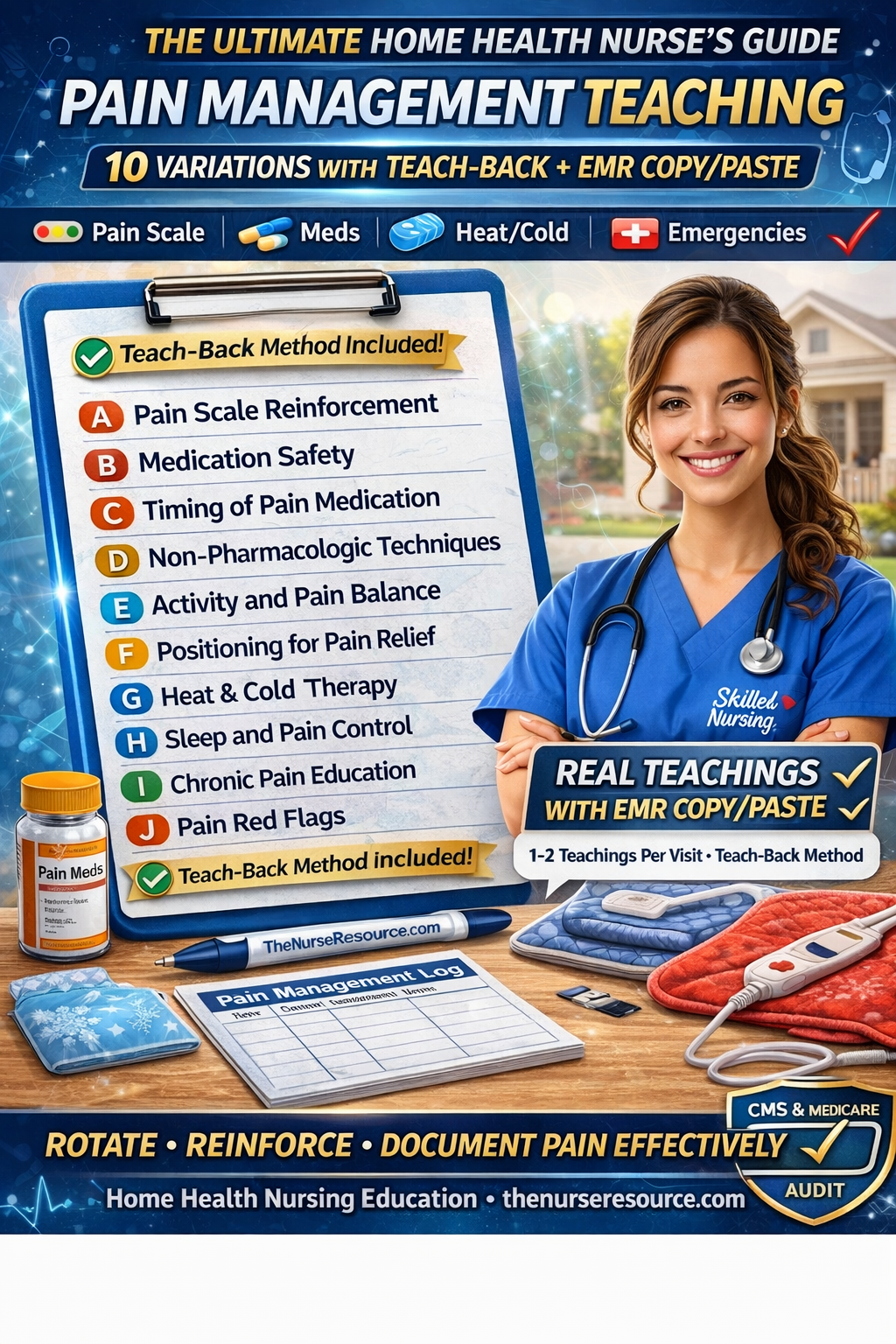
Pain teaching is one of the most frequent — and most repeated — interventions in home health. The key is not just teaching, but keeping it skilled, varied, and relevant every visit.
These variations help you:
- Avoid repetitive teaching
- Reinforce patient understanding
- Document clearly for CMS/Medicare compliance
Why This Matters in Home Health
Uncontrolled pain can lead to:
- Falls
- Immobility
- Sleep disturbances
- Medication misuse
- Hospitalization
Skilled nursing teaching ensures safe pain control, early intervention, and improved quality of life.
Table of Contents
- Pain Scale Reinforcement
- Medication Safety
- Timing of Pain Medication
- Non-Pharmacologic Techniques
- Activity and Pain Balance
- Positioning for Pain Relief
- Heat and Cold Therapy
- Sleep and Pain Control
- Chronic Pain Education
- Pain Red Flags
How to Use These Variations
- Use 1 teaching per visit
- Rotate topics weekly
- Keep it short but skilled
- Always include teach-back + SN need
A. Pain Scale Reinforcement
Use this when: inconsistent reporting, unclear pain levels
Teaching Script:
SN instructed patient/PCG to use 0–10 pain scale to monitor pain and report changes in intensity or pattern.
EMR Copy/Paste:
SN provided skilled teaching on use of pain scale to support accurate pain assessment and management. Education focused on identifying pain level and reporting changes in severity or type. Teach-back method utilized; patient/PCG verbalized pain rating and reporting plan. Continued SN required to monitor pain trends and adjust interventions.
Teach-Back Prompt:
“How do you rate your pain?”
Tags: Pain Scale, Pain Assessment, Teach-Back
B. Medication Safety
Use this when: opioids, multiple meds
Teaching Script:
SN instructed patient/PCG to take pain medications as prescribed and monitor for side effects such as dizziness, drowsiness, or constipation.
EMR Copy/Paste:
SN provided skilled teaching on pain medication safety to prevent adverse effects and ensure effective pain control. Education included dosing, side effects, and safety precautions. Teach-back method utilized; patient/PCG verbalized medication routine and side effects to report. Continued SN required to monitor response and prevent complications.
Teach-Back Prompt:
“What side effects will you report?”
Tags: Medication Safety, Pain Management, Teach-Back
C. Timing of Pain Medication
Use this when: breakthrough pain
Teaching Script:
SN instructed patient/PCG to take pain medication before pain becomes severe and prior to activity when needed.
EMR Copy/Paste:
SN provided skilled teaching on timing of pain medication to improve effectiveness and prevent severe pain episodes. Teach-back method utilized; patient/PCG verbalized appropriate timing of medication use. Continued SN required to evaluate effectiveness and reinforce adherence.
Teach-Back Prompt:
“When should you take your medication?”
Tags: Pain Timing, Medication Teaching, Teach-Back
D. Non-Pharmacologic Techniques
Use this when: chronic pain, med limitations
Teaching Script:
SN instructed patient/PCG on non-medication pain relief including relaxation, repositioning, and distraction techniques.
EMR Copy/Paste:
SN provided skilled teaching on non-pharmacologic pain management strategies to improve comfort and reduce reliance on medication. Teach-back method utilized; patient/PCG verbalized techniques to implement. Continued SN required to reinforce use and monitor effectiveness.
Teach-Back Prompt:
“What can you do besides medication?”
Tags: Pain Relief, Non-Pharmacologic, Teach-Back
E. Activity and Pain Balance
Use this when: limited mobility
Teaching Script:
SN instructed patient/PCG on balancing activity and rest to prevent stiffness and worsening pain.
EMR Copy/Paste:
SN provided skilled teaching on activity pacing to reduce pain and improve mobility. Teach-back method utilized; patient/PCG verbalized plan for balancing rest and activity. Continued SN required to monitor mobility and pain response.
Teach-Back Prompt:
“How will you balance activity and rest?”
Tags: Mobility, Pain Control, Teach-Back
F. Positioning for Pain Relief
Use this when: musculoskeletal pain
Teaching Script:
SN instructed patient/PCG on proper positioning to reduce strain and improve comfort.
EMR Copy/Paste:
SN provided skilled teaching on positioning techniques to reduce pain and prevent strain. Teach-back method utilized; patient/PCG demonstrated understanding of positioning. Continued SN required to reinforce safe positioning and prevent complications.
Teach-Back Prompt:
“Show me how you position yourself.”
Tags: Positioning, Pain Relief, Teach-Back
G. Heat and Cold Therapy
Use this when: inflammation, muscle pain
Teaching Script:
SN instructed patient/PCG on safe use of heat and cold therapy including duration and skin protection.
EMR Copy/Paste:
SN provided skilled teaching on heat and cold therapy for pain relief and inflammation control. Teach-back method utilized; patient/PCG verbalized safe use and timing. Continued SN required to monitor effectiveness and prevent skin injury.
Teach-Back Prompt:
“When will you use heat or cold?”
Tags: Heat Therapy, Cold Therapy, Teach-Back
H. Sleep and Pain Control
Use this when: insomnia, nighttime pain
Teaching Script:
SN instructed patient/PCG on strategies to improve sleep including positioning, relaxation, and medication timing.
EMR Copy/Paste:
SN provided skilled teaching on sleep management related to pain control. Teach-back method utilized; patient/PCG verbalized strategies to improve sleep. Continued SN required to evaluate effectiveness and reinforce teaching.
Teach-Back Prompt:
“What helps you sleep better?”
Tags: Sleep, Pain Management, Teach-Back
I. Chronic Pain Education
Use this when: long-term pain
Teaching Script:
SN instructed patient/PCG on chronic pain management and importance of consistent treatment.
EMR Copy/Paste:
SN provided skilled teaching on chronic pain management to support long-term control and prevent complications. Teach-back method utilized; patient/PCG verbalized understanding of management plan. Continued SN required for ongoing evaluation and reinforcement.
Teach-Back Prompt:
“How do you manage your pain daily?”
Tags: Chronic Pain, Pain Management, Teach-Back
J. Pain Red Flags
Use this when: worsening pain
Teaching Script:
SN instructed patient/PCG to report severe or sudden pain changes and call 911 for chest pain or neurological symptoms.
EMR Copy/Paste:
SN provided skilled teaching on pain-related red flags and escalation plan to ensure timely intervention. Teach-back method utilized; patient/PCG verbalized symptoms requiring provider notification versus 911 activation. Continued SN required to reinforce safety and prevent complications.
Teach-Back Prompt:
“When will you call 911 for pain?”
Tags: Pain Red Flags, Emergency Plan, Teach-Back
Clinical Red Flags
Notify PCP/Home Health Agency if:
- worsening or uncontrolled pain
- medication ineffective
- new pain pattern
Call 911 if:
- chest pain
- sudden severe pain
- neurological symptoms