
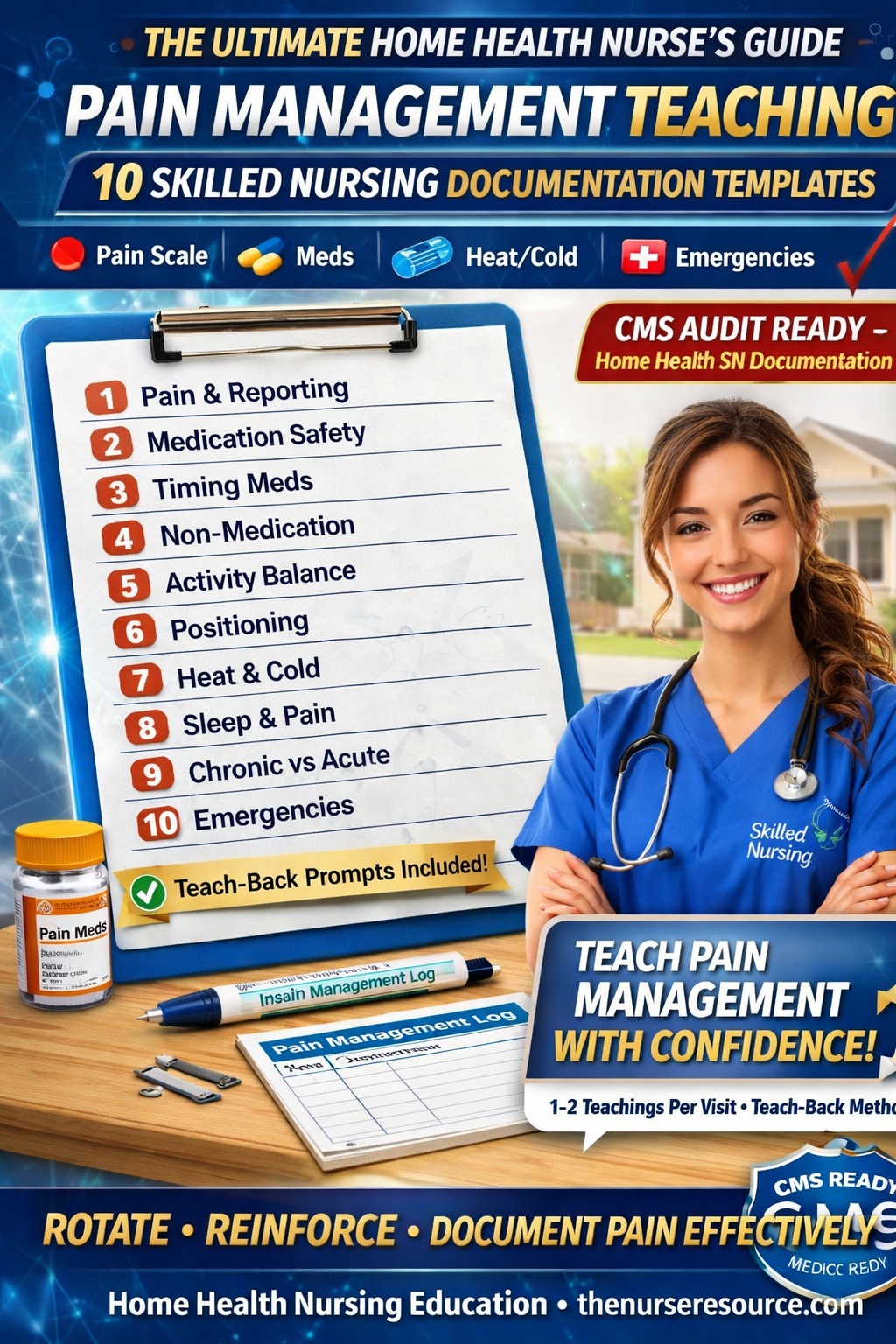
Pain is one of the most common reasons for home health visits and one of the most frequently documented skilled nursing interventions. Poor pain control can lead to decreased mobility, sleep disturbances, delayed recovery, and increased risk for hospitalization.
Skilled nursing teaching ensures patients and PCGs understand how to manage pain safely using medications, non-pharmacologic strategies, and early reporting of worsening symptoms.
This guide provides 10 audit-ready pain management teaching templates with teach-back prompts and EMR copy/paste documentation designed for real home health visits.
Why Pain Management Requires Skilled Nursing Judgment
SN is responsible for:
- Assessing pain level, type, and pattern
- Evaluating effectiveness of interventions
- Monitoring medication use and side effects
- Preventing complications (falls, overmedication, immobility)
- Adjusting teaching based on patient response
Table of Contents
- Pain Assessment and Reporting
- Medication Use and Safety
- Timing of Pain Medication
- Non-Pharmacologic Pain Relief
- Activity and Pain Balance
- Positioning and Body Mechanics
- Heat and Cold Therapy
- Sleep and Pain Management
- Chronic Pain vs Acute Pain Education
- Emergency Pain Red Flags
How to Use These Templates
- Use 1–2 teachings per visit
- Rotate topics based on patient condition
- Always include teach-back
- Copy/paste EMR and customize per patient
Free Home Health Nurse Starter Pack
Get four practical printable tools for home health skilled nursing visits, including SN documentation review, patient/PCG teaching follow-through, escalation guidance, and an end-of-visit review sheet.
Free download. No credit card required.
1. Pain Assessment and Reporting
Use this when: new admission, uncontrolled pain
Teaching Script:
SN instructed patient/PCG to monitor pain using a 0–10 scale and report changes in intensity, location, or type of pain. Reinforced importance of early reporting.
EMR Copy/Paste:
SN provided skilled teaching on pain assessment and reporting to support effective pain management and prevent complications. Education included use of pain scale and recognition of changes in pain pattern. Teach-back method utilized; patient/PCG verbalized pain rating and when to report changes. Continued SN required to monitor pain control and adjust interventions.
Teach-Back Prompt:
“How do you rate your pain and when will you report it?”
2. Medication Use and Safety
Use this when: opioid/non-opioid use, polypharmacy
Teaching Script:
SN instructed patient/PCG to take pain medications as prescribed and avoid skipping or doubling doses. Reinforced monitoring for side effects such as dizziness, drowsiness, or constipation.
EMR Copy/Paste:
SN provided skilled teaching on pain medication safety and adherence to prevent adverse effects and ensure effective pain control. Education included dosing, side effects, and safety precautions. Teach-back method utilized; patient/PCG verbalized medication schedule and safety measures. Continued SN required to monitor response and prevent complications.
Teach-Back Prompt:
“What side effects will you watch for?”
Tags: Medication Safety, Pain Control, Teach-Back
3. Timing of Pain Medication
Use this when: breakthrough pain, poor timing
Teaching Script:
SN instructed patient/PCG to take pain medication before pain becomes severe and prior to activity if needed. Reinforced consistent timing.
EMR Copy/Paste:
SN provided skilled teaching on timing of pain medication to improve effectiveness and prevent severe pain episodes. Teach-back method utilized; patient/PCG verbalized appropriate timing of medication use. Continued SN required to evaluate effectiveness and reinforce adherence.
Teach-Back Prompt:
“When should you take your pain medication?”
Tags: Pain Timing, Medication Teaching, Teach-Back
4. Non-Pharmacologic Pain Relief
Use this when: chronic pain, medication limitations
Teaching Script:
SN instructed patient/PCG on non-medication strategies including relaxation, deep breathing, repositioning, and distraction techniques.
EMR Copy/Paste:
SN provided skilled teaching on non-pharmacologic pain management strategies to support comfort and reduce reliance on medications. Teach-back method utilized; patient/PCG verbalized techniques to implement. Continued SN required to reinforce use and evaluate effectiveness.
Teach-Back Prompt:
“What can you do besides medication to relieve pain?”
Tags: Pain Relief, Non-Pharmacologic, Teach-Back
5. Activity and Pain Balance
Use this when: decreased mobility, fear of movement
Teaching Script:
SN instructed patient/PCG on balancing activity and rest to prevent stiffness and worsening pain. Reinforced gradual movement.
EMR Copy/Paste:
SN provided skilled teaching on activity pacing to reduce pain and improve mobility. Teach-back method utilized; patient/PCG verbalized plan for balancing activity and rest. Continued SN required to monitor mobility and pain response.
Teach-Back Prompt:
“How will you balance rest and activity?”
Tags: Mobility, Pain Control, Teach-Back
6. Positioning and Body Mechanics
Use this when: musculoskeletal pain, post-surgery
Teaching Script:
SN instructed patient/PCG on proper positioning and body mechanics to reduce strain and pain.
EMR Copy/Paste:
SN provided skilled teaching on positioning and body mechanics to reduce pain and prevent injury. Teach-back method utilized; patient/PCG demonstrated understanding of positioning techniques. Continued SN required to reinforce safety and prevent complications.
Teach-Back Prompt:
“Show me how you position yourself for comfort.”
Tags: Positioning, Body Mechanics, Teach-Back
7. Heat and Cold Therapy
Use this when: inflammation, muscle pain
Teaching Script:
SN instructed patient/PCG on safe use of heat and cold therapy including duration and skin protection.
EMR Copy/Paste:
SN provided skilled teaching on heat and cold therapy for pain relief and inflammation control. Teach-back method utilized; patient/PCG verbalized safe application and duration. Continued SN required to monitor effectiveness and prevent skin injury.
Teach-Back Prompt:
“When will you use heat or cold therapy?”
Tags: Heat Therapy, Cold Therapy, Teach-Back
8. Sleep and Pain Management
Use this when: insomnia, nighttime pain
Teaching Script:
SN instructed patient/PCG on strategies to improve sleep including positioning, medication timing, and relaxation techniques.
EMR Copy/Paste:
SN provided skilled teaching on sleep management related to pain control. Teach-back method utilized; patient/PCG verbalized strategies to improve sleep quality. Continued SN required to evaluate effectiveness and reinforce interventions.
Teach-Back Prompt:
“What will help you sleep better at night?”
Tags: Sleep, Pain Management, Teach-Back
9. Chronic Pain vs Acute Pain Education
Use this when: long-term pain conditions
Teaching Script:
SN instructed patient/PCG on differences between chronic and acute pain and importance of consistent management.
EMR Copy/Paste:
SN provided skilled teaching on chronic versus acute pain to support appropriate management and expectations. Teach-back method utilized; patient/PCG verbalized understanding of pain type and management approach. Continued SN required for ongoing evaluation and reinforcement.
Teach-Back Prompt:
“What is the difference between your pain types?”
Tags: Chronic Pain, Acute Pain, Teach-Back
10. Emergency Pain Red Flags
Use this when: severe or worsening pain
Teaching Script:
SN instructed patient/PCG to report severe or sudden pain changes and call 911 for chest pain, severe abdominal pain, or pain with neurological symptoms.
EMR Copy/Paste:
SN provided skilled teaching on pain-related red flags and escalation plan to ensure timely intervention. Teach-back method utilized; patient/PCG verbalized symptoms requiring provider notification versus 911 activation. Continued SN required to reinforce safety and prevent complications.
Teach-Back Prompt:
“When will you call 911 for pain?”
Tags: Pain Red Flags, Emergency Plan, Teach-Back
**Clinical Red Flags**
Notify PCP/Home Health Agency if:
- worsening or uncontrolled pain
- medication not effective
- new pain pattern
Call 911 if:
- chest pain
- severe sudden pain
- neurological symptoms