
Introduction
Pneumonia teaching in home health often begins after a recent Hospital stay, emergency visit, new diagnosis, or change in respiratory condition.
Unlike a chronic respiratory diagnosis such as COPD, pneumonia commonly involves recovery from an acute lung infection. Patient may return home with antibiotics or other medications, continued cough, shortness of breath, weakness, poor appetite, reduced activity tolerance, Oxygen use if ordered, or uncertainty about which symptoms are expected during recovery and which should be reported.
Pneumonia is an infection affecting one or both lungs. It can be caused by bacteria, viruses, or fungi, and symptoms can range from mild to serious. Common symptoms may include cough, fever or chills, chest discomfort with breathing or coughing, shortness of breath, fatigue, and low oxygen levels. Older adults may sometimes have less typical symptoms, including weakness, confusion, or a lower-than-normal temperature. NHLBI, NIH
Home health SN teaching should therefore progress across episode rather than repeat same general pneumonia education during every visit.
A practical approach is:
Assess → Prioritize → Teach → Evaluate → Reinforce or Advance → Plan Next Visit
Quick Summary
Across a home health episode, pneumonia teaching may include:
- Understanding pneumonia and current treatment plan.
- Monitoring cough, breathing, mucus, and respiratory symptoms.
- Comparing current symptoms with patient baseline.
- Medication compliance according to provider orders.
- Antibiotic or antiviral follow-through when prescribed.
- Inhaler or nebulizer teaching if ordered.
- Oxygen safety if ordered.
- Pulse oximeter use if ordered or instructed.
- Hydration and nutrition according to patient-specific instructions.
- Activity pacing and recovery.
- Weakness, dizziness, and fall prevention.
- Infection-prevention practices.
- PCG involvement when needed.
- Recognizing symptoms that should be reported.
- Knowing when to notify PCP or home health agency.
- Knowing when to call 911.
- Preparing patient and PCG to continue recovery after home health discharge.
Pneumonia treatment and recovery vary by cause, severity, age, underlying conditions, and patient-specific treatment plan. NHLBI, NIH
Why Pneumonia Teaching Matters in Home Health
Pneumonia recovery does not necessarily end when patient leaves Hospital.
Some patients return home while still experiencing:
- Cough.
- Mucus production.
- Shortness of breath with activity.
- Fatigue.
- Weakness.
- Poor appetite.
- Reduced endurance.
- Difficulty sleeping.
- Respiratory medication changes.
- Oxygen use if ordered.
- Continued antibiotic or other prescribed treatment.
Recovery may take weeks, and fatigue can persist even as infection improves. NHLBI notes that some people return to normal routines within one or two weeks while others take a month or longer. NHLBI, NIH
Home health nurses are also caring for many patients with conditions that can complicate recovery, including COPD, CHF, diabetes, chronic kidney disease, impaired mobility, swallowing problems, or weakened immune systems. Older adults and people with chronic heart, lung, liver disease, diabetes, or weakened immunity are among groups with increased pneumonia risk. NHLBI, NIH
SN may need to determine:
- Is breathing improving, unchanged, or worsening?
- Is cough changing?
- Is patient taking prescribed medication correctly?
- Is patient becoming weaker or less active?
- Is poor intake affecting recovery?
- Is patient using Oxygen or respiratory equipment safely?
- Are there medication side effects or refill problems?
- Can patient identify warning signs?
- Does PCG understand what to monitor?
- Is provider communication needed?
- Is patient progressing toward safer independent care?
These decisions require patient-specific assessment and skilled nursing judgment.
Need more respiratory teaching support?
Premium Library members can use the Respiratory Medication Teaching Resource Pack for inhaler, nebulizer, respiratory medication, symptom-monitoring, and documentation support.
Free Home Health Nurse Starter Pack
Get four practical printable tools for home health skilled nursing visits, including SN documentation review, patient/PCG teaching follow-through, escalation guidance, and an end-of-visit review sheet.
Free download. No credit card required.
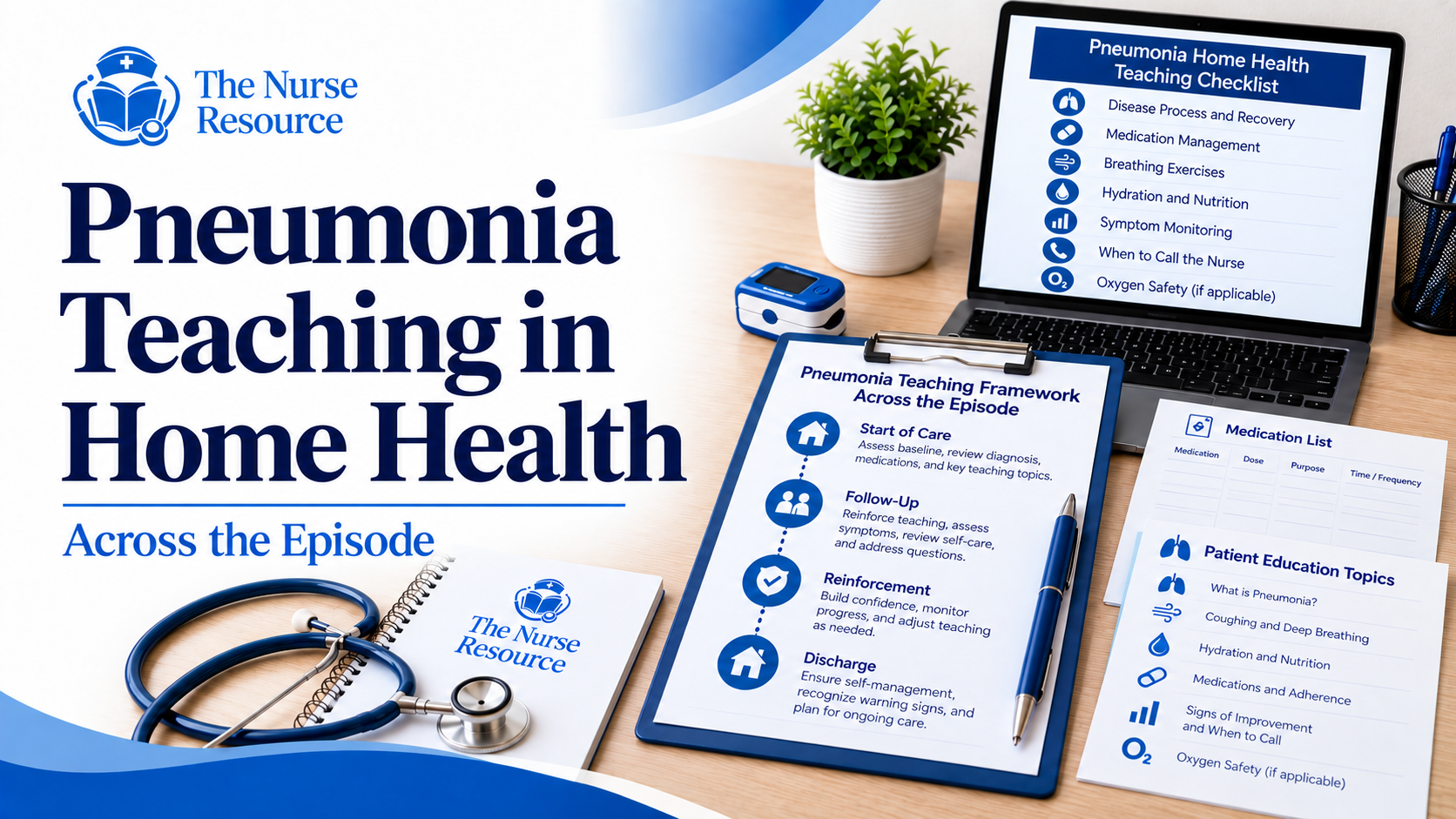
Pneumonia Teaching Across the Home Health Episode
Teaching priorities should change as patient moves from early recovery toward greater independence.
Start of Care and Early Visits
Early visits should establish respiratory baseline, identify immediate risks, and confirm patient understands treatment plan.
Confirm Basic Understanding of Pneumonia
Assess what patient or PCG understands about:
- Pneumonia diagnosis.
- Recent Hospital course when applicable.
- Current medications.
- Respiratory treatments.
- Oxygen orders if applicable.
- Provider follow-up.
- Symptoms that should be reported.
- Emergency instructions.
Teaching can explain simply that pneumonia is an infection in lungs that can cause inflammation and fluid or mucus in air sacs, making breathing more difficult. Cause and treatment vary by patient. NHLBI, NIH
Avoid assuming every pneumonia patient has bacterial pneumonia or requires same treatment.
Establish Current Respiratory Status
Early SN assessment may include patient-specific review of:
- Breathing pattern.
- Shortness of breath at rest and with activity.
- Cough.
- Mucus amount or changes.
- Wheezing when present.
- Chest discomfort.
- Fatigue and weakness.
- Temperature according to agency process.
- Vital Signs.
- Oxygen use if ordered.
- Pulse oximeter readings if ordered or instructed.
- Ability to speak and move without significant respiratory distress.
- Activity tolerance compared with baseline.
Do not apply universal respiratory-rate or Oxygen Saturation parameters. Use patient-specific provider parameters, orders, plan of care, agency policy, and skilled nursing judgment.
Review Current Medication Plan
Treatment depends on what caused pneumonia and how severe illness is. Antibiotics may be prescribed for bacterial pneumonia, antiviral medication may be used for some viral infections, and antifungal treatment may be needed for some fungal pneumonia. NHLBI, NIH
SN should assess:
- Medication availability.
- Medication schedule.
- Missed doses.
- Recent medication changes.
- Pharmacy or refill problems.
- Side effects or concerns.
- Patient or PCG understanding.
- Ability to safely follow instructions.
When an antibiotic is prescribed, reinforce taking it according to provider and pharmacy instructions and completing prescribed course unless provider changes instructions. MedlinePlus
Do not tell patient to start, stop, hold, skip, increase, decrease, extend, or restart an antibiotic, steroid, inhaler, nebulizer medication, or other treatment without appropriate provider instruction.
Identify Home Safety and Support Needs
Pneumonia recovery may involve significant fatigue and weakness.
Assess whether patient:
- Becomes short of breath walking to bathroom.
- Becomes dizzy with activity.
- Needs frequent rest.
- Has fallen or nearly fallen.
- Uses an assistive device.
- Has Oxygen tubing or respiratory equipment creating a trip hazard.
- Needs PCG assistance with medications, meals, equipment, or symptom monitoring.
PCG involvement may be especially important for patients with memory problems, medication confusion, limited mobility, poor teach-back, respiratory equipment needs, or difficulty recognizing worsening symptoms.
Middle of Episode Teaching
Middle visits should evaluate whether respiratory symptoms and functional ability are improving as expected and whether patient or PCG can safely follow treatment plan.
Review Respiratory Symptom Trends
Do not look only at one Vital Sign or one Oxygen Saturation reading.
Review changes in:
- Shortness of breath.
- Cough.
- Mucus amount or appearance.
- Chest discomfort.
- Fatigue.
- Weakness.
- Activity tolerance.
- Sleep.
- Appetite.
- Mental status.
- Oxygen needs according to existing order.
- Provider-ordered respiratory monitoring.
Pneumonia symptoms can include cough with or without mucus, fever, chills, shortness of breath, and chest pain associated with breathing or coughing. Worsening respiratory symptoms or new confusion may require prompt clinical review. NHLBI, NIH
Reinforce Medication Follow-Through
At follow-up visits, assess whether patient is:
- Taking medications as ordered.
- Completing prescribed antibiotic therapy when applicable.
- Following inhaler or nebulizer instructions if ordered.
- Maintaining medication supply.
- Reporting side effects.
- Keeping updated medication list.
- Contacting PCP or pharmacy when instructions are unclear.
If patient uses inhalers or nebulizers for an underlying respiratory condition, teaching should follow exact medication profile and provider instructions rather than assuming a standard rescue-versus-maintenance regimen.
For more detailed respiratory medication support, see the Respiratory Medication Teaching Resource Pack for Home Health Nurses.
Review Oxygen Safety if Ordered
Some patients may be discharged home with Oxygen.
If Oxygen is ordered, assess:
- Whether it is being used according to prescription.
- Equipment condition.
- Tubing placement.
- Fall hazards.
- Smoking or flame exposure.
- Backup plan or supplier contact when applicable.
- PCG understanding.
Do not tell patient to change Oxygen flow rate independently.
MedlinePlus specifically advises patients discharged with Oxygen not to change flow without provider direction and to avoid smoking near Oxygen equipment. MedlinePlus
Review Pulse Oximeter Use if Ordered or Instructed
If pulse oximeter monitoring is part of care plan:
- Assess device use.
- Review provider-specific monitoring instructions.
- Determine whether readings are being recorded if instructed.
- Consider readings together with patient symptoms.
- Follow patient-specific reporting parameters.
Do not create a universal Oxygen Saturation threshold for all pneumonia patients.
Hydration and Nutrition Considerations
Poor appetite and fatigue may interfere with recovery.
SN may assess:
- Food and fluid intake.
- Difficulty preparing meals.
- Nausea or vomiting.
- Swallowing concerns.
- Dehydration concerns.
- Weight or nutritional concerns when clinically relevant.
- Need for PCG assistance.
MedlinePlus encourages fluids during pneumonia recovery when provider says it is appropriate. MedlinePlus
For home health patients, fluid teaching must remain individualized. Patients with CHF, kidney disease, fluid restrictions, swallowing concerns, or other conditions may have different instructions.
Do not recommend a universal fluid amount or diet plan.
Activity Tolerance and Energy Conservation
Pneumonia can leave patients weak even after respiratory symptoms begin improving.
NHLBI recommends gradual light activity during recovery while recognizing that overly strenuous activity may worsen shortness of breath or dizziness. Activity level should be discussed with health care provider. NHLBI, NIH
Home health teaching may reinforce:
- Pacing activity according to tolerance.
- Rest periods.
- Avoiding rushing.
- Using prescribed assistive devices.
- Asking for assistance when weak or short of breath.
- Following PT or provider recommendations when applicable.
- Reporting worsening activity intolerance.
Energy conservation should not become a universal exercise prescription. Follow plan of care and patient-specific recommendations.
Reinforce Infection Prevention
Pneumonia can have many causes, including bacteria, viruses, and fungi. Respiratory infections may also spread between people depending on underlying cause. NHLBI, NIH
Teaching may include:
- Hand hygiene.
- Covering coughs and sneezes.
- Safe disposal of tissues.
- Cleaning respiratory equipment according to instructions.
- Avoiding close exposure to people who are ill when practical.
- Following diagnosis-specific infection precautions.
- Avoiding smoking and secondhand smoke.
- Discussing recommended vaccines with PCP.
CDC identifies immunization, hand hygiene, avoiding tobacco smoke, and other prevention measures as ways to reduce pneumonia risk. CDC
Vaccination teaching should remain patient-specific. SN may reinforce the importance of recommended immunizations and encourage patient to discuss vaccination needs with PCP or pharmacist according to current recommendations, agency process, medical history, and individual contraindications.
Later Episode and Discharge Preparation
Later visits should focus on whether patient or PCG can continue recovery safely with less SN prompting.
Confirm Symptom Awareness
Patient or PCG should understand which symptoms are improving and which changes require reporting.
Assess whether they can identify:
- Worsening shortness of breath.
- Increased breathing difficulty.
- New or worsening cough.
- Concerning mucus changes.
- Return or worsening of fever according to provider instructions.
- Chest discomfort.
- Increased fatigue or weakness.
- Reduced activity tolerance.
- New confusion or unusual sleepiness.
- Poor intake.
- Medication problems.
Confirm Treatment Follow-Through
Before discharge, evaluate whether patient or PCG can:
- Follow current medication schedule.
- Obtain refills when needed.
- Use inhaler or nebulizer correctly if ordered.
- Use Oxygen safely if ordered.
- Follow monitoring plan.
- Manage respiratory supplies.
- Maintain updated medication list.
- Attend PCP or specialist follow-up.
Follow-up after pneumonia should be individualized. NHLBI advises patients to ask provider when follow-up is needed, and additional imaging or rehabilitation may be considered when clinically indicated rather than performed automatically for every patient. NHLBI, NIH
Confirm Escalation Plan
Patient or PCG should know:
- Who to call for worsening non-emergency symptoms.
- PCP contact information.
- Home health agency number.
- After-hours process.
- Provider-specific monitoring parameters.
- When to call 911.
Key Pneumonia Teaching Priorities
Across the episode, SN teaching may focus on:
- Respiratory symptom changes and recovery trends
- Medication follow-through and side-effect reporting
- Inhaler or nebulizer use if ordered
- Oxygen and respiratory equipment safety if ordered
- Hydration and nutrition based on patient-specific needs
- Activity tolerance, pacing, and fall prevention
- Infection-prevention practices
- PCG support when needed
- When to notify PCP or home health agency
- When to call 911
Teaching priorities should change according to patient condition, recovery progress, provider orders, barriers, and patient or PCG understanding.
Medication Safety
Medication teaching should follow provider orders, medication profile, pharmacy guidance, and Hospital discharge instructions.
Reinforce:
- Taking medications as ordered.
- Completing prescribed antibiotic treatment unless provider changes plan.
- Keeping medications available.
- Reporting missed doses or side effects.
- Requesting refills before medication runs out.
- Not using leftover prescriptions from prior illness.
- Not changing medication independently.
The Medication Safety Resource Pack for Home Health Nurses provides additional patient and PCG medication-safety support.
Inhaler and Nebulizer Support if Ordered
Pneumonia itself does not mean every patient requires an inhaler or nebulizer.
When respiratory medications are ordered because of wheezing, bronchospasm, COPD, asthma, or another patient-specific indication, SN should follow medication order and assess:
- Device technique.
- Medication availability.
- Refill needs.
- Equipment cleaning.
- Patient ability.
- PCG support.
- Symptoms despite use as ordered.
The Respiratory Medication Teaching Resource Pack for Home Health Nurses provides more detailed respiratory medication teaching and documentation support.
Oxygen and Respiratory Equipment Safety
If ordered, reinforce:
- Using Oxygen according to prescription.
- Not changing flow rate independently.
- No smoking or open flames around Oxygen.
- Safe tubing placement.
- Equipment and supply management.
- Contacting respiratory supplier for equipment problems.
- Reporting worsening respiratory symptoms.
Recovery and Activity
Recovery should be evaluated patient by patient.
Some patients improve steadily. Others may continue to experience significant fatigue or shortness of breath for weeks. NHLBI, NIH
SN should assess whether patient is gradually regaining function or becoming less able to complete usual activities.
Infection Prevention
Teaching may include hand hygiene, cough etiquette, respiratory equipment care, smoking avoidance, diagnosis-specific precautions, and provider-directed vaccination discussion.
PCG Support
PCG involvement may be important when patient has:
- Cognitive impairment.
- Poor teach-back.
- Medication confusion.
- Oxygen use.
- Inhaler or nebulizer difficulty.
- Significant weakness.
- Fall risk.
- Poor intake.
- Difficulty communicating symptoms.
- Limited ability to obtain medications or supplies.
Pneumonia Warning Signs Patients and PCGs Should Report
Follow provider-specific instructions and agency policy for concerns such as:
- Increased shortness of breath compared with current baseline.
- Breathing becoming more difficult.
- New or worsening cough.
- Increased or concerning mucus changes.
- Fever that returns or symptoms of infection that worsen.
- Increased fatigue or weakness.
- Reduced ability to complete usual activity.
- New dizziness.
- New or worsening confusion.
- Increased sleepiness.
- Poor appetite or reduced fluid intake.
- Vomiting or difficulty keeping medications or fluids down.
- Chest discomfort that is new or worsening but not an emergency.
- Medication side effects.
- Missed medications.
- Refill or supply problems.
- Difficulty using inhaler, nebulizer, Oxygen, or other ordered equipment.
- Oxygen Saturation outside patient-specific parameters if monitoring is ordered.
- Symptoms that are not improving as expected.
Older adults may sometimes show weakness or sudden confusion rather than classic pneumonia symptoms. NHLBI, NIH
When to Notify PCP or Home Health Agency
Notify PCP or follow agency notification process for non-emergency concerns such as:
- Respiratory symptoms worsening compared with baseline.
- Increasing shortness of breath with activity.
- New or worsening cough.
- Concerning mucus changes.
- Fever returning or infection symptoms worsening.
- New chest discomfort that is not an emergency.
- Increasing weakness or reduced activity tolerance.
- New confusion or unusual sleepiness.
- Poor appetite or reduced intake.
- Vomiting or diarrhea affecting recovery or medication follow-through.
- Medication side effects.
- Missed doses.
- Antibiotic, respiratory medication, or refill concerns.
- Difficulty following treatment plan.
- Oxygen equipment concerns.
- Pulse oximeter readings outside patient-specific provider parameters if monitoring is ordered.
- Patient or PCG unable to safely manage care.
- Symptoms that worsen or do not improve as expected.
Follow provider orders, Hospital discharge instructions, medication profile, patient-specific parameters, plan of care, agency policy, and skilled nursing judgment.
When to Call 911
Call 911 or follow patient-specific emergency plan for severe or life-threatening symptoms, including:
- Severe shortness of breath or serious trouble breathing.
- Inability to speak normally because of respiratory distress.
- Blue or gray lips, face, or skin.
- Severe or concerning chest pain.
- Severe confusion or inability to respond normally.
- Fainting or loss of consciousness.
- Severe weakness with inability to respond normally.
- Severe allergic reaction symptoms.
- Symptoms that are rapidly worsening.
- Any situation in which patient appears to be in immediate danger.
Severe pneumonia can lead to respiratory failure and other serious complications. NHLBI, NIH
Do not delay emergency response to complete routine PCP notification.
For additional patient and PCG escalation support, see the Emergency Signs and Escalation Pack for Home Health Nurses.
Common Pneumonia Teaching Mistakes to Avoid
Teaching Everything During One Visit
Early teaching should prioritize immediate respiratory safety, medications, treatment follow-through, and symptoms to report.
Other topics can be reinforced as patient recovers.
Repeating Same Pneumonia Teaching Every Visit
Reinforcement may remain appropriate, but teaching should respond to current symptoms, patient understanding, recovery progress, and new barriers.
Treating Every Pneumonia Case the Same
Cause, severity, medications, respiratory status, comorbidities, and recovery needs vary.
Assuming Every Patient Needs Antibiotics
Pneumonia may be bacterial, viral, fungal, or related to other causes. Medication teaching should follow provider diagnosis and orders. NHLBI, NIH
Giving Universal Oxygen Saturation or Respiratory Parameters
Follow patient-specific provider instructions and agency policy.
Telling Patient to Change Oxygen Flow
Oxygen changes require provider direction.
Giving Generic Fluid Advice
Fluid recommendations must consider CHF, kidney disease, swallowing problems, restrictions, and other patient-specific conditions.
Ignoring Weakness and Fall Risk
Respiratory recovery, fatigue, dizziness, reduced endurance, and equipment may create a significant home safety concern.
Ignoring PCG Role
Patients with cognitive, mobility, medication, or equipment limitations may require reliable PCG support.
Failing to Connect Symptoms With Escalation
Patient may recognize worsening cough or shortness of breath but still not understand whether to contact PCP, home health agency, or 911.
Documenting Only “Pneumonia Teaching Done”
Documentation should reflect actual teaching focus, relevant patient or PCG response, barriers, abnormal findings, and follow-up when clinically appropriate.
How to Keep Pneumonia Teaching Skilled Across Visits
Skilled pneumonia teaching is not created by using different wording at every visit.
It remains patient-specific when SN:
- Assesses current respiratory condition.
- Compares symptoms with prior visit and baseline.
- Reviews Vital Signs and ordered respiratory monitoring.
- Evaluates medication follow-through.
- Assesses Oxygen or respiratory equipment when ordered.
- Identifies changes in cough, breathing, fatigue, intake, or activity tolerance.
- Identifies what patient or PCG already understands.
- Prioritizes current teaching need.
- Uses teach-back or demonstration when appropriate.
- Identifies barriers.
- Communicates significant findings when indicated.
- Adjusts teaching according to recovery and new concerns.
- Prepares patient or PCG for safer independent follow-through.
Early Episode
Focus on respiratory status, treatment plan, medication safety, immediate warning signs, equipment safety, and PCG needs.
Middle of Episode
Evaluate symptom trends, medication follow-through, activity tolerance, nutrition and hydration concerns, infection prevention, teach-back, and barriers.
Later Episode
Confirm patient or PCG can manage medications and supplies, recognize worsening symptoms, follow provider instructions, attend follow-up, and distinguish PCP concerns from emergency symptoms.
Teaching may appropriately repeat when patient still has incomplete understanding, a safety concern, medication or equipment difficulty, change in condition, or PCG support need.
Documentation Considerations
This free post does not provide a pneumonia documentation phrase bank or quick charting template.
At a framework level, SN documentation should show:
- Why pneumonia-related teaching or monitoring was relevant during visit.
- Important current respiratory findings.
- Specific teaching or intervention actually provided.
- Patient or PCG response.
- Changes from prior visit when clinically relevant.
- Abnormal findings and provider communication when applicable.
- Continued patient-specific teaching or monitoring need when supported.
- Logical focus for follow-up.
Limited Example
Weak:
Pneumonia teaching done. Patient verbalized understanding.
Stronger direction:
Documentation should identify current respiratory or treatment need, focused teaching provided, how patient or PCG responded, and what remains to be reinforced or monitored.
Detailed copy-ready charting language, response phrases, and ongoing skilled-need wording remain Premium Library content.
Related Home Health Teaching Resources
You may also find these resources helpful:
- COPD Teaching in Home Health: What Nurses Should Cover Across the Episode
- Respiratory Medication Teaching Resource Pack for Home Health Nurses
- COPD Teaching Resource Pack for Home Health Nurses
- Medication Safety Resource Pack for Home Health Nurses
- Emergency Signs and Escalation Pack for Home Health Nurses
- Albuterol Indication and Home Health Teaching
- Medication Teaching Lookup for Home Health Nurses
Premium Library Support
Respiratory Medication Teaching
If patient has ordered inhalers, nebulizer treatments, or other respiratory medications, Premium Library members can use the Respiratory Medication Teaching Resource Pack for Home Health Nurses for more detailed medication teaching, device follow-through, symptom reporting, and documentation support.
COPD and Chronic Respiratory Comorbidity
For patients whose pneumonia recovery is complicated by COPD or chronic respiratory symptoms, the COPD Teaching Resource Pack for Home Health Nurses provides separate COPD-focused patient teaching, PCG monitoring, Oxygen safety, respiratory medication support, and documentation resources.
Medication Safety
For antibiotic follow-through, medication organization, refill concerns, side-effect reporting, and broader medication safety, see the Medication Safety Resource Pack for Home Health Nurses.
Emergency Signs and Escalation
For additional PCP-versus-911 teaching support, patient and PCG escalation guidance, and documentation resources, see the Emergency Signs and Escalation Pack for Home Health Nurses.
These Premium resources provide more detailed teaching and documentation support without replacing patient-specific provider instructions or skilled nursing judgment.
Important Use Note
This post is for educational and home health teaching and documentation support only. It does not replace provider orders, Hospital discharge instructions, medication profile, pharmacy guidance, respiratory equipment instructions, Oxygen orders, patient-specific plan of care, agency policy, payer requirements, state regulations, Medicare guidance, accreditation standards, emergency protocols, or skilled nursing judgment.
Pneumonia teaching, respiratory monitoring, medication teaching, hydration and nutrition guidance, activity recommendations, Oxygen use, pulse oximeter monitoring, infection-prevention instructions, provider notification, and emergency escalation must be individualized to patient condition, diagnosis, provider orders, medication profile, patient-specific parameters, plan of care, agency policy, payer requirements, and clinical judgment.
This content does not provide medication dosing advice, antibiotic-selection advice, medication-adjustment instructions, universal Oxygen Saturation parameters, universal respiratory-rate parameters, universal fever parameters, universal fluid recommendations, Oxygen flow-rate changes, or emergency treatment instructions beyond calling 911 for emergency symptoms and following patient-specific emergency plan.
Documentation should reflect only assessment, teaching, patient or PCG response, communication, and interventions that actually occurred.
This content does not guarantee Medicare payment, claim approval, survey compliance, documentation compliance, or regulatory compliance.
Sources Used
- National Heart, Lung, and Blood Institute. What Is Pneumonia? NHLBI Pneumonia Overview
- National Heart, Lung, and Blood Institute. Pneumonia Symptoms. NHLBI Pneumonia Symptoms
- National Heart, Lung, and Blood Institute. Pneumonia Treatment. NHLBI Pneumonia Treatment
- National Heart, Lung, and Blood Institute. Pneumonia Recovery. NHLBI Pneumonia Recovery
- Centers for Disease Control and Prevention. Pneumonia Prevention and Control. Updated and reviewed February 25, 2026. CDC Pneumonia Prevention and Control
- Centers for Disease Control and Prevention. Risk Factors for Pneumonia. Updated and reviewed February 25, 2026. CDC Pneumonia Risk Factors
- MedlinePlus Medical Encyclopedia. Pneumonia in Adults: Discharge. Reviewed March 1, 2026. MedlinePlus Pneumonia in Adults: Discharge