
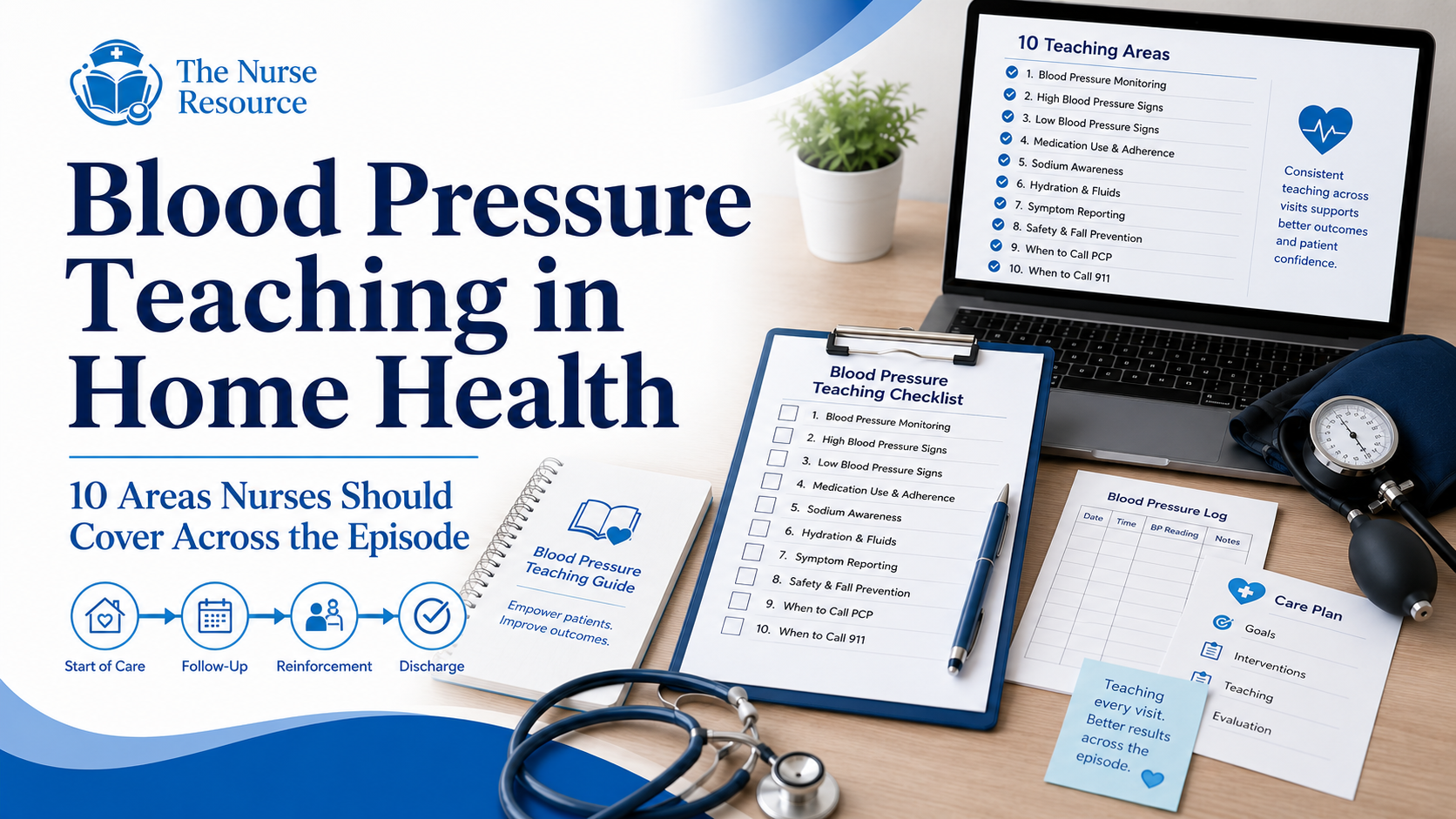
Blood Pressure teaching is a common home health skilled nursing intervention, but it should not look exactly the same during every visit.
A patient may first need help using a home monitor correctly. During later visits, SN may need to address inconsistent readings, dizziness, medication changes, poor follow-through, fall risk, or PCG involvement.
The goal is not to rotate through a collection of identical teaching scripts. The goal is to select the teaching area that best matches patient condition, current risk, provider orders, plan of care, previous response, and skilled nursing judgment.
This guide reviews 10 Blood Pressure teaching areas home health nurses may need to address across the episode. It focuses on clinical decision-making and teaching structure without replacing patient-specific provider instructions or agency requirements.
Why Blood Pressure Teaching Requires Skilled Nursing Judgment
Blood Pressure education involves more than telling a patient to check a reading.
SN may need to determine whether:
- patient is using monitor correctly
- cuff fits and is positioned appropriately
- reported readings appear affected by technique
- patient understands ordered monitoring schedule
- symptoms are occurring with abnormal readings
- medication changes may be contributing to dizziness or weakness
- patient is at increased risk for falls
- PCG needs to assist with monitoring
- abnormal findings require provider notification
- patient understands when emergency help may be needed
Accurate home measurement generally includes using an appropriately sized cuff on a bare arm, resting quietly beforehand, sitting with back supported and feet flat, keeping arm supported near heart level, and avoiding talking during measurement. SN should adapt teaching to patient ability, equipment, provider instructions, and agency policy.
A Simple Framework for Planning Blood Pressure Teaching
Before selecting a teaching topic, consider four questions.
What is happening today?
Review current Blood Pressure readings, symptoms, medication changes, Vital Signs, recent falls, functional status, and patient or PCG concerns.
What is highest risk?
Prioritize concerns such as:
- inaccurate monitoring
- repeated abnormal readings
- dizziness or weakness
- medication confusion
- fall risk
- worsening symptoms
- delayed provider notification
- inability to follow monitoring instructions safely
What has already been taught?
Review prior SN documentation and patient or PCG response. Avoid restarting from beginning when patient has already demonstrated understanding.
What still requires skilled intervention?
Determine whether SN needs to assess technique, correct an unsafe practice, evaluate symptoms, reinforce provider instructions, contact PCP, involve PCG, or prepare patient for greater independence.
A. Basic Technique Check
When This Teaching May Be Appropriate
This area may be appropriate when:
- patient recently received a home Blood Pressure monitor
- readings vary significantly without an obvious clinical explanation
- patient has not demonstrated monitoring technique
- patient reports checking while talking, moving, or immediately after activity
- home readings differ significantly from readings obtained by SN
What the SN Should Assess
SN should assess:
- where and how patient checks Blood Pressure
- whether patient rests before checking
- sitting position
- arm support
- whether patient talks or moves during measurement
- ability to operate monitor
- ability to read and understand display
- condition and availability of equipment
What the SN May Reinforce
SN may reinforce:
- following provider-ordered monitoring instructions
- resting quietly before measurement
- sitting in a supported position
- keeping feet flat when possible
- supporting arm appropriately
- remaining still and quiet
- recording reading as instructed
What Should Be Individualized
Individualize teaching according to:
- physical limitations
- tremors or weakness
- vision or hearing impairment
- cognitive status
- monitor type
- ordered monitoring schedule
- need for PCG assistance
- provider reporting parameters
B. Cuff Placement and Sizing
When This Teaching May Be Appropriate
This area may be appropriate when:
- cuff repeatedly slips
- patient places cuff over clothing
- cuff appears too tight or too loose
- patient has difficulty positioning cuff
- readings seem inconsistent with symptoms or SN findings
- patient changed monitors or cuffs
What the SN Should Assess
SN should assess:
- cuff size and fit
- placement on arm
- whether cuff is placed over bare skin
- patient’s ability to apply cuff independently
- arm circumference when relevant to equipment selection
- whether tubing or device is positioned according to manufacturer instructions
- whether monitor is intended for upper-arm or another measurement site
An incorrect cuff size or poor positioning can affect measurement accuracy. AHA home-monitoring guidance recommends a validated device with correct cuff size and placement on bare skin.
What the SN May Reinforce
SN may reinforce:
- using cuff intended for patient and device
- applying cuff to bare skin
- keeping cuff secure without improper placement
- supporting arm during measurement
- following device instructions
- asking for assistance if cuff cannot be applied safely
What Should Be Individualized
Individualize according to:
- arm size
- edema
- limited range of motion
- pain
- weakness
- paralysis
- vascular access or other arm precautions
- provider instructions
- manufacturer guidance
- agency policy
C. Consistent Timing and Logging
When This Teaching May Be Appropriate
This area may be appropriate when:
- patient checks at random times
- readings are not documented
- patient cannot recall recent results
- provider requested a Blood Pressure log
- medication response is being monitored
- patient checks only when symptoms occur despite other instructions
What the SN Should Assess
SN should assess:
- provider-ordered monitoring schedule
- when patient currently checks readings
- whether readings are recorded
- whether symptoms are documented with readings
- whether patient brings log to appointments
- ability to use written or electronic tracking
- barriers such as memory, literacy, vision, or missing supplies
CDC and AHA resources support tracking home Blood Pressure readings so they can be reviewed with the health care team.
What the SN May Reinforce
SN may reinforce:
- checking at ordered times
- using a consistent routine
- recording date, time, and reading
- noting symptoms when instructed
- keeping log available for SN and PCP review
- reporting readings according to provider parameters
What Should Be Individualized
Individualize according to:
- provider order
- medication schedule
- symptoms
- daily routine
- patient ability
- technology preference
- PCG availability
- plan of care
D. Orthostatic Precautions
When This Teaching May Be Appropriate
This area may be appropriate when patient reports:
- dizziness after standing
- lightheadedness
- weakness
- feeling faint
- unsteadiness
- recent fall or near fall
- symptoms after a medication change
Low Blood Pressure may cause dizziness or fainting in some patients. These symptoms may increase safety concerns and require patient-specific assessment.
What the SN Should Assess
SN should assess:
- when symptoms occur
- relationship between symptoms and position changes
- recent medication changes
- fluid intake as allowed
- recent illness, vomiting, or diarrhea
- gait and balance
- assistive device use
- fall history
- provider-ordered orthostatic measurements
- ability to transfer safely
What the SN May Reinforce
SN may reinforce:
- changing positions slowly
- pausing before walking
- sitting or lying down if dizziness occurs
- using assistive device as ordered
- asking for help when weak or unsteady
- reporting repeated or worsening symptoms
- following provider instructions regarding monitoring
What Should Be Individualized
Individualize according to:
- ordered precautions
- mobility status
- therapy recommendations
- medication profile
- fluid restrictions
- cardiac or renal conditions
- fall risk
- PCG availability
- agency policy
E. Abnormal Readings: What to Do Next
When This Teaching May Be Appropriate
This area may be appropriate when:
- patient reports repeated high or low readings
- patient becomes anxious after one unexpected reading
- patient does not know provider reporting parameters
- patient ignores abnormal readings
- symptoms occur with abnormal readings
- patient repeatedly checks without following an established plan
What the SN Should Assess
SN should assess:
- reading and measurement technique
- symptoms
- whether reading was repeated according to provider instructions
- recent medication use
- missed or extra doses
- recent activity
- pain, anxiety, illness, or poor intake
- provider-specific reporting parameters
- whether PCP or agency notification is required
What the SN May Reinforce
SN may reinforce:
- remaining calm
- rechecking only as instructed
- reviewing symptoms
- following provider reporting parameters
- contacting PCP or agency when indicated
- calling 911 for severe or life-threatening symptoms
- not changing medication independently
What Should Be Individualized
Individualize according to:
- provider orders
- patient’s usual range
- diagnosis
- symptoms
- medication profile
- recent changes in condition
- agency notification process
- emergency protocols
Avoid creating a universal Blood Pressure parameter for every patient. Reporting instructions should match provider orders, plan of care, and agency policy.
F. Lifestyle Factors Affecting Blood Pressure
When This Teaching May Be Appropriate
This area may be appropriate when:
- patient has diet-related questions
- sodium intake appears inconsistent with provider instructions
- patient uses tobacco
- patient consumes significant caffeine or alcohol
- patient is inactive due to fear or uncertainty
- poor intake or dehydration may affect readings
- provider has ordered lifestyle changes
What the SN Should Assess
SN should assess:
- current diet and sodium intake
- provider-ordered diet
- fluid instructions
- tobacco use
- caffeine and alcohol use
- activity tolerance
- access to food
- ability to shop or prepare meals
- understanding of provider recommendations
- cultural and financial factors
What the SN May Reinforce
SN may reinforce:
- following ordered diet
- recognizing high-sodium foods
- following fluid instructions
- participating in activity as allowed
- keeping provider appointments
- reporting poor intake, vomiting, or diarrhea
- avoiding unapproved changes to prescribed treatment
What Should Be Individualized
Individualize according to:
- provider orders
- cardiac or renal restrictions
- diabetes care plan
- swallowing ability
- nutritional status
- activity tolerance
- financial resources
- cultural preferences
- skilled nursing judgment
G. Blood Pressure Medication Safety
When This Teaching May Be Appropriate
This area may be appropriate when:
- medication was started or changed
- patient recently returned from Hospital
- patient has missed doses
- old and current medications are mixed together
- patient reports dizziness or weakness
- patient is unsure why medication was prescribed
- refill problems are present
- PCG manages medications
What the SN Should Assess
SN should assess:
- current medication profile
- provider orders
- medication reconciliation findings
- patient’s medication routine
- missed or extra doses
- refill status
- ability to read labels
- use of organizers
- possible duplicate or discontinued medications
- symptoms following medication use
- need for pharmacy or PCP clarification
What the SN May Reinforce
SN may reinforce:
- taking medication as ordered
- not stopping or changing medication without provider direction
- maintaining an updated medication list
- planning refills
- reporting side effects or concerns
- following ordered Blood Pressure monitoring
- asking PCP or pharmacist when instructions are unclear
What Should Be Individualized
Individualize according to:
- medication order
- indication
- dosing schedule
- medication profile
- provider parameters
- patient cognition
- ability to self-administer
- PCG support
- agency medication-management policy
H. Emergency Red Flags
When This Teaching May Be Appropriate
This area may be appropriate when:
- patient has a history of stroke or cardiovascular disease
- patient does not know when to call 911
- patient delays reporting severe symptoms
- PCG is uncertain about emergency response
- patient has repeated severe symptoms
- emergency contact information is not readily available
What the SN Should Assess
SN should assess:
- patient and PCG understanding of emergency symptoms
- ability to call 911
- access to a phone
- emergency contact information
- ability to communicate symptoms
- prior delays in seeking help
- cognitive or language barriers
- whether patient lives alone
What the SN May Reinforce
SN may reinforce calling 911 for severe or sudden symptoms such as:
- chest pain or chest pressure
- severe shortness of breath or trouble breathing
- new facial droop
- sudden weakness or numbness
- difficulty speaking
- sudden severe confusion
- loss of consciousness
- severe symptoms that are rapidly worsening
AHA identifies severely elevated Blood Pressure with symptoms such as chest pain, shortness of breath, weakness, vision changes, or difficulty speaking as a medical emergency. MedlinePlus also identifies chest pain, breathing difficulty, mental-status changes, fainting, and sudden weakness as emergency warning signs.
What Should Be Individualized
Individualize according to:
- patient diagnosis
- provider emergency instructions
- agency emergency policy
- cognitive ability
- communication needs
- PCG availability
- known stroke or cardiac history
Do not delay emergency response to complete a routine PCP call when symptoms appear life-threatening.
I. Hypotension Safety and Fall Prevention
When This Teaching May Be Appropriate
This area may be appropriate when:
- readings are repeatedly low
- patient reports dizziness or weakness
- patient has poor intake
- patient recently started or changed medication
- patient has fallen or nearly fallen
- patient becomes unsteady during transfers
- PCG reports increased sleepiness or confusion
What the SN Should Assess
SN should assess:
- current symptoms
- Blood Pressure trend
- recent medication changes
- hydration and intake within ordered limits
- mobility and transfer safety
- gait and balance
- assistive device use
- fall history
- environmental hazards
- ability to request help
- need for PCP notification
What the SN May Reinforce
SN may reinforce:
- slow position changes
- sitting down when dizzy
- not walking alone when unsafe
- using ordered assistive device
- keeping pathways clear
- reporting repeated low readings
- reporting falls and near falls
- following provider instructions for fluids and medications
What Should Be Individualized
Individualize according to:
- provider parameters
- cardiac or renal restrictions
- medication profile
- mobility status
- therapy recommendations
- fall risk
- cognition
- PCG ability
- agency policy
J. Caregiver-Assisted Blood Pressure Checks
When This Teaching May Be Appropriate
This area may be appropriate when patient has:
- vision impairment
- poor dexterity
- tremors
- weakness
- cognitive limitations
- difficulty applying cuff
- difficulty recording readings
- inability to recognize symptoms or report findings
What the SN Should Assess
SN should assess:
- PCG availability and willingness
- PCG ability to operate monitor
- cuff placement technique
- ability to document readings
- understanding of symptoms
- understanding of provider parameters
- ability to contact PCP, agency, or 911
- reliability of assistance
- need for additional community support
What the SN May Reinforce
SN may reinforce:
- correct monitoring technique
- following ordered schedule
- documenting readings and symptoms
- reporting abnormal findings
- recognizing emergency symptoms
- maintaining updated contact information
- communicating concerns to SN or PCP
- not changing medications without provider direction
What Should Be Individualized
Individualize according to:
- patient permission
- plan of care
- PCG role
- provider orders
- language and literacy needs
- home environment
- agency policy
- patient’s ability to participate
Planning Blood Pressure Teaching Across the Home Health Episode
The 10 teaching areas do not need to be covered during every visit.
SN should select teaching based on what is most relevant that day.
First or Early Visits
Focus may include:
- baseline monitoring technique
- cuff fit and placement
- ordered monitoring schedule
- medication reconciliation
- immediate fall risk
- provider reporting parameters
- emergency warning signs
- PCG role
Follow-Up Visits
Focus may include:
- reviewing technique
- reviewing Blood Pressure log
- checking retention
- identifying missed medications or refill problems
- evaluating dizziness or weakness
- reinforcing areas requiring additional teaching
- reviewing patient or PCG response
Mid-Episode Visits
Focus may include:
- trends in readings
- consistency with monitoring
- safe medication follow-through
- lifestyle barriers
- ability to recognize symptoms
- progress toward independence
- continued need for PCG support
- changes in skilled need
After a Change in Condition
Teaching may need to shift after:
- medication change
- abnormal reading
- fall or near fall
- worsening dizziness
- Hospital or emergency visit
- new weakness
- change in PCG availability
- new provider instructions
Discharge Preparation
Before discharge, SN should evaluate whether patient or PCG can:
- follow ordered monitoring plan
- use equipment safely
- record and communicate readings
- follow medication instructions
- identify symptoms to report
- contact PCP or agency
- recognize emergency symptoms
- continue care without routine SN prompting
Common Blood Pressure Teaching Mistakes
Repeating Same General Teaching Every Visit
Reinforcement may be necessary, but SN documentation should explain what remains unclear, unsafe, or incomplete.
Teaching Without Assessing Technique
A patient may state that Blood Pressure is checked daily while still using an incorrect cuff, unsupported arm, or inconsistent positioning.
Giving Universal Reporting Numbers
Provider parameters may differ based on patient diagnosis, baseline readings, symptoms, and care plan.
Focusing Only on High Blood Pressure
Low Blood Pressure, dizziness, weakness, medication effects, and fall risk may be equally important.
Ignoring Symptoms
A reading should be considered together with patient symptoms, current condition, medication profile, and provider instructions.
Giving Too Much Teaching at Once
Prioritize the highest-risk concern. Evaluate understanding before adding more information.
Documenting Only “Patient Verbalized Understanding”
SN should evaluate whether patient or PCG can explain, demonstrate, or safely apply the teaching.
Forgetting PCG Ability
Some patients cannot monitor safely without assistance. PCG ability and reliability may affect teaching plan and discharge readiness.
Failing to Update Teaching After a Medication Change
New medication orders or Hospital discharge instructions may change monitoring, safety, and reporting priorities.
When to Notify PCP or Home Health Agency
Notify PCP or follow agency notification process for concerns such as:
- repeated readings outside patient-specific provider parameters
- worsening dizziness or weakness
- repeated lightheadedness
- medication side effects
- medication confusion
- missed doses or refill problems
- new swelling
- increased shortness of breath with activity
- falls or near falls
- poor intake affecting Blood Pressure
- inability to use monitor correctly
- patient or PCG unable to follow ordered plan safely
- symptoms or readings that are worsening or not improving
Notification should follow provider orders, plan of care, agency policy, and clinical judgment.
When to Call 911
Call 911 or obtain emergency help for severe or sudden symptoms such as:
- chest pain or chest pressure
- severe shortness of breath
- trouble breathing
- sudden weakness or numbness
- facial droop
- difficulty speaking
- severe confusion or sudden mental-status change
- fainting or unresponsiveness
- severe symptoms that are rapidly worsening
Follow patient-specific emergency instructions and agency emergency procedures.
Planning Checklist for the Next Blood Pressure Teaching Visit
Before next SN visit, consider:
- What was patient’s most recent Blood Pressure concern?
- Was monitoring technique observed?
- Does cuff appear appropriate?
- Were readings recorded as ordered?
- Were symptoms present?
- Were medications changed?
- Did patient report dizziness, weakness, fall, or near fall?
- What did patient or PCG understand?
- What still requires reinforcement?
- Was PCP or agency notified?
- What should be reassessed next visit?
- What supports the need for continued skilled teaching or follow-up?
- Is patient progressing toward safe self-management?
Final Thoughts
Blood Pressure teaching in home health should be based on patient-specific need, not a fixed script.
SN should assess current findings, identify highest risk, select relevant teaching area, evaluate patient or PCG response, and plan what needs follow-up.
Across the episode, teaching may move from basic technique and immediate safety toward symptom recognition, medication follow-through, PCG participation, and discharge readiness.
That progression helps keep teaching focused, clinically relevant, and connected to plan of care.
8. Related Premium Resources
You may also find these home health resources helpful:
Blood Pressure Teaching Resource Pack
Patient, PCG, and nurse support tools for Blood Pressure monitoring, safety, symptom reporting, and documentation.
Medication Safety Resource Pack
Practical resources covering medication organization, compliance, refill planning, side-effect monitoring, and escalation.
Fall Prevention Teaching Pack
Patient teaching, caregiver support, and nurse documentation tools for dizziness, weakness, transfers, assistive devices, and fall-risk reduction.
Emergency Signs and Escalation Pack
Resources that help patients and PCGs understand when to call PCP, contact home health agency, or call 911.
Home Health SN Narrative Builder Pack
Documentation support for assessment findings, skilled interventions, patient or PCG response, progress toward goals, ongoing skilled need, and next-visit planning.
How to Build a Home Health Skilled Nursing Teaching Plan Across the Episode
Learn how to organize patient teaching from first SN visit through follow-up, reinforcement, changes in condition, and discharge preparation.
Related Home Health Teaching Resources
You may also find these resources helpful:
- Lisinopril Indication and Home Health Teaching
- Carvedilol Indication and Home Health Teaching
- Furosemide Indication and Home Health Teaching
- Isosorbide Mononitrate Indication and Home Health Teaching
- Nitroglycerin Indication and Home Health Teaching
- Blood Pressure Teaching Resource Pack for Home Health Nurses
Premium Library members can access the full resource content, documentation support, and downloadable tools inside each pack.
9. Premium Library
Need More Blood Pressure Teaching and Documentation Support?
This free guide explains the clinical framework for selecting Blood Pressure teaching across the home health episode.
Premium Library members can access the complete Blood Pressure Teaching Resource Pack, which includes:
- Blood Pressure patient teaching handout
- Blood Pressure nurse quick charting sheet
- PCG Blood Pressure monitoring checklist
- teach-back support
- patient and PCG response support
- Blood Pressure documentation guidance
- practical tools for monitoring, safety, and escalation
These resources provide more detailed, copy-friendly support while still requiring nurses to individualize teaching and documentation to patient condition, provider orders, plan of care, agency policy, and skilled nursing judgment.
Sources Used
- American Heart Association home Blood Pressure monitoring guidance, including correct cuff size, bare-arm placement, resting before measurement, supported posture, and recording readings.
- CDC high Blood Pressure resources, including self-measured Blood Pressure monitoring and working with the health care team to manage Blood Pressure.
- MedlinePlus emergency symptom guidance and general high Blood Pressure education.
10. Important Use Note
This post is for education and home health teaching support only. It does not replace provider orders, patient-specific plan of care, medication profile, agency policy, payer requirements, state regulations, Medicare guidance, accreditation standards, emergency protocols, or skilled nursing judgment.
Blood Pressure teaching, provider notification, emergency escalation, and documentation should always be individualized to patient condition, symptoms, provider orders, plan of care, agency policy, applicable regulations, payer requirements, and clinical judgment.
This resource does not guarantee payment, claim approval, survey compliance, or regulatory compliance.
Leave a Reply