
Tag: Safe Transfers
-
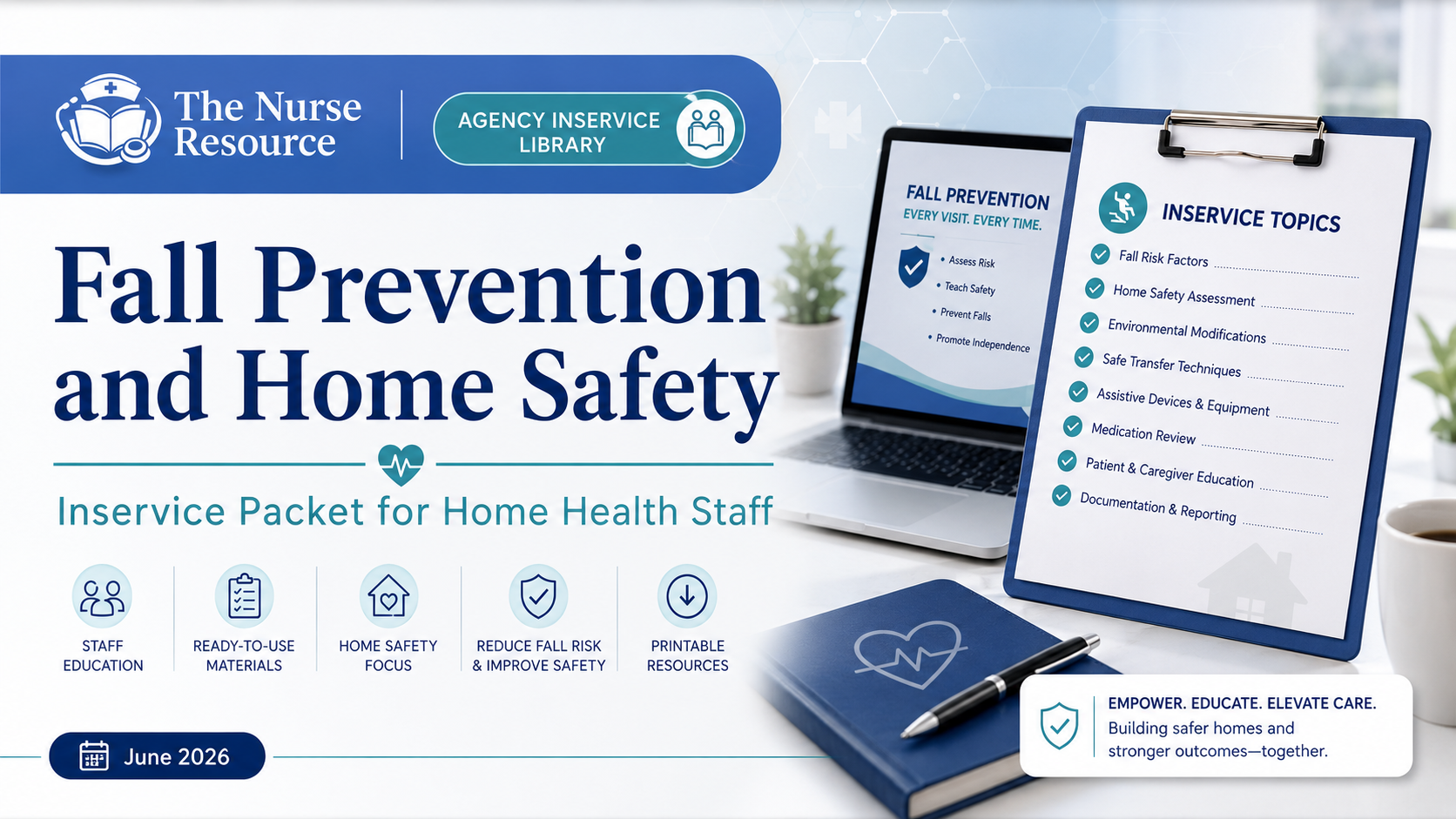
Fall Prevention and Home Safety Inservice Packet for Home Health Staff
Agency-ready fall prevention and home safety inservice for home health staff, with practical education on fall risks, home safety, staff responsibilities, competency support, and QAPI documentation tools.
-
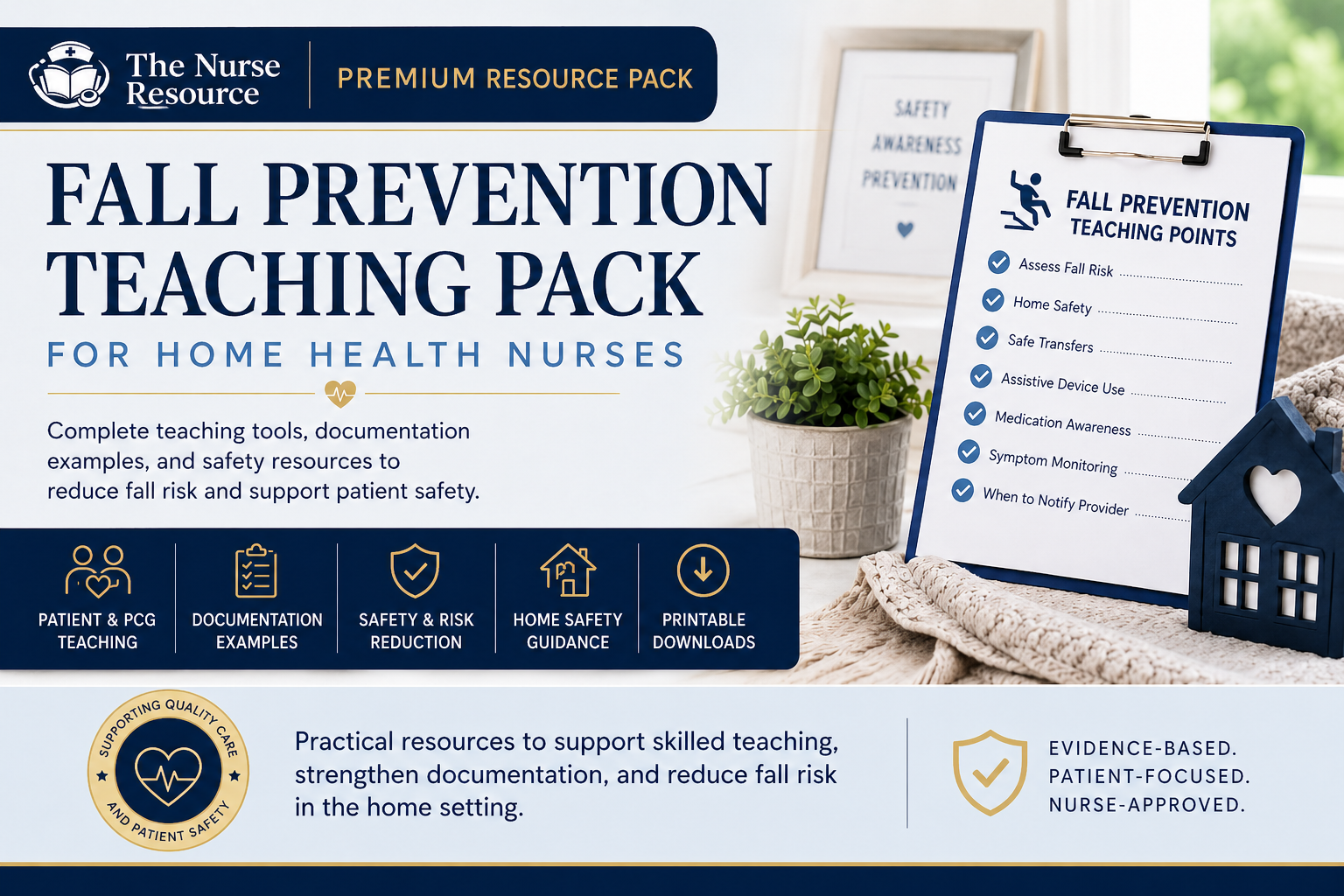
Fall Prevention Teaching Pack for Home Health Nurses
The Fall Prevention Teaching Pack helps home health nurses provide patient and PCG teaching on fall risk awareness, home safety, safe transfers, assistive device use, dizziness precautions, medication-related fall risks, footwear safety, bathroom safety, symptom reporting, and SN documentation support.
-
Safe Transfer Techniques Variations (A–J): 10 Home Health Teachings With Teach-Back + EMR (Sample)
Safe transfers are a major safety focus in home health. Falls often happen during sit-to-stand, bed mobility, toileting, and rushed transfers. Skilled nursing teaching supports safe movement patterns, correct use of assistive devices, caregiver guarding, and early reporting of dizziness, weakness, or functional decline. This guide provides 10 safe transfer teaching variations you can rotate…
-
The Ultimate Home Health Nurse’s Guide to Caregiver Teaching: 10 Skilled Nursing Documentation Templates
Caregiver teaching is one of the most valuable skilled nursing interventions in home health. Many patients rely on PCGs for medication management, transfers, wound care support, symptom monitoring, and safety in the home. Skilled nursing education ensures PCGs understand safe techniques, recognize red flags early, and follow the plan of care correctly to reduce complications…