
Tag: home health nursing
-
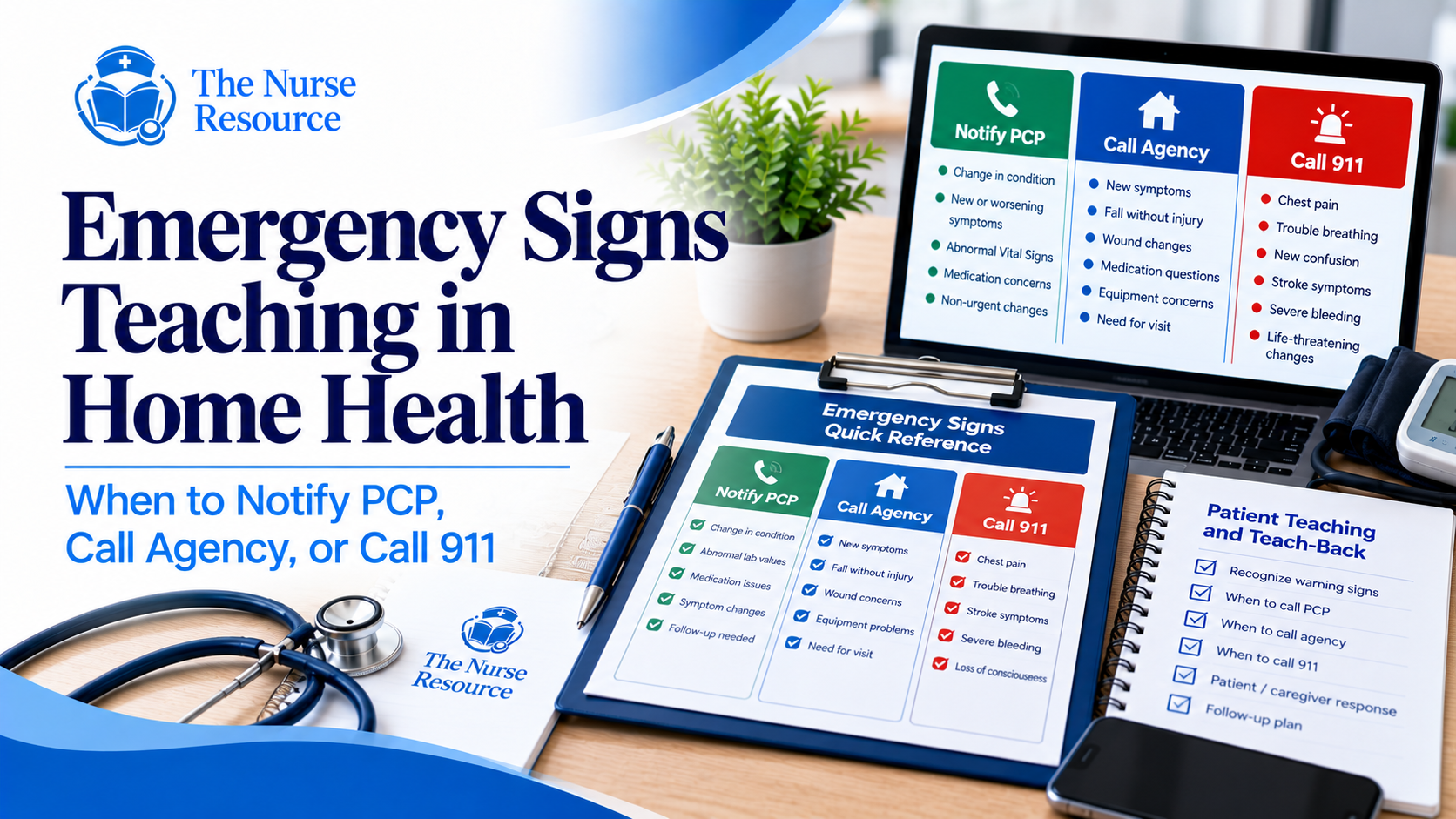
Emergency Signs Teaching in Home Health: When to Notify PCP, Call Agency, or Call 911
Learn how home health nurses can teach patients and PCGs to recognize changes in condition, notify PCP or home health agency appropriately, and call 911 for emergency symptoms.
-
Safe Transfer Techniques Variations (A–J): 10 Home Health Teachings With Teach-Back + EMR (Sample)
Safe transfers are a major safety focus in home health. Falls often happen during sit-to-stand, bed mobility, toileting, and rushed transfers. Skilled nursing teaching supports safe movement patterns, correct use of assistive devices, caregiver guarding, and early reporting of dizziness, weakness, or functional decline. This guide provides 10 safe transfer teaching variations you can rotate…
-
The Ultimate Home Health Nurse’s Guide to Caregiver Teaching: 10 Skilled Nursing Documentation Templates
Caregiver teaching is one of the most valuable skilled nursing interventions in home health. Many patients rely on PCGs for medication management, transfers, wound care support, symptom monitoring, and safety in the home. Skilled nursing education ensures PCGs understand safe techniques, recognize red flags early, and follow the plan of care correctly to reduce complications…
-
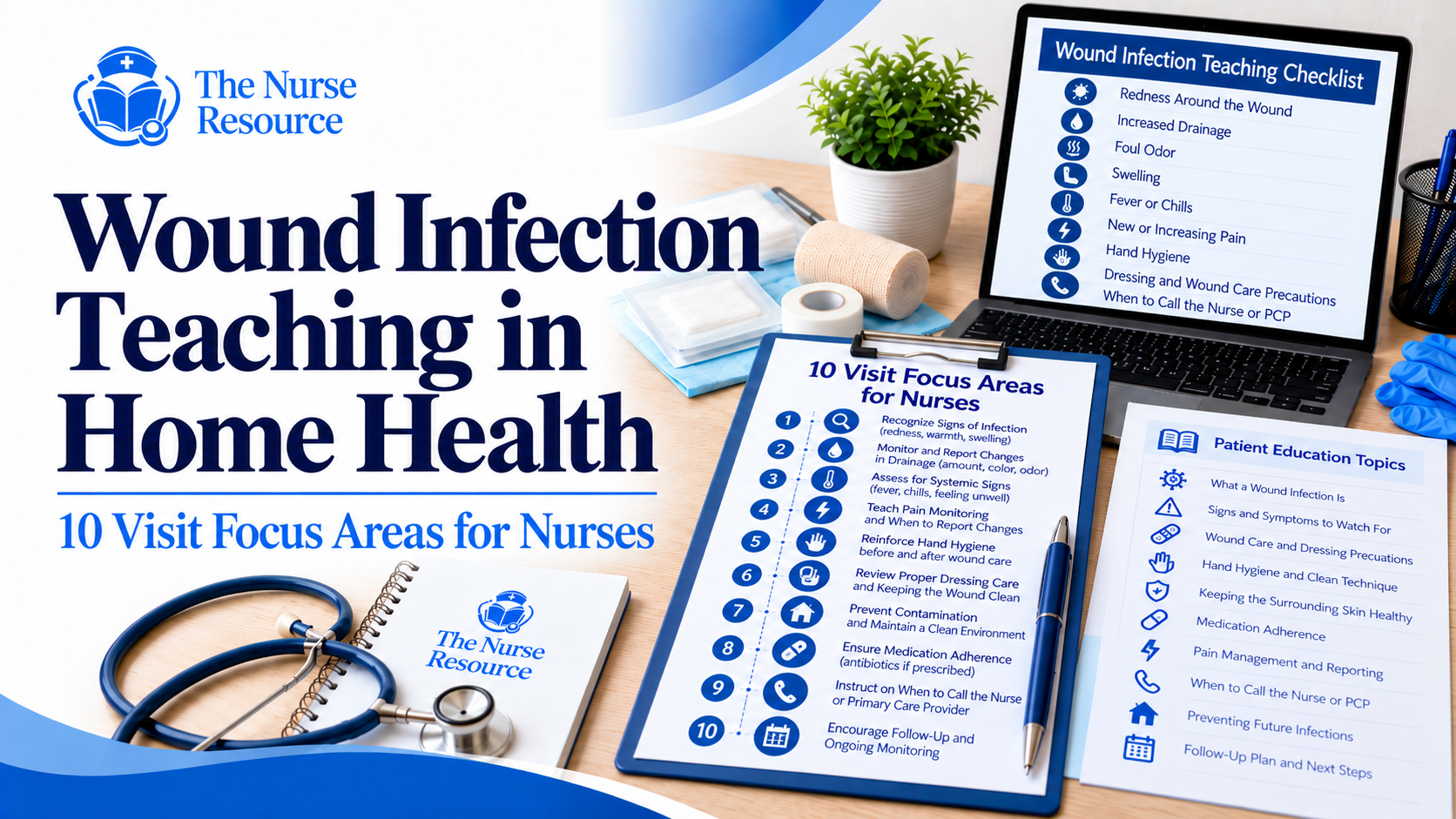
Wound Infection Teaching in Home Health: 10 Visit Focus Areas for Nurses
Review 10 wound infection teaching focus areas for home health nurses, including wound changes, drainage, redness, pain, systemic symptoms, infection prevention, PCG support, and timely reporting.
-
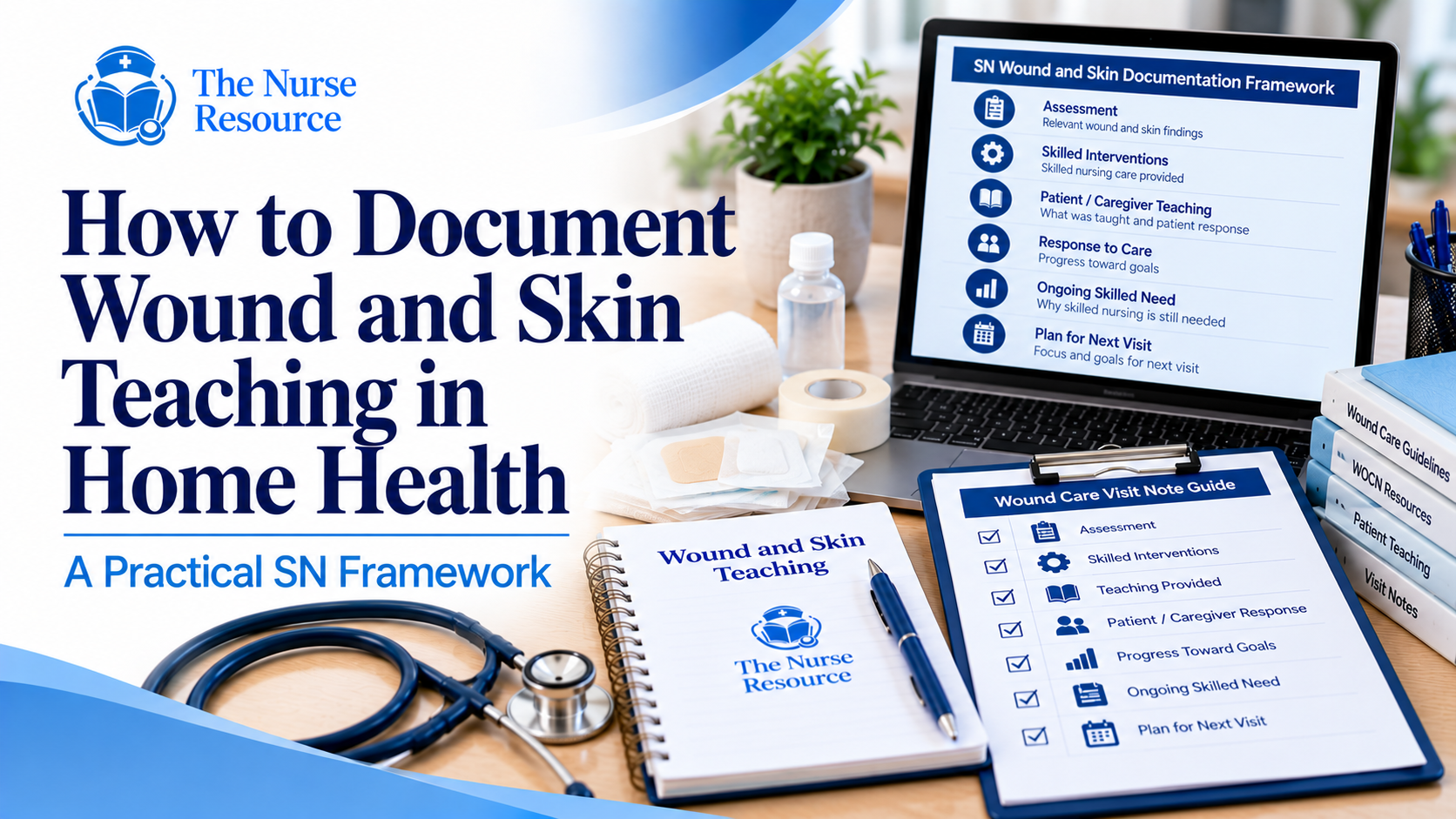
How to Document Wound and Skin Teaching in Home Health: A Practical SN Framework
Learn a practical framework for documenting wound and skin teaching in home health, including assessment findings, ordered wound care, patient or PCG response, abnormal findings, provider communication, and follow-up.
-
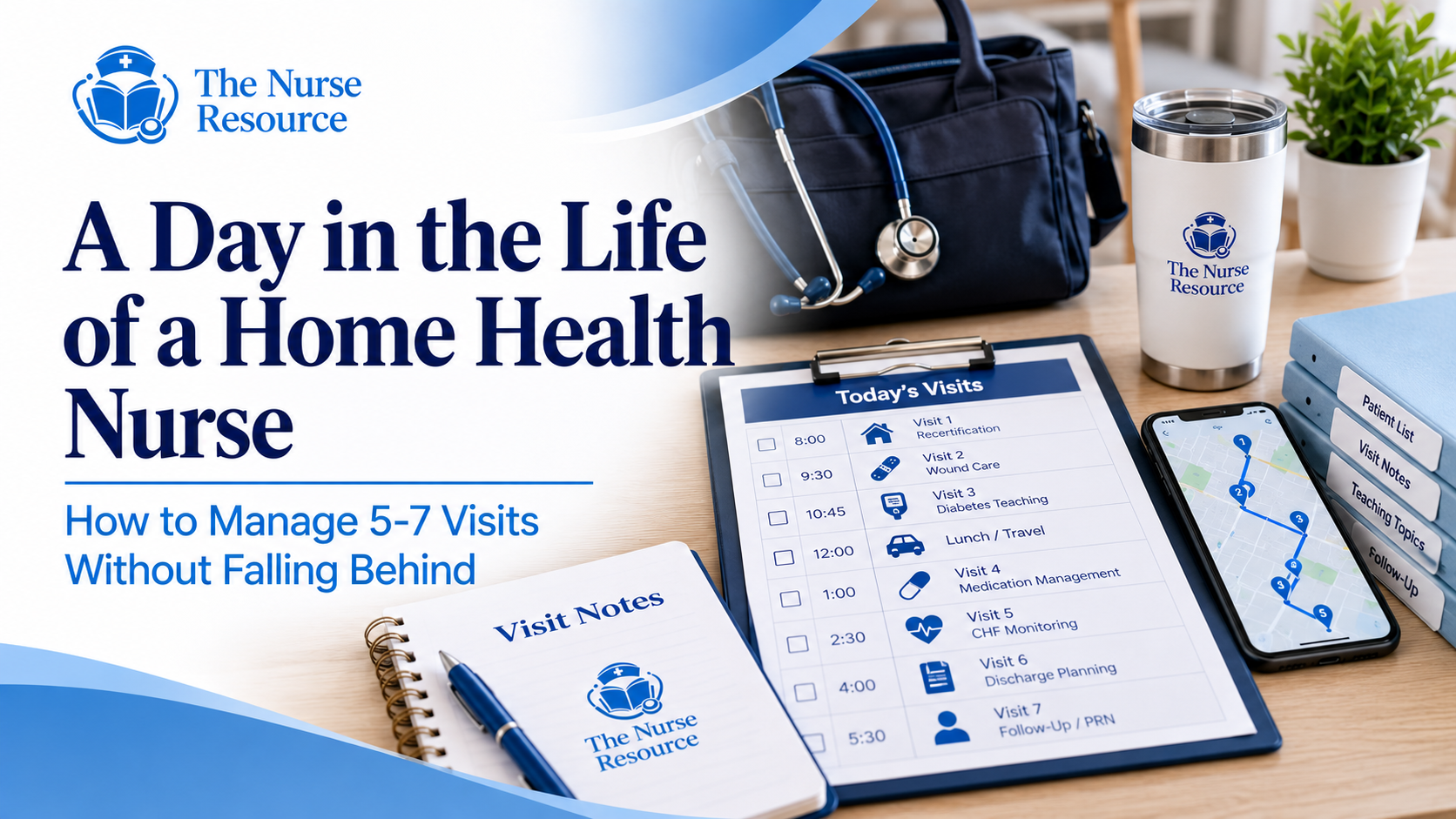
A Day in the Life of a Home Health Nurse: How to Manage 5–7 Visits Without Falling Behind
Working as a home health nurse offers flexibility and autonomy—but managing 5 to 7 patient visits a day can quickly become overwhelming without a solid system. The most successful home health nurses aren’t rushing; they’re organized, intentional, and consistent in how they plan, assess, teach, and document. In this post, we’ll walk through a realistic…
-

Inhaler Teaching Variations (A–J): 10 Home Health Teachings With Teach-Back + EMR Copy/Paste
Inhaler technique errors are extremely common in home health, and even small mistakes can lead to poor symptom control, more rescue inhaler use, and avoidable urgent care or ER visits. Skilled nursing teaching is required to correct technique, reinforce medication routines, and document teach-back clearly. This guide provides 10 inhaler teaching variations you can rotate…
-

The Ultimate Home Health Nurse’s Guide to Respiratory Teaching: 10 Skilled Nursing Documentation Templates
Respiratory symptoms are one of the most common reasons home health patients call after hours or end up in the ER. In the home setting, patients manage chronic lung conditions, oxygen equipment, and inhaler routines with limited supervision. Respiratory teaching is a skilled nursing intervention that supports symptom recognition, safe medication use, improved technique, and…
-
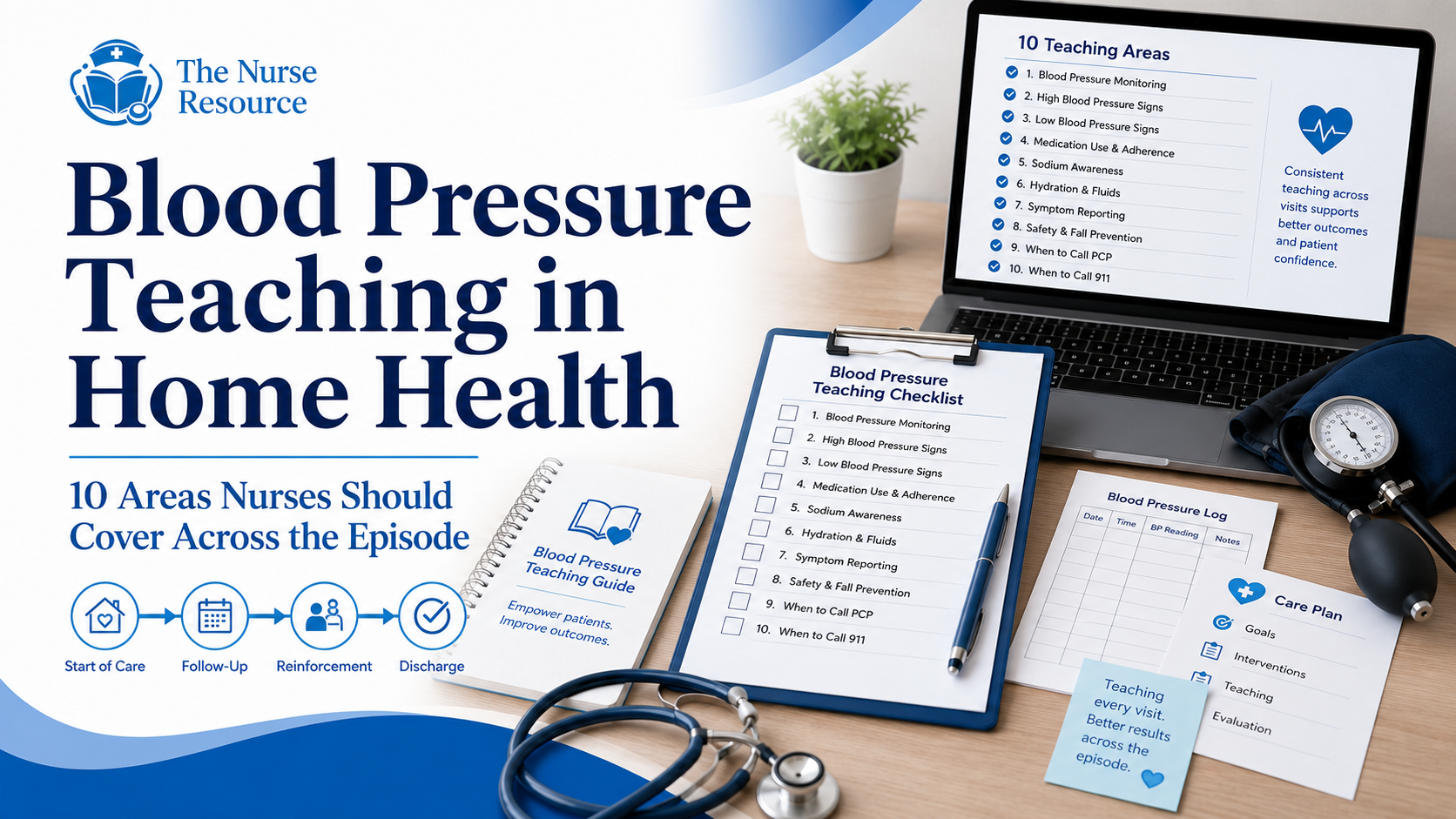
Blood Pressure Teaching in Home Health: 10 Areas Nurses Should Cover Across the Episode
Review 10 Blood Pressure teaching areas home health nurses should consider across the episode, including monitoring technique, medication safety, fall prevention, abnormal readings, and emergency signs.
-
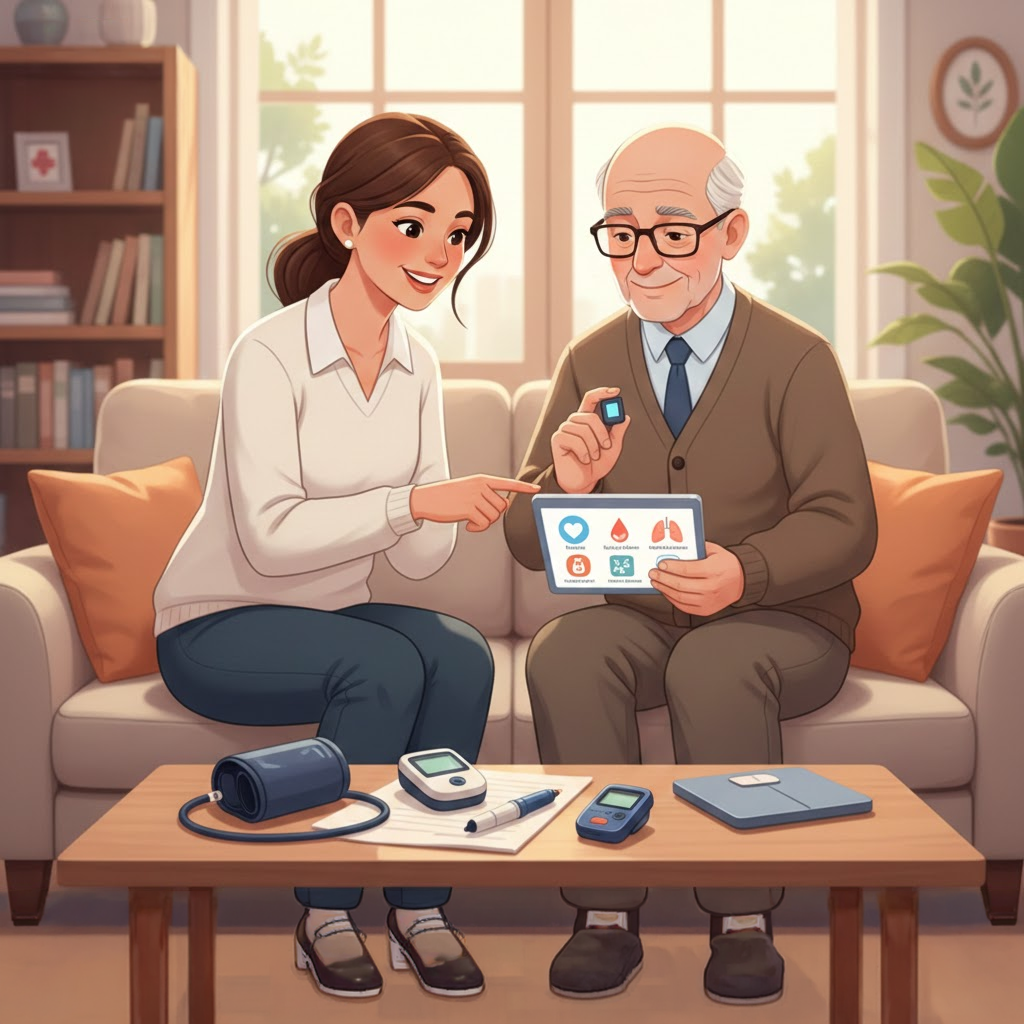
The Ultimate Home Health Nurse’s Guide to Monitoring at Home: 10 Skilled Nursing Documentation Templates
Home monitoring is one of the most valuable skilled nursing interventions in home health. Patients often manage multiple chronic conditions at home with limited support, and early symptom recognition can prevent avoidable complications and rehospitalization. Monitoring education requires skilled nursing judgment to verify correct technique, interpret patient-reported data, identify risk patterns, reinforce escalation steps, and…