
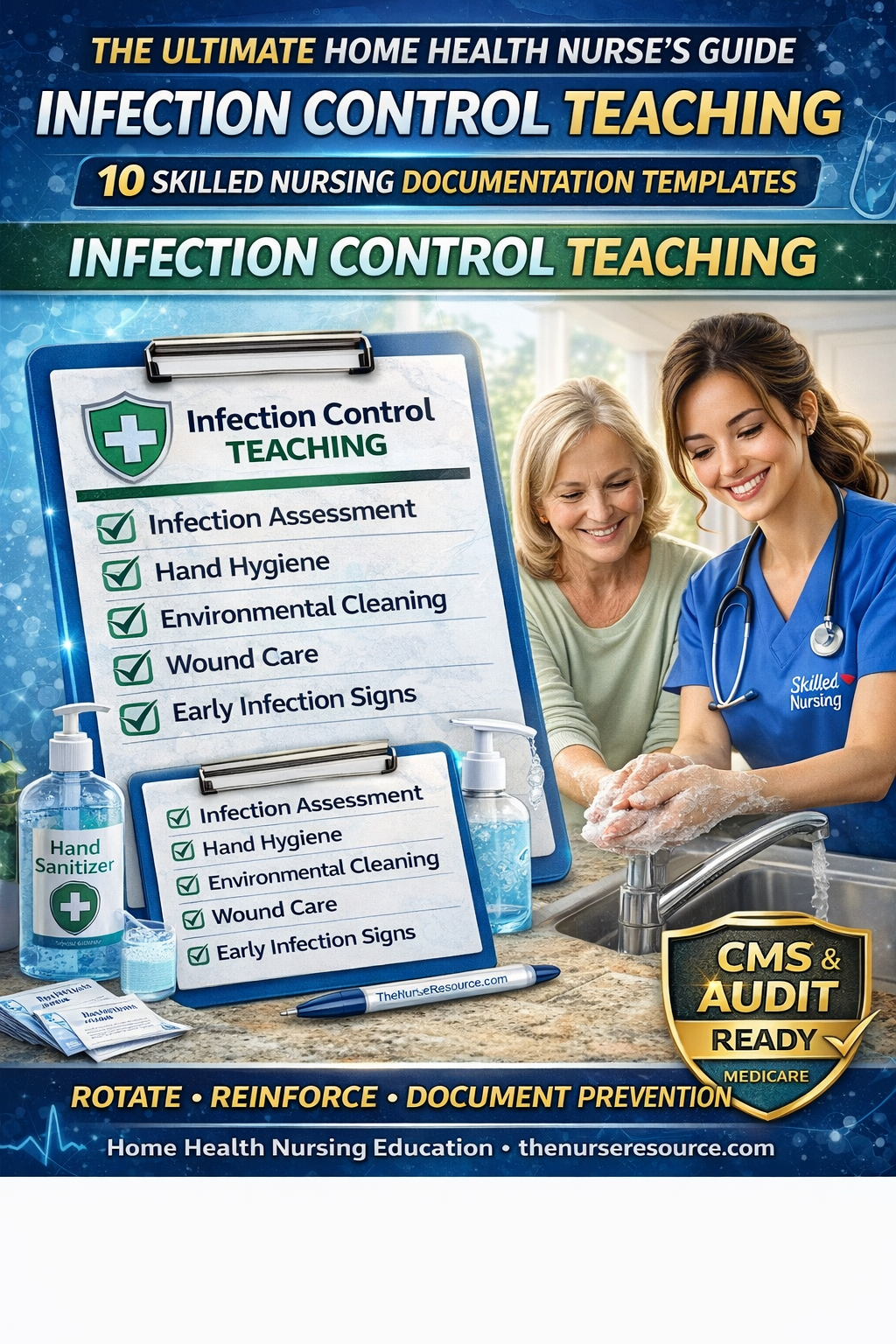
Infection control is a foundational priority in home health nursing. Preventing infection helps protect patient safety, reduces avoidable complications, and supports recovery and independence. Home health nurses must provide clear patient/caregiver education and document skilled teaching in daily visit notes. This guide includes 10 infection control teaching variations with copy/paste EMR documentation examples and teach-back questions to support Medicare/OASIS-aligned documentation and improve infection prevention practices.
Why Infection Control Teaching Requires Skilled Nursing Judgment
Infection control teaching in home health requires skilled nursing judgment because infection risk varies based on the patient’s clinical condition, functional status, environment, and caregiver support. The nurse must assess individual risk factors, observe hygiene and care practices, and tailor education to what the patient can safely perform at home. Skilled judgment is needed to identify early signs of infection and determine when monitoring, reinforcement, or escalation is required. In home health, infection control teaching is considered skilled when it is individualized, assessment-based, and demonstrates clinical decision-making rather than general instruction.
Disclaimer: Content contributed by a licensed Registered Nurse (RN) and provided for general educational purposes only. It is not medical advice and should not replace individualized guidance from a qualified healthcare provider.
Infection Control Teaching table of content
- Hand Hygiene + Everyday Prevention
- Respiratory Etiquette + Sick Contacts
- Wound/Dressing Infection Prevention
- UTI Prevention + Hydration/Hygiene
- COVID/Flu Screening + When to Test/Isolate
- Food Safety (GI Infection Prevention)
- Equipment & Personal Item Hygiene
- Catheter/Line/Drain Site Monitoring (if applicable)
- Safe Handling and Disposal of Soiled Supplies (Gloves, Dressings, Sharps)
- Laundry, Linen, and Bathroom Hygiene (Reducing Germ Spread)
**Clinical Red Flags & Emergency Protocols**
other important teaching
How to Use These Templates
- Choose the section that matches today’s teachings (hand hygiene, wound, UTI, Catheter line etc.).
- Deliver the Teaching Script in plain language.
- Use Teach-Back (patient repeats or demonstrates).
- Paste the EMR Documentation Template and customize: vitals, wound dressing, food handling, and patient response.
- Document follow-up: what you’ll reassess next visit.

1. Hand Hygiene + Everyday Prevention
Use this when: routine visit, general prevention, caregiver involved.
Teaching Script:
SN instructed patient and caregiver on infection prevention with emphasis on hand hygiene. Education included washing hands with soap and water for at least 20 seconds before eating, after using the restroom, after coughing/sneezing, after touching pets, and before/after any wound care or medication administration. Reviewed use of alcohol-based hand rub when hands are not visibly soiled. Reinforced avoiding touching face with unwashed hands and cleaning commonly touched surfaces (doorknobs, phones, remotes) routinely.
Teach-Back Prompts:
- “Tell me two times during the day you must wash your hands.”
- “Show me how you would clean your hands before wound care.”
- “Which surfaces in your home should be cleaned often?”
Red Flags:
Notify provider for fever, chills, new cough, worsening weakness, or signs of local infection. Seek urgent care for rapid worsening symptoms or severe shortness of breath.
EMR Documentation Sample:
SN provided skilled teaching on infection control with emphasis on hand hygiene and routine prevention. Patient/caregiver instructed on handwashing technique, use of sanitizer, avoiding face-touching, and cleaning high-touch surfaces. Teach-back used; patient/caregiver verbalized key times for hand hygiene and identified surfaces to disinfect. SN will reinforce infection prevention practices on follow-up visits.
2. Respiratory Etiquette + Sick Contacts
Use this when: cough/cold season, household sick contact, respiratory risk.
Teaching Script:
SN instructed patient and caregiver on respiratory infection prevention. Education included covering cough/sneeze with tissue or elbow, disposing tissues properly, washing hands after coughing/sneezing, and wearing a mask if symptomatic or exposed to illness as appropriate. Reviewed avoiding close contact with sick individuals, not sharing cups/utensils, and ventilating rooms when possible. Reinforced monitoring for respiratory symptom changes and contacting PCP with worsening symptoms.
Teach-Back Prompts:
- “What will you do if someone in the home becomes sick?”
- “How will you cover your cough and what do you do afterward?”
- “When should you notify the provider about breathing symptoms?”
Red Flags:
Call provider for fever, worsening cough, increased mucus, or new shortness of breath. Call 911 for severe respiratory distress, blue lips, or inability to speak in full sentences.
EMR Documentation Sample:
SN provided skilled respiratory infection prevention teaching including cough etiquette, avoiding exposure, not sharing personal items, and surface cleaning. Patient/caregiver instructed on symptom monitoring and when to notify PCP vs call 911. Teach-back used; patient/caregiver verbalized prevention steps and emergency warning signs. SN will reinforce teaching and monitor symptoms on next visit.
3. Wound/Dressing Infection Prevention
Use this when: any wound, dressing changes, skin breakdown risk.
Teaching Script:
SN instructed patient and caregiver on infection prevention related to wound care. Education included hand hygiene before and after dressing changes, keeping supplies clean and dry, using clean technique as instructed, and not reusing soiled gauze. Reinforced keeping dressing intact, avoiding touching wound bed, and reporting signs of infection including increased redness, warmth, swelling, pain, increased drainage, foul odor, fever, or chills.
Teach-Back Prompts:
- “Tell me the first step before touching any wound supplies.”
- “What changes in the wound would you report right away?”
- “Show me where you will store your wound supplies.”
Red Flags:
Notify provider for fever, increased redness/warmth, pus-like drainage, foul odor, or worsening pain. Seek urgent evaluation for rapid spreading redness or systemic symptoms.
EMR Documentation Sample:
SN provided skilled infection control teaching for wound care. Patient/caregiver instructed on hand hygiene, clean supply storage, dressing integrity, and monitoring for wound infection signs. Teach-back used; patient/caregiver identified infection symptoms to report and demonstrated understanding of supply handling. SN will continue to monitor wound status and reinforce infection prevention measures.
4. UTI Prevention + Hydration/Hygiene
Use this when: UTI history, incontinence, catheter risk, older adults.
Teaching Script:
SN instructed patient on UTI prevention. Education included adequate hydration as allowed by provider, not holding urine for long periods, and regular toileting schedule. Reviewed perineal hygiene (front to back wiping), changing incontinence products promptly, and avoiding irritants (harsh soaps, douching). Reinforced reporting burning urination, foul odor, cloudy urine, fever, pelvic pain, or new confusion.
Teach-Back Prompts:
- “Tell me two ways you can reduce UTI risk.”
- “What symptoms would make you call the provider?”
- “How often should you change incontinence pads if soiled?”
Red Flags:
Notify provider for UTI symptoms or fever. Seek urgent care for high fever, flank pain, vomiting, or sudden confusion.
EMR Documentation Sample:
SN provided skilled teaching on UTI prevention including hydration as allowed, toileting schedule, and hygiene practices. Reviewed signs/symptoms requiring provider notification. Teach-back used; patient verbalized prevention strategies and identified symptoms to report. SN will reinforce teaching and monitor for infection signs.
5. COVID/Flu Screening + When to Test/Isolate
Use this when: exposure risk, community outbreaks, immunocompromised, caregiver concerns.
Teaching Script:
SN instructed patient and caregiver on infection control measures including COVID-19/flu symptom screening. Reviewed monitoring for fever, cough, sore throat, congestion, body aches, fatigue, loss of taste/smell, and shortness of breath. Education included staying home when sick, masking if symptomatic, hand hygiene, and notifying PCP about symptoms or exposures. Reinforced following provider guidance for testing and isolation. Encouraged vaccination discussions with PCP as appropriate.
Teach-Back Prompts:
- “What symptoms would make you notify the provider right away?”
- “What will you do if you have an exposure to someone sick?”
- “When would you seek emergency care?”
Red Flags:
Call 911 for severe shortness of breath, chest pain, confusion, or bluish lips/face. Notify provider for persistent fever or worsening symptoms.
EMR Documentation Sample:
SN provided skilled infection control education including COVID-19/flu screening, symptom monitoring, exposure precautions, masking, and hand hygiene. Reviewed when to notify PCP vs seek emergency care. Teach-back used; patient/caregiver verbalized screening symptoms and appropriate actions. SN will reinforce prevention measures and monitor for changes in condition.
6. Food Safety (GI Infection Prevention)
Use this when: GI issues, immunocompromised, poor food handling habits.
Teaching Script:
SN instructed patient on food safety to reduce risk of gastrointestinal infection. Education included washing hands before food prep, washing fruits/vegetables, cooking meats thoroughly, avoiding cross-contamination (separate cutting boards for raw meat), refrigerating leftovers promptly, and discarding expired foods. Reinforced drinking safe water and avoiding undercooked eggs/seafood if high risk.
Teach-Back Prompts:
- “Tell me how you will prevent raw meat from contaminating other foods.”
- “How long should leftovers sit out before they are refrigerated?”
- “Name one food safety habit you will start today.”
Red Flags:
Notify provider for persistent vomiting/diarrhea, fever, or inability to keep fluids down. Seek urgent care for signs of dehydration, severe weakness, or blood in stool.
EMR Documentation Sample:
SN provided skilled teaching on infection prevention related to food safety. Patient instructed on hand hygiene during food prep, proper cooking, avoiding cross-contamination, and safe storage of leftovers. Teach-back used; patient verbalized key food safety steps and dehydration warning signs. SN will reinforce education on follow-up visits.
7. Equipment & Personal Item Hygiene
Use this when: shared equipment, glucose meters, BP cuffs, walkers, commodes.
Teaching Script:
SN instructed patient and caregiver on preventing infection through cleaning of frequently used equipment and personal items. Education included routine cleaning of BP cuff surfaces, glucose meter, walker handles, commode seat, and phone/remote controls with appropriate disinfectant. Reinforced not sharing personal items (towels, razors, cups), laundering linens routinely, and storing clean supplies away from contaminated areas.
Teach-Back Prompts:
- “Which equipment in your home should be cleaned regularly?”
- “Show me where you will store clean supplies.”
- “What personal items should not be shared?”
Red Flags:
Notify provider for fever, worsening wound redness/drainage, or respiratory symptoms. Seek urgent care for rapid clinical decline.
EMR Documentation Sample:
SN provided skilled infection control teaching focused on cleaning household equipment and high-touch items. Patient/caregiver instructed on disinfecting frequently used devices and avoiding sharing personal items. Teach-back used; patient/caregiver identified equipment to clean and described safe supply storage. SN will reinforce infection prevention and monitor for signs of infection.
8. Catheter/Line/Drain Site Monitoring (if applicable)
Use this when: urinary catheter, PICC/IV access, drains, ostomy, any device site.
Teaching Script:
SN instructed patient and caregiver on infection prevention and monitoring of any catheter/line/drain site as applicable. Education included keeping site clean and dry, avoiding pulling/tension on tubing, securing devices properly, and performing hand hygiene before and after handling equipment. Reviewed signs of infection including redness, warmth, swelling, pain at site, cloudy drainage, foul odor, fever, chills, or leakage. Patient instructed to report issues promptly.
Teach-Back Prompts:
Teaching Script:
SN instructed patient and caregiver on infection prevention through proper laundry and bathroom hygiene. Education included laundering towels, washcloths, and bed linens routinely and whenever soiled, using warm/hot water as appropriate for fabric, and drying items completely. Patient instructed not to share towels or personal hygiene items and to clean bathroom surfaces regularly, especially toilet handles, sink faucets, shower/tub surfaces, and high-touch areas. Reinforced prompt cleaning of any urine or stool accidents using gloves if available, and performing hand hygiene immediately after. Patient advised to keep skin clean and dry, change incontinence products promptly, and report any skin irritation or breakdown.
- “Tell me what signs at the site would you report immediately.”
- “Show me how you will secure the tubing to prevent pulling.”
- “When should you call the provider vs 911?”
Red Flags:
Report fever, chills, new drainage, redness or swelling at site, or device malfunction. Seek emergency care for severe symptoms, altered mental status, or rapid worsening.
EMR Documentation Sample:
SN provided skilled infection control teaching for device site care as applicable. Patient/caregiver instructed on hand hygiene, maintaining clean/dry site, securing tubing, and monitoring for infection signs. Teach-back used; patient/caregiver verbalized warning signs and appropriate reporting plan. SN will reinforce teaching and monitor site condition on follow-up visits.
9. Safe Handling and Disposal of Soiled Supplies (Gloves, Dressings, Sharps)
Use this when: wound care, injections (insulin), fingersticks, contaminated dressings, caregiver assisting.
Teaching Script:
SN instructed patient and caregiver on infection control related to safe handling and disposal of soiled supplies. Education included wearing gloves as appropriate, performing hand hygiene before and after glove use, and avoiding touching clean surfaces with contaminated gloves. Patient instructed to discard soiled dressings, gloves, and disposable supplies in a lined trash bag, tie securely, and remove from living area promptly. If sharps are used (needles/lancets), patient instructed to place sharps immediately into an approved sharps container and never recap, bend, or throw sharps into household trash. Reinforced keeping supplies out of reach of children and pets and cleaning any contaminated surfaces with appropriate disinfectant.
Teach-Back Prompts:
- “Show me where you will throw away soiled dressings and gloves.”
- “What will you do with needles or lancets after use?”
- “When do you wash your hands during a dressing change?”
Red Flags:
Notify provider for signs of infection (fever, redness, swelling, increased drainage, foul odor) or accidental needle stick exposure. Seek urgent care for rapidly worsening infection symptoms or systemic illness.
EMR Documentation Sample:
SN provided skilled infection control teaching on safe handling and disposal of soiled supplies and sharps. Patient/caregiver instructed on hand hygiene, glove use, separating clean vs contaminated items, proper disposal of soiled dressings, and immediate sharps disposal in approved container. Teach-back used; patient/caregiver verbalized disposal steps and identified storage location for supplies and sharps container. SN will reinforce infection control practices and monitor for infection signs on follow-up visits.
10. Laundry, Linen, and Bathroom Hygiene (Reducing Germ Spread)
Use this when: caregiver support, incontinence, recurrent infections, household crowding, high-risk patients.
Teach-Back Prompts:
- “How often will you change and wash towels and bed linens?”
- “Which bathroom surfaces should be cleaned most often?”
- “What will you do after cleaning a soiled area?”
Red Flags:
Notify provider for fever, worsening skin breakdown, signs of infection, or new urinary symptoms. Seek urgent evaluation for rapid decline, high fever, or severe weakness/new confusion.
EMR Documentation Sample:
SN provided skilled infection control teaching focused on laundry and bathroom hygiene to reduce germ spread. Patient/caregiver instructed on routine laundering of linens, not sharing towels/personal items, cleaning high-touch bathroom surfaces, prompt cleaning of soiled areas, and hand hygiene after cleaning. Teach-back used; patient/caregiver verbalized cleaning plan and identified key surfaces and laundry frequency. SN will reinforce hygiene measures and monitor for skin issues or infection signs.
Disclaimer: Content contributed by a licensed Registered Nurse (RN) and provided for general educational purposes only. It is not medical advice and should not replace individualized guidance from a qualified healthcare provider.
Leave a Reply