
Introduction
Infection control teaching is an important part of home health skilled nursing care, especially when patients have wounds, recent Hospitalization, respiratory symptoms, urinary symptoms, catheter or drain use, weakness, incontinence, chronic disease, limited PCG support, or increased risk for infection.
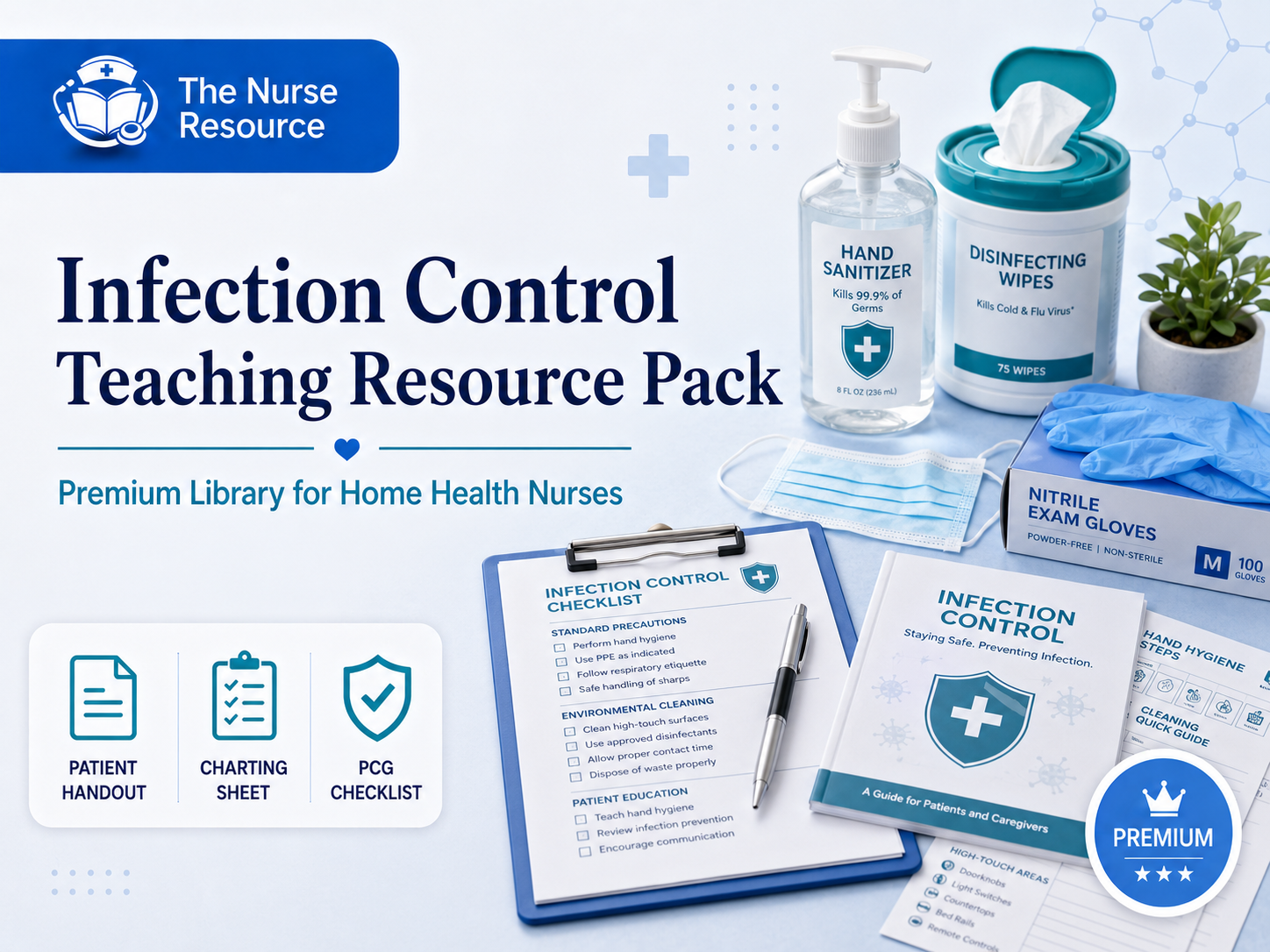
This Premium Library resource pack is designed to help home health nurses provide stronger infection control teaching and support skilled nursing documentation related to patient education, PCG involvement, infection prevention, symptom monitoring, and ongoing skilled need.
This pack focuses on infection control teaching that is clear, patient-specific, and clinically meaningful. It is not meant to teach nurses to copy the same phrase for every patient. Instead, it gives nurses a structure for showing why infection control teaching was needed, what skilled teaching was provided, how the patient or PCG responded, and why continued skilled care may still be needed.
Get the Infection Control Teaching Resource Pack
Need practical Infection Control teaching and documentation support for home health nursing visits?
Infection Control Teaching Resource Pack gives Premium Library members practical infection prevention and control teaching support, including hand hygiene, standard precautions, PPE use when applicable, respiratory hygiene, environmental and equipment cleanliness, infection warning signs, wound, catheter, or drain precautions when relevant, patient and PCG education, PCP/provider notification guidance, copy-friendly SN documentation examples, response phrase banks, quick charting support, and printable member tools.
Premium Library members can access full online resource inside Premium Library.
This Premium Resource May Help With
- Infection control teaching
- Hand hygiene education
- Standard precautions teaching
- Respiratory hygiene teaching
- Wound infection prevention
- UTI prevention teaching
- Catheter, line, or drain site monitoring
- Equipment cleaning and supply safety
- PCG infection prevention teaching
- Red flags and PCP notification
- Ongoing skilled need documentation
What’s Included in This Pack
Premium Library members can access:
- Infection control teaching framework
- Hand hygiene and standard precautions teaching guide
- Patient-friendly infection control teaching points
- PCG infection prevention checklist
- Infection control red flags and when to report changes
- Home equipment cleaning and supply safety reminders
- Wound infection prevention teaching examples
- UTI prevention teaching examples
- Respiratory hygiene teaching examples
- Skilled nursing documentation examples
- Weak documentation examples and stronger rewrites
- Patient and PCG response phrase bank
- Ongoing skilled need phrases
- Quick charting cheat sheet
- Downloadable infection control teaching tools
Why This Resource Matters
Infection control teaching should show more than “SN instructed patient on infection prevention” or “patient verbalized understanding.”
Strong documentation should help support:
- why infection control teaching was needed
- what infection risk or clinical concern was addressed
- what teaching, assessment, monitoring, or intervention was provided
- how the patient or PCG responded
- whether reinforcement remains needed
- whether PCP was notified of abnormal findings
- why continued SN visits remain reasonable and necessary
Home health patients may have increased infection risk due to wounds, recent Hospitalization, chronic disease, weakness, poor hygiene, catheter use, impaired mobility, incontinence, respiratory symptoms, medication changes, immune compromise, poor home sanitation, or limited PCG support.
For this reason, infection control documentation should not read like a generic checklist. It should connect the patient’s condition, infection risk, skilled teaching, patient or PCG response, and ongoing skilled need.
Related Premium Library Resources
You may also find these resources helpful:
- Infection Control Teaching for Home Health Nurses: Hand Hygiene, Standard Precautions, and Skilled Documentation Examples
- Wound and Skin Teaching Pack for Home Health Nurses
- Emergency Signs and Escalation Pack for Home Health Nurses
- Home Health SN Narrative Builder Pack
- How to Build a Home Health Skilled Nursing Teaching Plan Across the Episode
Premium Library members can access the full resource content, documentation support, and downloadable tools inside each pack.
Premium Library Access
Full Infection Control Teaching Resource Pack is available with Premium Library membership.
Membership Access: This resource is included with Premium Library membership and Agency Inservice Library membership.
Agency Inservice Library membership includes access to Premium Library resources. Premium Library resources remain subject to Premium Library individual-subscriber use terms and are not automatically licensed for agency-wide redistribution, shared staff distribution, or agency-wide staff inservice use. Agency Inservice Library materials are separate resources designed for agency staff education.
Premium members can access the full infection control teaching framework, hand hygiene and standard precautions guidance, PPE teaching when applicable, respiratory hygiene and infection-prevention support, environmental and equipment cleanliness guidance, infection warning-sign monitoring, wound, catheter, or drain precautions when relevant, patient and PCG education, PCP/provider notification guidance, documentation examples, phrase banks, quick charting support, and companion downloadable resources available within this pack.
Important Use Note
This resource is for educational and clinical documentation support only. Teaching and documentation should always be individualized to patient condition, infection risk, current findings, provider orders, plan of care, patient and PCG response, agency policy, payer requirements, applicable regulations, and skilled nursing judgment.
This resource does not replace provider orders, diagnosis-specific precautions, Hospital discharge instructions, agency infection-control policies and procedures, isolation or transmission-based precaution requirements, wound or device-specific orders, emergency protocols, payer requirements, or patient-specific clinical judgment.
This resource does not provide universal PPE requirements, isolation instructions, infection parameters, fever parameters, wound-care instructions, catheter or drain-care instructions, or antibiotic treatment recommendations. Follow patient-specific provider orders, applicable precautions, plan of care, agency policy, and current infection-control requirements.
Documentation should reflect infection-control assessment, teaching, patient or PCG response, communication, and interventions that actually occurred.
This resource does not guarantee payment, claim approval, survey compliance, regulatory compliance, infection prevention, or patient outcome.
Important Use Note
This resource is for educational and clinical documentation support only. Documentation should always be individualized to patient condition, provider orders, plan of care, medication profile, agency policy, payer requirements, applicable regulations, and skilled nursing judgment.
This resource does not replace provider orders, agency documentation requirements, Medicare guidance, accreditation standards, payer requirements, emergency protocols, infection control policy, or patient-specific clinical judgment.
This resource does not guarantee payment, claim approval, survey compliance, or regulatory compliance.