
Overview
Hydralazine is a vasodilator and antihypertensive medication. It may be ordered for Blood Pressure management or as part of a provider-ordered cardiac plan depending on patient diagnosis, medication profile, discharge instructions, pharmacy label, and plan of care. Apresoline is a common brand name associated with hydralazine.
For home health nurses, Hydralazine indication and home health teaching often focuses on medication compliance, Blood Pressure management support when ordered, dizziness and orthostatic safety, fall prevention, headache awareness, pulse/Blood Pressure monitoring reminders if ordered, medication list review, reporting palpitations or chest pain, reporting worsening shortness of breath or swelling, avoiding independent medication changes, and knowing when to notify PCP or call 911.
DailyMed describes hydralazine hydrochloride as an antihypertensive and states that its major effects are cardiovascular, lowering Blood Pressure through a peripheral vasodilating effect and direct relaxation of vascular smooth muscle. DailyMed lists its indication as essential Hypertension, alone or as an adjunct. MedlinePlus states that hydralazine is used to treat high Blood Pressure, is in a class called vasodilators, and works by relaxing blood vessels so blood can flow more easily.
Hydralazine may help manage Blood Pressure as ordered, but it does not cure Hypertension or replace provider evaluation for worsening symptoms. Patient-specific use, precautions, monitoring, and administration instructions must always follow provider order, medication profile, pharmacy label, discharge instructions, plan of care, agency policy, and skilled nursing judgment.
Medication Quick Information
| Item | Information |
|---|---|
| Generic name | Hydralazine |
| Common brand name(s) | Apresoline |
| Drug classification | Vasodilator / antihypertensive medication |
| Common home health teaching focus | Medication compliance, Blood Pressure management support when ordered, dizziness and orthostatic safety, fall prevention, headache awareness, pulse/Blood Pressure monitoring reminders if ordered, medication list review, palpitations reporting, chest pain reporting, worsening shortness of breath or swelling reporting, and when to notify PCP or call 911 |
Common Indications for Hydralazine
Common indications may include:
- Hypertension
- High Blood Pressure
- Blood Pressure control
- Provider-ordered antihypertensive therapy
- Provider-ordered vasodilator therapy
- Adjunct Blood Pressure management
- Heart failure support when specifically ordered with other medications
- Afterload reduction support when specifically ordered
DailyMed lists hydralazine hydrochloride tablets for essential Hypertension, alone or as an adjunct. MedlinePlus notes that hydralazine is also used after heart valve replacement and in treatment of heart failure, and advises patients to talk with doctor about risks when used for those conditions.
Drug classification is not the same as patient-specific indication. For example, Hydralazine may be classified as a vasodilator or antihypertensive medication, but patient-specific indication may be Hypertension, Blood Pressure control, adjunct Blood Pressure therapy, provider-ordered vasodilator therapy, or heart failure support when specifically ordered.
Short EMR Indication Options
Verify patient-specific reason before use. Examples below are possible short indication options. Select only the indication that matches patient diagnosis, provider order, medication profile, discharge instructions, pharmacy label, or clarified PCP/provider instruction.
| Patient diagnosis / reason | Short EMR indication option |
|---|---|
| Hypertension | Hypertension / BP control |
| High Blood Pressure | Blood Pressure management |
| Elevated Blood Pressure readings | Elevated BP management |
| Provider-ordered antihypertensive therapy | Antihypertensive therapy |
| Provider-ordered vasodilator therapy | Vasodilator therapy |
| Adjunct Blood Pressure management | Adjunct BP management |
| Cardiac medication support | Cardiac medication support |
| Heart failure support, when ordered | CHF / heart failure support |
| Afterload reduction, when ordered | Afterload reduction support |
| Ordered Blood Pressure monitoring | BP monitoring support |
Home Health Teaching Focus
For home health nursing, Hydralazine teaching often focuses on medication compliance, Blood Pressure monitoring if ordered, pulse monitoring if ordered, dizziness precautions, orthostatic safety, fall prevention, headache awareness, palpitations reporting, chest pain reporting, shortness of breath reporting, swelling reporting, medication list review, and when to notify PCP.
Patients may need reinforcement if they have a new Hydralazine order, recent Hospital stay, Hypertension, abnormal Blood Pressure readings, dizziness, weakness, fall risk, headache, palpitations, chest discomfort, heart failure history, swelling, shortness of breath, medication confusion, missed doses, refill problems, or PCG involvement.
Patient Teaching Points for Hydralazine
Basic teaching may include:
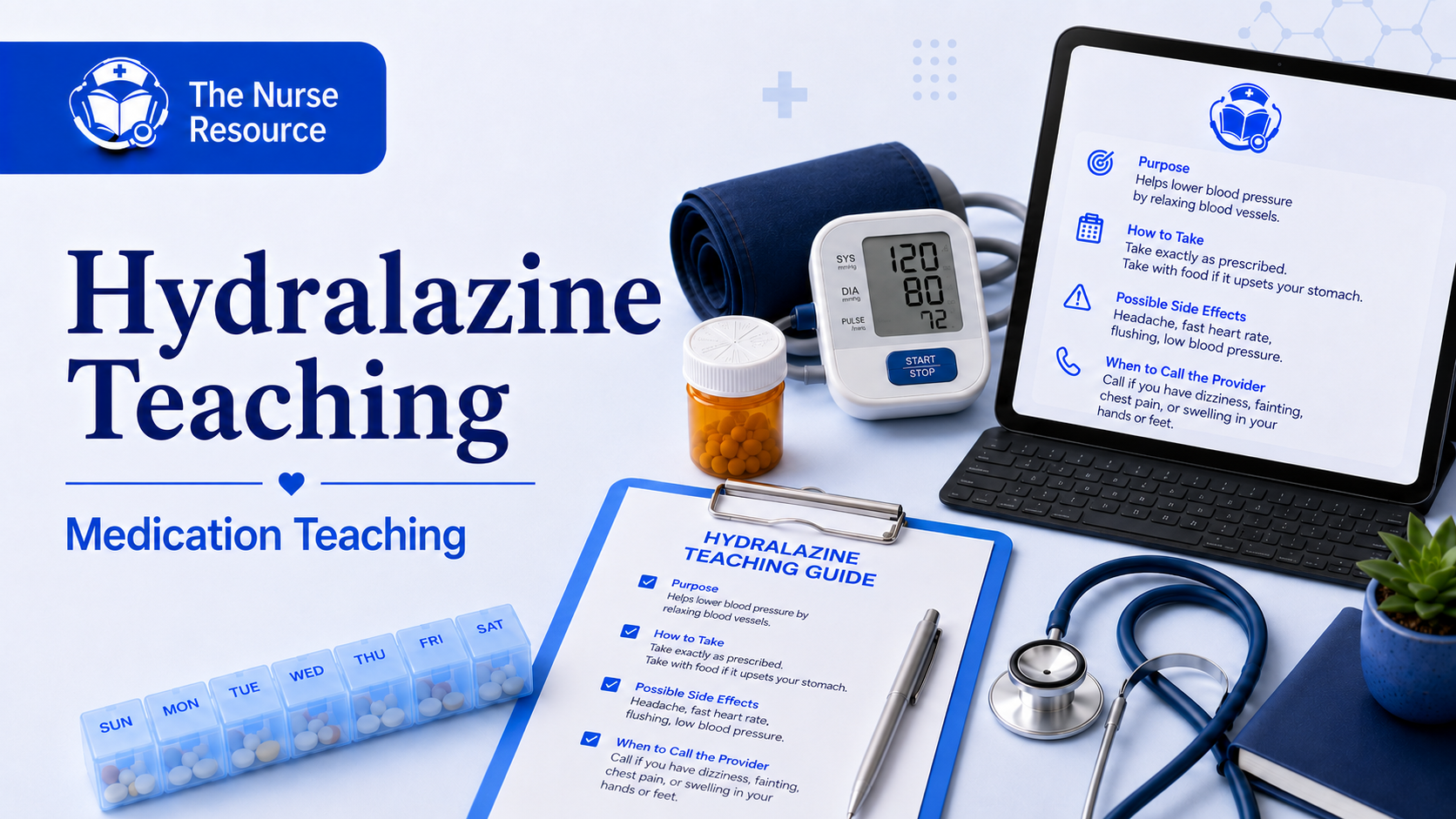
- Take Hydralazine exactly as ordered by PCP/provider and pharmacy label.
- Do not stop, hold, skip, take extra, or change medication unless instructed by PCP/provider.
- Monitor Blood Pressure or pulse only if ordered or instructed.
- Report dizziness, lightheadedness, fainting, weakness, severe headache, palpitations, fast heartbeat, swelling, worsening shortness of breath, or symptoms that continue or worsen.
- Use fall precautions and rise slowly if dizzy, weak, or unsteady.
- Report chest pain, worsening shortness of breath, swelling, numbness/tingling, fever, joint or muscle pain, or symptoms that feel concerning.
- Do not adjust medication based on Blood Pressure readings unless PCP/provider gives specific instructions.
- Ask PCP or pharmacist before starting new over-the-counter medications, supplements, or interacting medications.
- Keep updated medication list available for PCP, pharmacy, home health agency, and Hospital visits.
Possible Side Effects or Concerns to Report
Possible side effects or concerns may include:
- headache
- dizziness
- lightheadedness
- weakness
- flushing
- upset stomach
- nausea or vomiting
- diarrhea or constipation
- palpitations or fast heartbeat
- chest pain
- shortness of breath
- swelling or edema
- numbness or tingling in hands or feet
- fever
- joint or muscle pain
- rash or allergic-type symptoms
- symptoms that continue or worsen
DailyMed lists common adverse reactions such as headache, nausea, vomiting, diarrhea, palpitations, tachycardia, and angina pectoris. It also lists less frequent concerns including hypotension, edema, dyspnea, dizziness, numbness/tingling, tremors, muscle cramps, rash, fever, chills, and joint pain. MedlinePlus lists serious symptoms that should prompt immediate doctor contact, including fainting, joint or muscle pain, fever, rapid heartbeat, chest pain, swollen ankles or feet, and numbness or tingling in hands or feet.
When to Notify PCP
Call PCP or follow agency/provider instructions if patient has:
- repeated abnormal Blood Pressure readings, if monitoring is ordered
- repeated abnormal pulse readings, if monitoring is ordered
- dizziness, lightheadedness, fainting, or near fainting
- severe headache or headache that continues
- palpitations, fast heartbeat, or heartbeat symptoms
- worsening weakness or inability to tolerate usual activity
- non-emergency chest discomfort or provider-specific concerns, unless symptoms are severe, worsening, or life-threatening
- worsening shortness of breath
- swelling in feet, ankles, legs, hands, or abdomen
- numbness or tingling in hands or feet
- fever, joint pain, muscle pain, rash, or symptoms that continue
- medication confusion
- missed doses
- refill problems
- new medication, over-the-counter medication, or supplement concern
MedlinePlus advises patients to tell doctor and pharmacist about prescription medications, nonprescription medications, vitamins, supplements, and herbal products they are taking or plan to take while taking hydralazine. It also advises patients to keep appointments with doctor and laboratory and notes that doctor may ask patient to check Blood Pressure.
When to Call 911
Call 911 or get emergency help right away for:
- chest pain or chest pressure
- severe shortness of breath
- fainting or unresponsiveness
- severe weakness with trouble responding
- sudden confusion or sudden mental status change
- stroke-like symptoms
- severe dizziness with inability to stay safe
- severe allergic reaction symptoms
- severe swelling of face, lips, tongue, or throat
- trouble breathing or swallowing
- symptoms that feel severe or life-threatening
Related Home Health Teaching Resources
You may also find these resources helpful:
- Blood Pressure Teaching Resource Pack
- Medication Safety Resource Pack
- Emergency Signs and Escalation Pack
- Home Health SN Narrative Builder Pack
- How to Build a Home Health Skilled Nursing Teaching Plan Across the Episode
- Carvedilol Indication and Home Health Teaching
- CHF Teaching in Home Health
Premium Library members can access the full resource content, documentation support, and downloadable tools inside each pack.
Important Use Note
This post is for education and home health teaching support only. It does not provide dosing advice, Blood Pressure hold parameters, pulse hold parameters, medication adjustment instructions, diet changes, fluid changes, salt changes, or patient-specific medication profile instructions. It does not replace provider orders, pharmacy guidance, discharge instructions, medication profile, agency policy, payer requirements, or skilled nursing judgment.
Always verify patient-specific Hydralazine use and indication with provider order, medication profile, discharge instructions, pharmacy label, plan of care, agency policy, and clinical judgment. Drug classification is not the same as patient-specific indication.
Public Premium Teaser
Need copy-friendly Hydralazine teaching and documentation support for home health notes?
The Premium Library section includes a home health teaching script, detailed patient/PCG teaching points, SN charting phrases, patient/PCG response phrases, ongoing skilled need wording, weak vs stronger documentation examples, and a quick charting template for Hydralazine teaching.
Restricted Premium Library Section
Premium teaching and documentation support below is available for Premium Library and Agency Inservice Library members.
Premium Library Teaching and Documentation Support
Sources Used for Medication Information
- DailyMed / FDA prescribing label for Hydralazine Hydrochloride Tablets, including antihypertensive classification, vasodilating effect, and indication for essential Hypertension alone or as adjunct therapy.
- DailyMed / FDA prescribing label adverse reaction information, including headache, nausea, vomiting, diarrhea, palpitations, tachycardia, angina pectoris, hypotension, edema, dyspnea, dizziness, numbness/tingling, rash, fever, chills, and joint pain.
- MedlinePlus medication information for Hydralazine, including use for high Blood Pressure, vasodilator class, medication precautions, side effects, other uses, Blood Pressure monitoring reminders, and emergency guidance.
- Patient-specific use should always be verified with provider order, medication profile, discharge instructions, pharmacy label, agency policy, and clinical judgment.