
Introduction
Diabetes teaching is a common skilled nursing need in home health because safe diabetes management involves much more than reviewing a Blood Sugar reading.
Patients may need help understanding their diabetes care plan, using monitoring equipment, following medication instructions, recognizing hypoglycemia or hyperglycemia symptoms, protecting feet and skin, managing supplies, and knowing when changes should be reported.
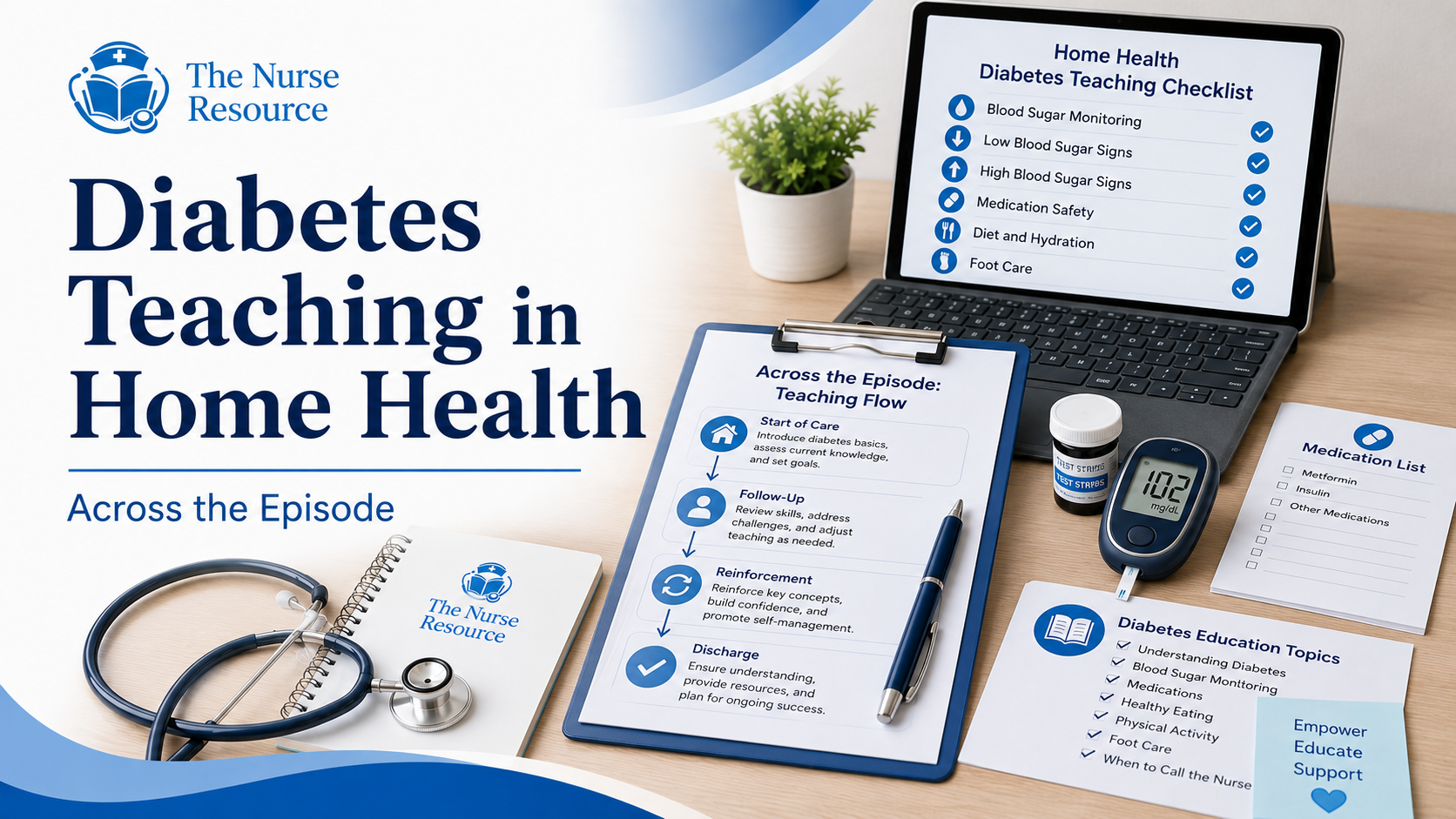
Teaching should also develop across the home health episode. Early visits may focus on immediate safety and baseline understanding. Follow-up visits can reinforce monitoring, medications, symptoms, and barriers. Later visits should evaluate whether patient or PCG can continue care safely with less SN prompting.
Diabetes is a chronic condition involving elevated blood glucose, also called Blood Sugar. Over time, diabetes can contribute to problems involving nerves, kidneys, eyes, heart, blood vessels, and feet. Individual diabetes management plans vary, which is why home health teaching should remain patient-specific.
Quick Summary
Across a home health episode, diabetes teaching may include:
- Patient-specific understanding of diabetes and care plan.
- Blood Sugar monitoring if ordered.
- Recognition of hypoglycemia and hyperglycemia symptoms.
- Medication and insulin safety.
- Meal consistency and provider-specific nutrition instructions.
- Hydration instructions according to patient-specific plan.
- Foot and skin observation.
- Wound and infection reporting.
- Weakness, dizziness, activity, and fall prevention.
- Sick-day and poor-intake concerns.
- PCG involvement when needed.
- Medication, monitoring, and supply refill planning.
- PCP and follow-up appointments.
- Knowing when to notify PCP and when to call 911.
A useful approach across visits is:
Assess → Prioritize → Teach → Evaluate → Plan Next Visit
Why Diabetes Teaching Matters in Home Health
Diabetes management happens largely outside a medical office. Patient or PCG may be responsible for medications, Blood Sugar monitoring, meals, foot care, symptom recognition, supplies, and communication with health care providers.
Blood Sugar monitoring may be an important part of care for some patients, but frequency and target ranges should follow provider-specific instructions. Not every patient with diabetes requires the same monitoring schedule.
Home health SN may also identify concerns that are difficult to recognize during an office visit, including:
- Difficulty using glucometer or other monitoring equipment.
- Missing testing supplies.
- Medication confusion.
- Missed doses.
- Insulin storage or supply concerns.
- Irregular meals.
- Poor appetite.
- Vision or dexterity limitations.
- Memory problems.
- Unsafe footwear.
- Foot wounds or skin changes.
- Fall risk.
- Limited PCG support.
- Delayed reporting of abnormal symptoms.
Diabetes may also affect nerves and circulation in feet. Reduced sensation may make it harder for patient to notice cuts, blisters, sores, or injuries, while poor blood flow can make wounds more difficult to heal.
These factors make diabetes teaching an ongoing process rather than a one-visit topic.
Diabetes Teaching Across the Episode
A strong diabetes teaching plan should build from patient-specific needs rather than repeat the same general information at every visit.
Start of Care and Early Visits
Early visits should establish baseline understanding and identify immediate safety concerns.
SN may focus on:
- Confirming patient’s understanding of diabetes diagnosis and care plan.
- Reviewing current medication profile.
- Assessing Blood Sugar monitoring technique if ordered.
- Confirming testing supplies are available.
- Reviewing provider-specific Blood Sugar reporting instructions.
- Assessing understanding of hypoglycemia and hyperglycemia symptoms.
- Identifying meal or poor-intake concerns.
- Assessing feet and skin according to plan of care.
- Identifying wounds or infection concerns.
- Evaluating fall risk, weakness, or dizziness.
- Determining whether PCG assistance is needed.
- Reviewing PCP and emergency contact information.
Goal is not to complete all diabetes education during first visit. Goal is to identify highest risks, determine baseline knowledge, and develop a reasonable teaching sequence.
Middle of Episode Teaching
Middle of episode should move from basic information toward safer daily follow-through.
SN may review:
- Whether ordered Blood Sugar monitoring is being completed.
- Whether patient can operate monitoring equipment correctly.
- Patterns of repeated high or low Blood Sugar according to provider parameters.
- Medication compliance.
- Insulin or medication supply concerns.
- Meal consistency.
- Poor appetite or missed meals.
- Hydration instructions if applicable.
- Foot and skin observations.
- New wounds or areas of concern.
- Signs of infection.
- Weakness, dizziness, or fall concerns.
- Patient or PCG teach-back.
- Barriers that continue despite prior teaching.
Teaching should change when patient condition or care plan changes.
Later Episode and Discharge Preparation
Later teaching should focus on whether patient or PCG can continue diabetes care safely with less SN prompting.
Before discharge, evaluate whether patient or PCG understands:
- Ordered Blood Sugar monitoring routine.
- Patient-specific reporting parameters.
- Medication routine.
- Refill and supply plan.
- Signs of low and high Blood Sugar.
- Foot and skin observation.
- When wounds or infection concerns should be reported.
- Provider-specific instructions for illness or poor intake.
- When to notify PCP.
- When to call 911.
- Scheduled PCP, diabetes, podiatry, or other follow-up appointments when applicable.
Unresolved barriers should be addressed through provider communication, care coordination, agency process, and discharge planning.
1. Understanding Patient-Specific Diabetes Diagnosis and Care Plan
Diabetes care should begin with understanding what type of diabetes patient has, what provider has ordered, and what patient is expected to manage at home.
SN should consider:
- Patient’s understanding of diagnosis.
- Recent Hospitalization or change in condition.
- Current medications.
- Blood Sugar monitoring orders.
- Provider-specific targets or reporting parameters.
- Nutrition instructions.
- Activity instructions.
- Foot or wound concerns.
- Follow-up appointments.
- Patient ability to manage care independently.
Avoid assuming every patient with Type 2 Diabetes Mellitus has the same treatment plan. Diabetes management should be developed with patient’s health care team and individualized to medication needs, health conditions, and personal circumstances.
2. Blood Sugar Monitoring if Ordered
If home Blood Sugar monitoring is ordered, assess whether patient or PCG can complete it safely.
Consider:
- Availability of glucometer or prescribed monitoring system.
- Testing supplies.
- Ability to use equipment.
- Hand hygiene.
- Ability to see and interpret display.
- Ability to record readings if instructed.
- Monitoring schedule.
- Provider-specific reporting parameters.
- What patient does when reading is concerning.
Home Blood Sugar testing should be performed as instructed by health care provider. Monitoring needs vary among patients, and not everyone with diabetes needs the same testing schedule.
Do not substitute universal Blood Sugar parameters for patient-specific instructions.
3. Hypoglycemia Signs and Reporting
Hypoglycemia can develop quickly and may become serious.
Symptoms can vary but may include:
- Shakiness.
- Sweating.
- Dizziness or lightheadedness.
- Weakness.
- Hunger.
- Headache.
- Irritability.
- Confusion.
- Vision or speech difficulty.
- Feeling faint.
Severe hypoglycemia may result in loss of consciousness, seizure, or inability to safely treat oneself.
SN should assess whether patient or PCG knows:
- Patient-specific low Blood Sugar parameters.
- Symptoms patient commonly experiences.
- Provider-specific hypoglycemia plan.
- When PCP should be notified.
- When emergency help is needed.
This public guide does not provide a universal hypoglycemia treatment protocol. Treatment should follow patient-specific provider instructions and diabetes care plan.
4. Hyperglycemia Signs and Reporting
Patients and PCGs should also understand symptoms that may occur with high Blood Sugar.
Possible concerns may include:
- Increased thirst.
- Frequent urination.
- Dry mouth.
- Blurred vision.
- Fatigue.
- Weakness.
- Nausea.
- Worsening illness symptoms.
Repeated or severe hyperglycemia can be associated with serious complications, and health care team may need to adjust patient-specific care plan when Blood Sugar remains elevated.
SN should reinforce provider-specific reporting instructions rather than assigning universal parameters.
5. Diabetes Medication Safety
Medication teaching should be based on current medication profile and provider orders.
SN may assess:
- Whether patient understands basic medication purpose.
- Medication schedule.
- Missed doses.
- Refill status.
- Medication organization.
- Ability to read labels.
- Insulin or injectable supplies if applicable.
- Storage concerns.
- Patient or PCG ability to administer medication as ordered.
- Possible side effects or symptoms that require reporting.
Reinforce taking diabetes medications according to provider order and medication profile.
Do not independently advise patient to:
- Start or stop medication.
- Hold medication.
- Take extra medication.
- Change insulin units.
- Change a sliding scale or correction scale.
- Change medication timing.
- Adjust treatment because of a Blood Sugar reading.
Medication changes should come from PCP, diabetes provider, or other authorized prescriber.
6. Meal Consistency, Hydration, and Provider-Specific Diet Instructions
Food intake can affect diabetes management, especially when medications or insulin are involved.
SN should assess:
- Whether meals are being eaten consistently.
- Poor appetite.
- Missed meals.
- Difficulty obtaining food.
- Ability to prepare meals.
- Dental or swallowing concerns.
- Patient-specific nutrition instructions.
- PCG involvement.
- Hydration instructions and any medical restrictions.
Healthy eating is part of diabetes management, but meal plans should be individualized with health care team.
Avoid assigning a universal carbohydrate amount, meal plan, fluid amount, or diet restriction unless it is specifically ordered or included in patient’s care plan.
7. Foot and Skin Care
Foot and skin teaching is an important part of diabetes care because neuropathy may reduce sensation and poor circulation can contribute to delayed healing.
Patient or PCG may need to monitor for:
- Redness.
- Swelling.
- Cuts.
- Cracks.
- Blisters.
- Drainage.
- Open areas.
- Calluses or pressure areas.
- Skin changes.
- Pain or tenderness.
- Areas patient cannot feel normally.
NIDDK recommends regular foot care because nerve damage may reduce sensation, allowing injuries to go unnoticed, and reduced blood flow may make wounds or infections more difficult to heal.
Teaching may also reinforce safe footwear and avoiding barefoot walking when appropriate to patient-specific plan.
8. Wound and Infection Reporting
Small skin problems can become more serious in patients with diabetes, particularly when neuropathy, circulation problems, or poor healing are present.
SN should reinforce early reporting of:
- New foot sore.
- Open area.
- Increased redness.
- Swelling.
- Warmth.
- Drainage.
- Increased pain.
- Foul odor.
- Worsening wound.
- Fever or chills.
- Other signs of possible infection.
Wound care itself should follow provider orders, Wound Specialist instructions, plan of care, and agency policy.
9. Activity, Weakness, Dizziness, and Fall Prevention
Diabetes-related complications, hypoglycemia, medications, neuropathy, weakness, and impaired balance may contribute to fall risk.
Diabetic peripheral neuropathy can affect balance and increase risk of falls in some patients.
SN should assess:
- Dizziness or lightheadedness.
- Weakness.
- Falls or near falls.
- Gait and balance.
- Foot sensation.
- Assistive device use.
- Ability to reach bathroom safely.
- Safe footwear.
- Vision concerns.
- Ability to complete Blood Sugar monitoring or medication tasks safely.
Activity teaching should follow provider instructions, therapy recommendations, patient tolerance, and plan of care.
10. Sick-Day and Poor-Intake Concerns
Illness can affect Blood Sugar and may make diabetes management more difficult. Vomiting, diarrhea, fever, poor intake, and dehydration concerns may require changes in monitoring or provider-directed care.
SN should determine whether patient has a provider-specific sick-day plan.
Teaching may reinforce:
- Monitoring symptoms.
- Following ordered Blood Sugar monitoring.
- Reporting vomiting or diarrhea.
- Reporting inability to eat or drink as expected.
- Reporting dehydration concerns.
- Following provider instructions for medications during illness.
- Asking for help when patient or PCG is unsure what to do.
Do not independently create a sick-day medication plan or instruct patient to change insulin or medication doses.
11. PCG Involvement and Home Support
PCG involvement may be especially important when patient has:
- Memory impairment.
- Vision problems.
- Poor dexterity.
- Difficulty using glucometer.
- Insulin or medication confusion.
- Poor teach-back.
- Mobility limitations.
- Foot-care limitations.
- Wound concerns.
- Fall risk.
- Difficulty recognizing symptoms.
- Trouble obtaining medications or supplies.
PCG teaching should focus on safe support within patient-specific plan of care.
SN should also evaluate whether PCG can reliably participate or whether additional support may be needed.
12. Follow-Up Appointments, Supplies, Refills, and Medication List
Diabetes care continues beyond home health visits.
SN may assess whether patient or PCG has:
- Updated medication list.
- Adequate medication supply.
- Insulin or injectable supplies if applicable.
- Blood Sugar testing supplies if ordered.
- Working monitoring equipment.
- Pharmacy contact information.
- PCP or diabetes provider appointments.
- Podiatry or wound follow-up when applicable.
- Transportation plan.
- Understanding of refill process.
Ongoing diabetes management involves medications, Blood Sugar management, healthy lifestyle measures, and regular follow-up with health care team.
Diabetes Warning Signs Patients and PCGs Should Report
Patient or PCG should follow provider-specific instructions and agency policy for concerns such as:
- Repeated high Blood Sugar readings when monitoring is ordered.
- Repeated low Blood Sugar readings when monitoring is ordered.
- Shakiness, sweating, dizziness, weakness, or confusion.
- Increased thirst or frequent urination.
- Worsening fatigue.
- Poor appetite.
- Missed meals.
- Nausea or vomiting.
- Diarrhea.
- Reduced fluid intake.
- Medication confusion.
- Missed doses.
- Insulin or medication supply problems.
- New foot sore or open area.
- Redness, swelling, drainage, warmth, or worsening skin condition.
- Falls or near falls.
- Symptoms that continue, worsen, or do not improve as expected.
Patient-specific reporting instructions should always take priority.
When to Notify PCP
Notify PCP, diabetes provider, or follow agency notification process for non-emergency concerns such as:
- Repeated Blood Sugar readings outside provider-specific parameters if monitoring is ordered.
- Repeated symptoms of hypoglycemia.
- Repeated symptoms of hyperglycemia.
- Poor intake or repeated missed meals.
- Vomiting or diarrhea.
- Dehydration concern.
- Illness affecting diabetes care.
- Medication confusion.
- Missed medication doses.
- Insulin or medication supply concerns.
- Refill problems.
- Difficulty using glucometer or other monitoring equipment.
- New or worsening foot wound.
- Redness, swelling, warmth, or drainage.
- Possible infection symptoms.
- Dizziness or worsening weakness.
- Fall or near fall.
- Patient or PCG unable to safely follow diabetes care plan.
- Symptoms that are worsening or not improving as expected.
Follow provider-specific reporting parameters, agency policy, and patient-specific plan of care.
When to Call 911
Call 911 for severe or life-threatening symptoms, including:
- Unresponsiveness.
- Loss of consciousness.
- Seizure.
- Severe confusion or inability to respond normally.
- Inability to safely swallow or respond.
- Severe weakness with trouble responding.
- Severe trouble breathing.
- Severe or concerning chest pain.
- Severe allergic reaction symptoms.
- Symptoms that are rapidly worsening.
- Any situation in which patient appears to be in immediate danger.
Severely low Blood Sugar can lead to loss of consciousness, seizure, or other serious complications, and serious illness related to diabetes may also require emergency evaluation.
Do not delay emergency response to complete a routine PCP call. Follow patient-specific emergency plan and agency emergency protocol.
What Nurses Should Avoid
Teaching Diabetes Only Once
Diabetes education often requires reinforcement across multiple visits.
A patient may understand Blood Sugar monitoring but remain confused about medications, foot care, symptom reporting, or what to do during illness.
Repeating Same Teaching Without Evaluating Progress
Reinforcement may be appropriate, but SN should determine what patient remembers, what remains unclear, and what new risks have developed.
Documenting Only “Patient Verbalized Understanding”
This does not show which topic was taught or how well patient can apply information.
Teach-back, observation, return demonstration when applicable, and identification of barriers provide more meaningful information about patient progress.
Giving Universal Blood Sugar Parameters
Blood Sugar targets and reporting parameters vary.
Follow provider orders, diabetes care plan, medication profile, and agency policy.
Giving Medication or Insulin Adjustment Advice
Do not independently provide:
- Insulin-unit changes.
- Sliding-scale changes.
- Correction-scale changes.
- Medication dose changes.
- Instructions to hold or stop diabetes medication.
- Instructions to take extra medication.
These decisions require provider-specific instructions.
Giving a Universal Hypoglycemia Treatment Plan
Patient should follow provider-specific hypoglycemia instructions and diabetes care plan.
Ignoring PCG Needs
When patient has memory, vision, mobility, dexterity, or medication-management limitations, PCG may be essential for safe diabetes management.
Separating Diabetes From Foot and Skin Care
Diabetes teaching should include foot and skin awareness when relevant because neuropathy, circulation problems, wounds, and infection can create serious risks.
Ignoring Fall Risk
Weakness, dizziness, neuropathy, hypoglycemia symptoms, impaired vision, and mobility concerns can affect home safety.
Waiting Too Long to Address Supply Problems
Missing glucometer supplies, medication refills, insulin supplies, or transportation can interfere with care after SN leaves home.
Documentation Considerations
Strong diabetes documentation should show more than a general statement that diabetes teaching occurred.
SN documentation should reflect:
- Why diabetes teaching required skilled nursing.
- Which specific diabetes topic was addressed.
- Whether Blood Sugar monitoring was reviewed when ordered.
- Relevant assessment findings.
- Patient or PCG response.
- Teach-back or demonstration when applicable.
- Barriers affecting safe follow-through.
- Abnormal findings.
- PCP or provider notification when applicable.
- Progress toward plan-of-care goals.
- Why additional skilled assessment or teaching remains needed when SN continues.
Documentation should develop across visits just as teaching does.
Early notes may identify knowledge gaps and risks. Follow-up documentation may show reinforcement, improved understanding, continued barriers, or new concerns. Later documentation should help show whether patient or PCG is progressing toward safer independent management.
Detailed SN charting phrases, response wording, ongoing skilled need support, documentation examples, and quick charting tools are reserved for Premium Library resources.
How to Keep Diabetes Teaching Skilled Across Visits
Diabetes teaching remains patient-specific when SN:
- Reviews current condition and Vital Signs.
- Reviews ordered Blood Sugar monitoring.
- Connects teaching to patient diagnosis and current risk.
- Reviews medication changes.
- Identifies what patient or PCG already understands.
- Prioritizes one or two important teaching areas.
- Evaluates teach-back or safe performance.
- Identifies new or continued barriers.
- Assesses feet and skin when indicated.
- Reviews fall and safety concerns.
- Communicates abnormal findings.
- Adjusts next teaching visit according to response.
- Evaluates progress toward plan-of-care goals.
Early Episode
Establish baseline understanding, Blood Sugar monitoring routine if ordered, medication safety, symptom recognition, foot and skin awareness, and reporting plan.
Middle of Episode
Evaluate follow-through, review readings and symptoms as ordered, address medication or meal barriers, reinforce foot and infection awareness, involve PCG when needed, and evaluate teach-back.
Later Episode
Confirm patient or PCG understands daily care routine, has medications and supplies, recognizes warning signs, knows when to contact PCP, and can continue care safely after discharge.
This progression helps prevent diabetes teaching from becoming a repetitive checklist. For practical examples of how Diabetes teaching focus can change across visits, see Diabetes Teaching Variations in Home Health: 10 Visit Focus Areas for Nurses.
Related Home Health Teaching Resources
You may also find these resources helpful:
- Diabetes Teaching Variations in Home Health: 10 Visit Focus Areas for Nurses
- How to Document Diabetes Teaching in Home Health: A Practical SN Framework
- Diabetes Teaching Resource Pack for Home Health Nurses
- Diabetes Teaching Variations and SN Documentation Support for Home Health Nurses
- Medication Safety Resource Pack
- Emergency Signs and Escalation Pack
Premium Library members can access full resource content, documentation support, and downloadable tools inside these Premium Library resources.
Premium Library Support
Need more copy-friendly diabetes teaching and documentation support?
Premium Library members can access the Diabetes Teaching Resource Pack for Home Health Nurses, which includes patient teaching tools, PCG monitoring support, nurse quick charting support, documentation examples, and downloadable Diabetes resources.
For more detailed visit-specific teaching variations, patient/PCG response wording, documentation support, and ongoing skilled need examples, see Diabetes Teaching Variations and SN Documentation Support for Home Health Nurses.
The Medication Safety Resource Pack for Home Health Nurses also provides support for medication organization, compliance, refill planning, side-effect awareness, and safe medication follow-through in home settings.
Use this free post as the episode-based Diabetes teaching framework. Use Premium Library resources when you need printable tools, PCG checklists, quick charting support, and more detailed documentation examples.
Important Use Note
This post is for educational and home health documentation support only. It does not replace provider orders, medication profile, pharmacy guidance, Hospital discharge instructions, diabetes care plan, patient-specific plan of care, agency policy, payer requirements, Medicare guidance, emergency protocols, or skilled nursing judgment.
Diabetes teaching, Blood Sugar monitoring, reporting instructions, diet and fluid instructions, medication teaching, and safety instructions should be individualized to patient condition, provider order, medication profile, plan of care, agency policy, and clinical judgment.
This content does not provide dosing advice, insulin-unit instructions, sliding-scale instructions, correction-scale instructions, carbohydrate-counting instructions, universal Blood Sugar parameters, medication-adjustment instructions, universal hypoglycemia treatment instructions, diet orders, or emergency treatment instructions beyond calling 911 for emergency symptoms and following patient-specific emergency plan.
This content does not guarantee payment, claim approval, survey compliance, or regulatory compliance.
Sources Used
- Centers for Disease Control and Prevention. Living with Diabetes. Used for general diabetes self-management, medication compliance, Blood Sugar monitoring, healthy eating, and regular follow-up. [1]
- Centers for Disease Control and Prevention. Low Blood Sugar (Hypoglycemia). Used for hypoglycemia symptoms and severe low Blood Sugar concerns. [1]
- Centers for Disease Control and Prevention. Managing Sick Days. Used for diabetes-related illness, poor intake, vomiting, dehydration, and emergency concerns. [1]
- National Institute of Diabetes and Digestive and Kidney Diseases. Managing Diabetes. Used for patient-specific diabetes care planning, medications, Blood Sugar management, and working with health care team. [1]
- National Institute of Diabetes and Digestive and Kidney Diseases. Low Blood Glucose (Hypoglycemia). Used for hypoglycemia symptoms, patient-specific low Blood Sugar considerations, and severe hypoglycemia risks.
- National Institute of Diabetes and Digestive and Kidney Diseases. Diabetes & Foot Problems. Used for diabetic neuropathy, circulation concerns, foot injuries, infection risk, and foot-care importance. [1]
- MedlinePlus Medical Encyclopedia. Home Blood Sugar Testing. Used for provider-directed Blood Sugar monitoring and recording of results. [1]
- MedlinePlus Medical Encyclopedia. Managing Your Blood Sugar. Used for Blood Sugar monitoring, medication management, meal planning, sick-day preparation, supplies, and follow-up care. [1]