
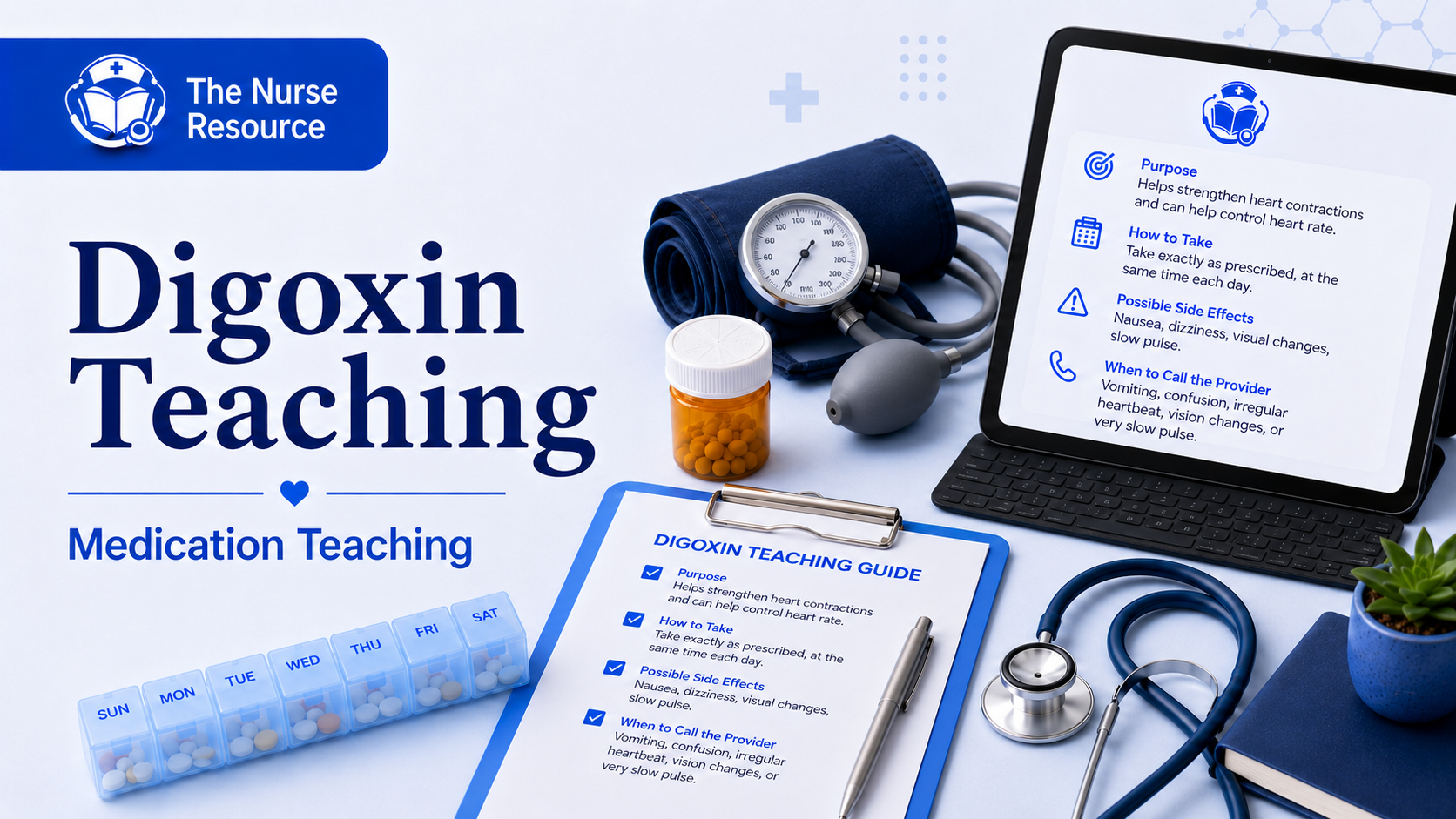
Overview
Digoxin, commonly known by brand name Lanoxin, is a cardiac glycoside. It may be ordered for certain patients with heart failure or chronic atrial fibrillation depending on provider order, diagnosis, medication profile, discharge instructions, pharmacy label, and plan of care. DailyMed lists digoxin tablets as indicated for treatment of mild to moderate heart failure in adults and control of resting ventricular rate in adult patients with chronic atrial fibrillation.
For home health nurses, Digoxin indication and home health teaching often focuses on medication compliance, pulse or heart rate monitoring only if instructed by provider, possible digoxin toxicity symptom awareness, medication interaction review, lab or EKG appointment reminders when ordered, fall prevention if dizziness or weakness occurs, and knowing when to notify PCP or call 911.
Digoxin may help control certain heart-related conditions as ordered, but it does not cure the underlying condition. MedlinePlus advises taking digoxin exactly as directed and not stopping without talking to doctor. Patient-specific use, pulse instructions, lab/EKG follow-up, precautions, and administration instructions must always follow provider order, medication profile, pharmacy label, discharge instructions, plan of care, agency policy, and skilled nursing judgment.
Medication Quick Information
| Item | Information |
|---|---|
| Generic name | Digoxin |
| Common brand name(s) | Lanoxin |
| Drug classification | Cardiac glycoside |
| Common home health teaching focus | Medication compliance, heart failure or atrial fibrillation indication support when ordered, pulse / heart rate monitoring only if instructed, toxicity symptom awareness, medication list review, interaction awareness, lab / EKG appointment reminders when ordered, fall prevention if dizziness or weakness occurs, and when to notify PCP or call 911 |
Common Indications for Digoxin
Common indications may include:
- Heart failure management support
- Mild to moderate heart failure, when ordered
- Atrial fibrillation rate control, when ordered
- Chronic atrial fibrillation ventricular rate control, when ordered
- Irregular heartbeat management, when ordered
- Provider-ordered cardiac glycoside therapy
- Cardiac medication management
- Heart rate monitoring support, when ordered
- Symptom monitoring related to digoxin therapy
- Medication compliance support for digoxin therapy
DailyMed lists digoxin tablets for treatment of mild to moderate heart failure in adults and control of ventricular response rate in adult patients with chronic atrial fibrillation. MedlinePlus lists digoxin for treating heart failure and abnormal heart rhythms.
Drug classification is not the same as patient-specific indication. For example, Digoxin may be classified as a cardiac glycoside, but patient-specific indication may be heart failure support, atrial fibrillation rate control, cardiac medication management, or another provider-ordered reason.
Short EMR Indication Options
Verify patient-specific reason before use. Examples below are possible short indication options. Select only the indication that matches patient diagnosis, provider order, medication profile, discharge instructions, pharmacy label, or clarified PCP/provider instruction.
| Patient diagnosis / reason | Short EMR indication option |
|---|---|
| Heart failure | Heart failure support |
| Mild to moderate heart failure | HF symptom support |
| CHF medication management | CHF medication support |
| Atrial fibrillation | A-fib / rate control |
| Chronic atrial fibrillation | Chronic A-fib rate control |
| Irregular heartbeat, when ordered | Irregular heartbeat support |
| Provider-ordered cardiac glycoside therapy | Cardiac glycoside therapy |
| Cardiac medication management | Cardiac medication support |
| Heart rate monitoring support, when ordered | Heart rate monitoring |
| Digoxin symptom monitoring | Digoxin safety monitoring |
| Medication compliance support | Digoxin compliance support |
Home Health Teaching Focus
For home health nursing, Digoxin teaching often focuses on medication compliance, following provider order and pharmacy label, pulse or heart rate monitoring only if ordered or instructed, reporting pulse faster or slower than provider instructions, possible toxicity symptom awareness, fall prevention if dizziness or weakness occurs, medication interaction review, and keeping ordered lab, EKG, or provider appointments.
Patients may need reinforcement if they have a new Digoxin order, recent Hospital stay, heart failure, atrial fibrillation, irregular heartbeat, dizziness, weakness, confusion, GI symptoms, vision changes, abnormal pulse concerns, poor intake, vomiting, diarrhea, kidney-related precautions, electrolyte-related monitoring ordered by provider, medication confusion, missed doses, refill problems, or PCG involvement.
Patient Teaching Points for Digoxin
Basic teaching may include:
- Take Digoxin exactly as ordered by PCP/provider and pharmacy label.
- Do not stop, hold, take extra, or change Digoxin unless instructed by PCP/provider or pharmacist. For missed doses, follow the pharmacy label or provider instructions and ask PCP/pharmacist if unsure.
- Monitor pulse or heart rate only if ordered or instructed.
- Report pulse faster or slower than provider instructions if pulse monitoring is ordered.
- Report dizziness, weakness, faint feeling, confusion, nausea, vomiting, diarrhea, loss of appetite, visual changes, irregular heartbeat, or symptoms that continue or worsen.
- Keep ordered lab, EKG, and provider follow-up appointments if ordered.
- Ask PCP or pharmacist before starting new prescription medications, OTC medications, vitamins, supplements, or herbal products.
- Use fall precautions if dizzy, weak, lightheaded, or unsteady.
- Report missed doses, possible medication error, refill problems, or medication confusion.
- Keep updated medication list available for PCP, pharmacy, home health agency, and Hospital visits.
Possible Side Effects or Concerns to Report
Possible side effects or concerns may include:
- nausea
- vomiting
- diarrhea
- loss of appetite
- dizziness or lightheadedness
- drowsiness
- weakness
- confusion
- blurred vision
- yellow vision or other visual changes
- rash
- irregular heartbeat
- pulse faster or slower than provider instructions, if pulse monitoring is ordered
- swelling of feet or hands
- unusual weight gain
- difficulty breathing
- poor intake, vomiting, diarrhea, dehydration concern, or illness affecting medication safety
MedlinePlus lists dizziness, lightheadedness, drowsiness, blurred or yellow vision, rash, and irregular heartbeat as possible side effects, and lists upset stomach, vomiting, diarrhea, loss of appetite, swelling of feet or hands, unusual weight gain, and difficulty breathing as symptoms needing immediate doctor contact. DailyMed patient counseling information advises patients to contact a health care professional for nausea, vomiting, persistent diarrhea, confusion, weakness, or visual disturbances because these may be signs that digoxin dose may be too high.
When to Notify PCP
Call PCP or follow agency/provider instructions if patient has:
- nausea, vomiting, diarrhea, or loss of appetite
- dizziness, lightheadedness, weakness, or faint feeling
- new confusion or unusual drowsiness
- blurred vision, yellow vision, halos, or other visual changes
- irregular heartbeat or palpitations
- pulse faster or slower than provider instructions, if pulse monitoring is ordered
- difficulty following medication schedule
- missed doses or possible medication error
- new OTC medication, prescription medication, supplement, vitamin, or herbal product use
- poor intake, vomiting, diarrhea, dehydration concern, or illness that may affect medication safety
- swelling of feet or hands, unusual weight gain, new or worsening shortness of breath, or worsening heart failure symptoms, unless symptoms are severe or life-threatening
- missed lab, EKG, or provider follow-up appointment
DailyMed notes that many drugs can interact with digoxin and advises patients to inform doctor and pharmacist about OTC medications, herbal medications, or new prescriptions. MedlinePlus also advises keeping all doctor and laboratory appointments, notes EKGs and blood tests may be used periodically, and states doctor may ask patient to check pulse.
When to Call 911
Call 911 or get emergency help right away for:
- severe chest pain
- severe shortness of breath
- fainting or loss of consciousness
- seizure
- severe confusion or inability to respond normally
- severe weakness with altered mental response
- severe irregular heartbeat with serious symptoms
- trouble breathing
- symptoms that feel severe or life-threatening
Related Home Health Teaching Resources
You may also find these resources helpful:
- Medication Safety Resource Pack for Home Health Nurses
- Emergency Signs and Escalation Pack for Home Health Nurses
- Blood Pressure Teaching Resource Pack for Home Health Nurses
- Fall Prevention Teaching Pack for Home Health Nurses
- Home Health SN Narrative Builder Pack
- Furosemide Indication and Home Health Teaching
- CHF Teaching in Home Health
Premium Library members can access the full resource content, documentation support, and downloadable tools inside each pack.
Important Use Note
This post is for education and home health teaching support only. It does not provide dosing advice, universal pulse parameters, universal heart rate hold parameters, digoxin blood level ranges, lab interpretation, medication adjustment instructions, missed-dose instructions, diet changes, potassium instructions, fluid changes, or patient-specific medication profile instructions. It does not replace provider orders, pharmacy guidance, discharge instructions, medication profile, agency policy, payer requirements, emergency protocols, or skilled nursing judgment.
Always verify patient-specific Digoxin use and indication with provider order, medication profile, discharge instructions, pharmacy label, plan of care, agency policy, and clinical judgment. Drug classification is not same as patient-specific indication. Pulse monitoring, heart rate reporting, lab appointments, EKG follow-up, kidney-related monitoring, electrolyte-related monitoring, and medication instructions must follow PCP/provider instructions and plan of care.
Sources Used for Medication Information
- DailyMed / FDA prescribing label for Digoxin tablets, including listed indications for mild to moderate heart failure in adults and control of resting ventricular rate in adult patients with chronic atrial fibrillation.
- DailyMed / FDA prescribing label and patient counseling information for Digoxin, including toxicity-related symptom reminders, drug interaction reminders, and renal/electrolyte monitoring considerations under provider management.
- MedlinePlus medication information for Digoxin, including medication use, brand names, side effects, interaction reminders, pulse monitoring reminders when instructed, doctor/lab/EKG follow-up, medication list reminders, and emergency guidance.
- Patient-specific use should always be verified with provider order, medication profile, discharge instructions, pharmacy label, agency policy, and clinical judgment.
Public Premium Teaser
Need copy-friendly Digoxin teaching and documentation support for home health notes?
The Premium Library section includes a home health teaching script, detailed patient/PCG teaching points, SN charting phrases, patient/PCG response phrases, ongoing skilled need wording, weak vs stronger documentation examples, and a quick charting template for Digoxin teaching.
Restricted Premium Library Section
Premium teaching and documentation support below is available for Premium Library and Agency Inservice Library members.