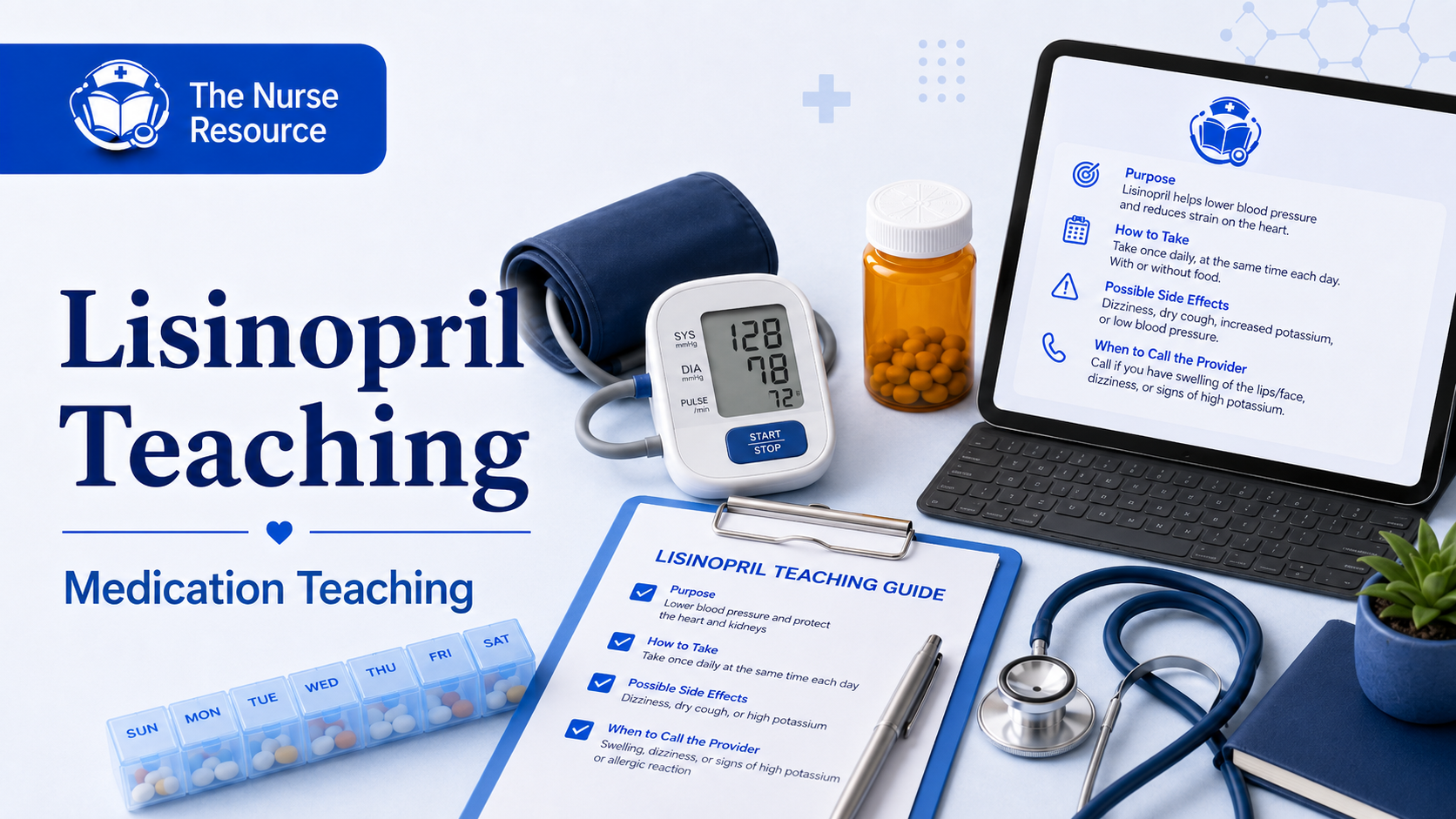
Lisinopril

Indication and Home Health Teaching

Overview

Lisinopril is an ACE inhibitor, also called an angiotensin-converting enzyme inhibitor. It may be ordered for Blood Pressure management and certain heart-related conditions depending on provider order, diagnosis, medication profile, pharmacy label, discharge instructions, and plan of care. Common brand names may include Zestril, Prinivil, and Qbrelis.

For home health nurses, Lisinopril indication and home health teaching often focuses on Blood Pressure monitoring, dizziness precautions, orthostatic safety, medication compliance, dry cough awareness, swelling or angioedema warning signs, kidney-related precautions or lab monitoring reminders when ordered, low Blood Pressure symptoms, provider reporting, and when to notify PCP or call 911.

Common indications may include Hypertension, adjunct therapy for heart failure, and treatment after acute myocardial infarction when prescribed. DailyMed lists Lisinopril as an ACE inhibitor indicated for treatment of Hypertension, adjunct therapy for heart failure, and treatment of acute myocardial infarction. MedlinePlus also lists use for high Blood Pressure, heart failure with other medications, and improving survival after a heart attack.

Lisinopril may help manage Blood Pressure or heart-related conditions as ordered, but it does not cure the underlying disease. Patient-specific use, precautions, monitoring, and administration instructions must always follow provider order, medication profile, pharmacy label, plan of care, and agency policy.


Medication Quick Information

ItemInformation
Generic nameLisinopril
Common brand name(s)Zestril, Prinivil, Qbrelis
Drug classificationACE inhibitor / antihypertensive medication
Common home health teaching focusBlood Pressure monitoring, dizziness precautions, orthostatic safety, medication compliance, dry cough awareness, swelling or angioedema warning signs, kidney-related precautions or lab monitoring reminders when ordered, low Blood Pressure symptoms, provider reporting, and when to notify PCP or call 911

Common Indications for Lisinopril

Common indications may include:

  • Hypertension
  • High Blood Pressure
  • Blood Pressure management
  • Heart failure support, when ordered
  • Adjunct therapy for heart failure, when ordered
  • Post-myocardial infarction cardiac support, when ordered
  • ACE inhibitor therapy as part of patient’s ordered medication plan

DailyMed labeling lists Lisinopril for Hypertension, heart failure, and reduction of mortality in acute myocardial infarction. The label also notes warnings and precautions related to angioedema, renal impairment, hypotension, hyperkalemia, and hepatic failure.

Drug classification is not the same as patient-specific indication. For example, Lisinopril may be classified as an ACE inhibitor, but the patient-specific indication may be Hypertension, Blood Pressure management, heart failure support, post-MI support, or another provider-ordered reason.


Short EMR Indication Options

Verify patient-specific reason before use. The examples below are possible short indication options. Select only the indication that matches the patient’s diagnosis, provider order, medication profile, discharge instructions, pharmacy label, or clarified PCP/provider instruction.

Patient diagnosis / reasonShort EMR indication option
HypertensionHypertension / BP control
High Blood PressureBlood Pressure management
Elevated Blood Pressure readingsElevated BP management
Heart failureCHF / heart failure support
Systolic heart failureSystolic HF support
Post-myocardial infarction carePost-MI cardiac support
ACE inhibitor therapyACE inhibitor therapy
Ordered antihypertensive therapyAntihypertensive therapy
Low Blood Pressure symptom monitoringBP safety monitoring
Kidney-related monitoring concernRenal safety monitoring

Home Health Teaching Focus

For home health nursing, Lisinopril teaching often focuses on medication compliance, Blood Pressure monitoring if ordered, dizziness and orthostatic precautions, dry cough awareness, swelling or angioedema warning signs, kidney-related precautions or lab monitoring reminders when ordered, potassium-related safety awareness, medication list review, and when to notify PCP.

Patients may need reinforcement if they have a new Lisinopril order, recent Hospital stay, Hypertension, heart failure, post-MI history, abnormal Blood Pressure readings, dizziness, weakness, fall risk, dry cough, kidney-related concerns, medication confusion, missed doses, refill problems, or PCG involvement.


Patient Teaching Points for Lisinopril

Basic teaching may include:

  • Basic teaching may include:
  • Take Lisinopril exactly as ordered by PCP/provider.
  • Do not stop, skip, hold, take extra, or change medication unless instructed by PCP/provider.
  • Check Blood Pressure only if ordered or instructed.
  • Report dizziness, lightheadedness, fainting, weakness, dry cough, or symptoms that continue or worsen.
  • Use fall precautions and rise slowly if dizzy, weak, or unsteady.
  • Report swelling of face, lips, tongue, throat, hands, feet, or ankles right away.
  • Call 911 or seek emergency help right away for trouble breathing, trouble swallowing, severe swelling, chest pain, fainting, or symptoms that feel life-threatening.
  • Ask PCP or pharmacist before using potassium supplements, salt substitutes, NSAIDs, or new over-the-counter medications.
  • Notify PCP right away if pregnant, planning pregnancy, or pregnancy is possible.
  • Keep an updated medication list available for PCP, pharmacy, home health agency, and Hospital visits.

Possible Side Effects or Concerns to Report

Possible side effects or concerns may include:

  • dizziness
  • lightheadedness
  • fainting or near fainting
  • weakness
  • headache
  • dry cough
  • nausea or diarrhea
  • low Blood Pressure symptoms
  • swelling of face, lips, tongue, throat, hands, feet, ankles, or lower legs
  • difficulty breathing or swallowing
  • potassium-related concerns if instructed by provider
  • kidney-related concerns if instructed by provider
  • rash or unusual symptoms

MedlinePlus lists cough, dizziness, headache, tiredness, nausea, diarrhea, weakness, sneezing, runny nose, and rash as possible side effects. It also lists serious symptoms such as swelling of the face, throat, tongue, lips, eyes, hands, feet, ankles, or lower legs, hoarseness, difficulty breathing or swallowing, lightheadedness, fainting, and chest pain.


When to Notify PCP

Call PCP or follow agency/provider instructions if patient has:

  • repeated abnormal Blood Pressure readings
  • dizziness, lightheadedness, fainting, or near fainting
  • worsening weakness or unusual tiredness
  • persistent dry cough or cough affecting daily function
  • swelling in hands, feet, ankles, or lower legs
  • medication confusion
  • missed doses
  • refill problems
  • poor intake, vomiting, diarrhea, heavy sweating, dehydration concern, or symptoms of low Blood Pressure
  • concerns about potassium supplements, salt substitutes, NSAIDs, or new medications
  • pregnancy or possible pregnancy
  • symptoms that continue or worsen

MedlinePlus notes that diarrhea, vomiting, not drinking enough fluids, and heavy sweating can cause a drop in Blood Pressure that may lead to lightheadedness and fainting. It also advises talking with a doctor before using potassium-containing salt substitutes.


When to Call 911

Call 911 or get emergency help right away for:

  • severe swelling of face, lips, tongue, or throat
  • trouble breathing or swallowing
  • chest pain or chest pressure
  • fainting or unresponsiveness
  • severe weakness with trouble responding
  • sudden confusion
  • stroke-like symptoms
  • severe allergic reaction symptoms
  • severe dizziness with inability to stay safe
  • symptoms that feel severe or life-threatening

Important Use Note

This post is for education and home health teaching support only. It does not provide dosing advice, medication adjustment instructions, or patient-specific medication profile instructions. It does not replace provider orders, pharmacy guidance, discharge instructions, medication profile, agency policy, payer requirements, or skilled nursing judgment.

Always verify patient-specific Lisinopril use and indication with provider order, medication profile, discharge instructions, pharmacy label, plan of care, agency policy, and clinical judgment. Drug classification is not the same as patient-specific indication.


Public Premium Teaser

Need copy-friendly Lisinopril teaching and documentation support for home health notes?

The Premium Library section includes a home health teaching script, detailed patient/PCG teaching points, SN charting phrases, patient/PCG response phrases, ongoing skilled need wording, weak vs stronger documentation examples, and a quick charting template for Lisinopril teaching.


Restricted Premium Library Section

Premium teaching and documentation support below is available for Premium Library and Agency Inservice Library members.


Premium Library Teaching and Documentation Support

Membership Required

You must be a member to access this content.

View Membership Levels

Already a member? Log in here


Comments

Leave a Reply

Your email address will not be published. Required fields are marked *