
Overview
Gabapentin is an anticonvulsant medication that may be ordered for nerve-related pain, postherpetic neuralgia, or seizure-related use when prescribed. Common brand names may include Neurontin and Gralise. Horizant is related, but it contains gabapentin enacarbil, an extended-release prodrug of gabapentin, and should not be treated as interchangeable with other gabapentin products.
For home health nurses, Gabapentin indication and home health teaching often focuses on medication compliance, dizziness and drowsiness precautions, fall prevention, neuropathy or nerve pain teaching, seizure-related use when ordered, side effect reporting, medication safety, and when to notify PCP. This post also includes short EMR indication options for Gabapentin to help nurses choose brief, diagnosis-specific wording for medication indication fields.
Common indications may include postherpetic neuralgia in adults and adjunctive therapy for partial onset seizures, depending on product and provider order. DailyMed labeling for Neurontin lists management of postherpetic neuralgia in adults and adjunctive therapy for partial onset seizures. Gralise labeling lists management of postherpetic neuralgia and notes that it is not substitutable with other gabapentin products because of different pharmacokinetic profiles. Horizant labeling lists treatment of moderate-to-severe primary restless legs syndrome in adults and management of postherpetic neuralgia in adults.
Gabapentin may help manage symptoms as ordered, but it does not cure the underlying condition. Patient-specific reason for use should always be verified before selecting an indication or documenting medication teaching.
Medication Quick Information
| Item | Information |
|---|---|
| Generic name | Gabapentin |
| Common brand name(s) | Neurontin, Gralise; Horizant applies to gabapentin enacarbil |
| Drug classification | Anticonvulsant / neuropathic pain medication |
| Common home health teaching focus | Medication compliance, dizziness and drowsiness precautions, fall prevention, neuropathy or nerve pain teaching, seizure-related use when ordered, side effect reporting, medication safety, and when to notify PCP |
Common Indications for Gabapentin
Common indications may include:
- Postherpetic neuralgia
- Nerve pain after shingles
- Neuropathic pain or nerve pain, when ordered
- Partial onset seizures as adjunctive therapy, when ordered
- Seizure-related medication management, when ordered
- Restless legs syndrome, when the ordered product is Horizant/gabapentin enacarbil
- Medication management for neurologic symptoms as part of patient’s ordered plan
MedlinePlus lists gabapentin capsules, tablets, and oral solution as used with other medications to help control certain types of seizures in people with epilepsy, and it also lists gabapentin for postherpetic neuralgia. It also notes brand names including Gralise, Horizant, and Neurontin.
Drug classification is not the same as patient-specific indication. For example, Gabapentin may be classified as an anticonvulsant or neuropathic pain medication, but the patient-specific indication may be postherpetic neuralgia, neuropathy, nerve pain, seizure-related use, or restless legs syndrome depending on provider order, medication profile, discharge instructions, and pharmacy label.
Short EMR Indication Options
Verify patient-specific reason before use. The examples below are possible short indication options. Select only the indication that matches the patient’s diagnosis, provider order, medication profile, discharge instructions, pharmacy label, or clarified PCP/provider instruction.
| Patient diagnosis / reason | Short EMR indication option |
|---|---|
| Postherpetic neuralgia | Postherpetic neuralgia |
| Nerve pain after shingles | Shingles nerve pain |
| Neuropathy | Neuropathy / nerve pain |
| Diabetic neuropathy, when ordered | Diabetic nerve pain |
| Chronic nerve pain, when ordered | Chronic nerve pain |
| Partial onset seizures | Partial seizure management |
| Epilepsy with adjunct medication order | Seizure adjunct therapy |
| Seizure-related medication support | Seizure medication support |
| Restless legs syndrome, Horizant only | RLS symptom management |
Home Health Teaching Focus
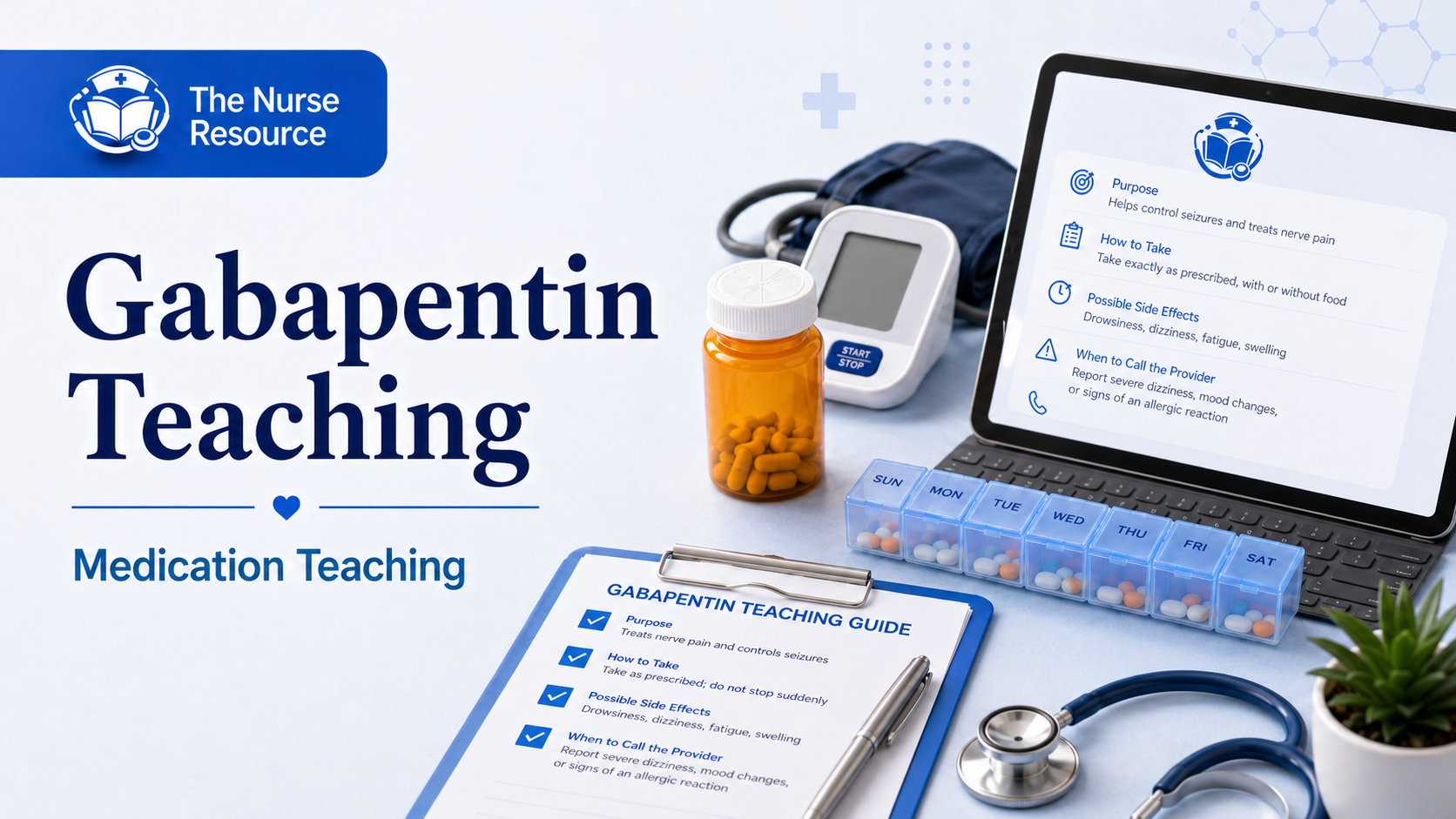
For home health nursing, Gabapentin teaching often focuses on medication compliance, dizziness and drowsiness precautions, fall prevention, side effect reporting, neuropathy or nerve pain education, seizure-related use when ordered, and medication safety.
Patients may need reinforcement if they have a new Gabapentin order, recent Hospital stay, neuropathy, postherpetic neuralgia, seizure history, fall risk, gait instability, drowsiness, dizziness, confusion, medication changes, medication confusion, missed doses, refill problems, or PCG involvement with medication reminders.
Patient Teaching Points for Gabapentin
Basic teaching may include:
- Take Gabapentin exactly as ordered by PCP/provider.
- Do not stop, skip, hold, take extra, or change medication unless instructed by PCP/provider.
- Report dizziness, drowsiness, confusion, worsening weakness, swelling, mood changes, or symptoms that feel concerning.
- Use fall precautions if sleepy, dizzy, weak, or unsteady.
- Avoid driving or unsafe activity if medication causes sleepiness or dizziness, unless cleared by provider.
- Report seizure activity, worsening nerve pain, or symptoms not improving as instructed.
- Keep updated medication list available for PCP, pharmacy, home health agency, and Hospital visits.
- Request refills before medication runs out.
- Ask PCP or pharmacist if confused about medication purpose, product name, or instructions.
Possible Side Effects or Concerns to Report
Possible side effects or concerns may include:
- dizziness
- drowsiness or sleepiness
- tiredness
- weakness
- unsteady gait or coordination problems
- confusion or memory concerns
- swelling in hands, feet, ankles, or legs
- mood changes
- depression symptoms or thoughts of self-harm
- breathing problems, especially if patient has respiratory disease or uses sedating medications
- rash, fever, swollen glands, or possible serious allergic reaction symptoms
- seizure activity or worsening symptoms
DailyMed labeling for Neurontin includes warnings related to drug reaction with eosinophilia and systemic symptoms, anaphylaxis and angioedema, somnolence/dizziness, suicidal behavior and ideation, respiratory depression, and increased seizure risk with abrupt discontinuation.
When to Notify PCP
Call PCP or follow agency/provider instructions if patient has:
- dizziness, drowsiness, or weakness that affects safety
- increased confusion or unusual behavior
- unsteady gait, fall, or near fall
- swelling in hands, feet, ankles, or legs
- mood changes, depression symptoms, or concerning behavior changes
- rash, fever, swollen glands, or symptoms of allergic reaction
- breathing concerns, increased sleepiness, or slowed breathing
- worsening nerve pain or symptoms not improving
- seizure activity or change in seizure pattern
- medication confusion
- missed doses
- refill problems
- symptoms that continue or worsen
When to Call 911
Call 911 or get emergency help right away for:
- trouble breathing or severe breathing changes
- severe sleepiness with trouble waking
- severe confusion or sudden mental status change
- unresponsiveness
- seizure that is prolonged, repeated, or different from patient’s usual pattern
- fall with head injury
- severe weakness with trouble responding
- severe allergic reaction symptoms
- severe swelling of face, lips, tongue, or throat
- thoughts of self-harm or immediate safety concern
- symptoms that feel severe or life-threatening
Important Use Note
This post is for education and home health teaching support only. It does not provide dosing advice. It does not replace provider orders, pharmacy guidance, discharge instructions, medication profile, agency policy, payer requirements, or skilled nursing judgment.
Always verify patient-specific Gabapentin use and indication with provider order, medication profile, discharge instructions, pharmacy label, agency policy, and clinical judgment. Drug classification is not the same as patient-specific indication. Gabapentin products and related products may not be interchangeable, so nurses should verify exact product name before teaching or documentation.
Public Premium Teaser
Need copy-friendly Gabapentin teaching and documentation support for home health notes?
The Premium Library section includes a home health teaching script, detailed patient/PCG teaching points, SN charting phrases, patient/PCG response phrases, ongoing skilled need wording, weak vs stronger documentation examples, and a quick charting template for Gabapentin teaching.
Restricted Premium Library Section
Suggested restriction note:
Premium teaching and documentation support below is available for Premium Library and Agency Inservice Library members.
Premium Library Teaching and Documentation Support
Related Home Health Teaching Resources
You may also find these home health teaching resources helpful:
Sources Used for Medication Information
- DailyMed / FDA prescribing label for Neurontin/gabapentin, including listed indications for postherpetic neuralgia in adults and adjunctive therapy for partial onset seizures.
- DailyMed / FDA prescribing label for Gralise/gabapentin, including listed indication for postherpetic neuralgia and limitation that Gralise is not substitutable with other gabapentin products.
- DailyMed / FDA prescribing label for Horizant/gabapentin enacarbil, including listed indications for moderate-to-severe primary restless legs syndrome in adults and postherpetic neuralgia in adults.
- MedlinePlus medication information for Gabapentin, including common uses, safety information, and brand names.
- Patient-specific use should always be verified with provider order, medication profile, discharge instructions, pharmacy label, agency policy, and clinical judgment.