
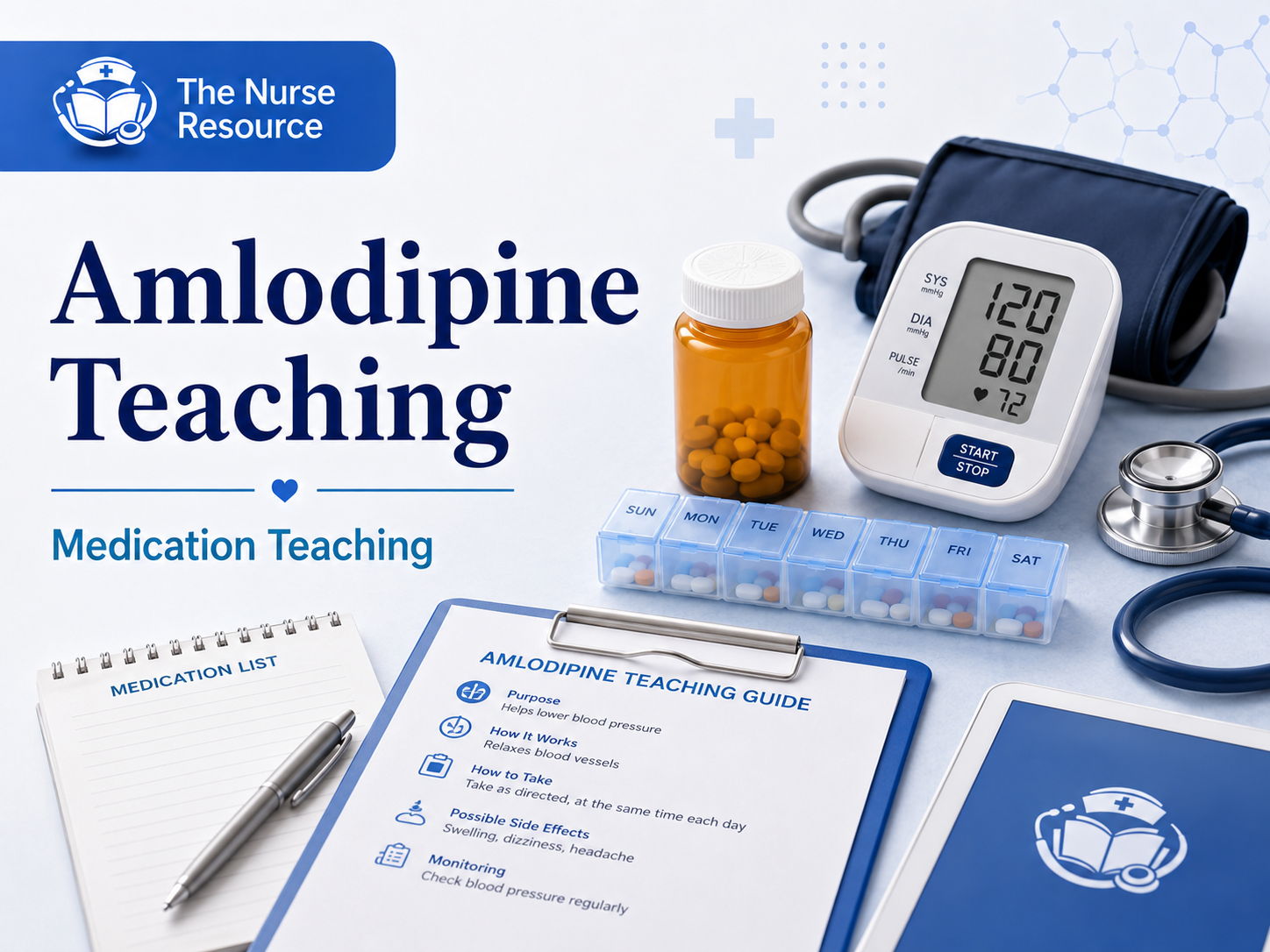
Amlodipine is a calcium channel blocker that may be ordered for Blood Pressure control or certain heart-related symptoms/conditions, such as angina, when prescribed. Common indications may include Hypertension, chronic stable angina, vasospastic angina, and certain coronary artery disease-related symptoms or conditions. DailyMed/FDA labeling lists Hypertension and coronary artery disease indications, including chronic stable angina and vasospastic angina. MedlinePlus also lists high Blood Pressure, certain types of angina, and coronary artery disease as uses for Amlodipine.1,2
This medication helps manage the condition as ordered, but it does not cure the underlying disease. Patient-specific reason for use should always be verified before using any teaching or EMR indication wording.
Common Indications for Amlodipine
Common indications may include:
- Hypertension
- High Blood Pressure
- Chronic stable angina
- Vasospastic angina
- Coronary artery disease-related symptom management, when ordered
- Blood Pressure control as part of patient’s ordered medication plan
Amlodipine may help lower Blood Pressure and may help with certain types of chest pain when taken regularly as prescribed. MedlinePlus notes that Amlodipine does not stop chest pain once it starts and that provider instructions should be followed for chest pain treatment.3
Short EMR Indication Options
Verify patient-specific reason before use. The examples below are possible short indication options. Select only the indication that matches the patient’s diagnosis, provider order, medication profile, discharge instructions, pharmacy label, or clarified PCP/provider instruction.
| Patient diagnosis / reason | Short EMR indication option |
|---|---|
| Hypertension | Hypertension / BP control |
| High Blood Pressure | Blood Pressure management |
| Elevated Blood Pressure readings | Elevated BP management |
| Chronic stable angina | Chronic angina management |
| Vasospastic angina | Vasospastic angina |
| Coronary artery disease with angina symptoms | CAD / angina symptoms |
| Ordered cardiac/Blood Pressure medication | BP medication management |
Home Health Teaching Focus
For home health nursing, Amlodipine teaching often focuses on medication compliance, Blood Pressure monitoring, dizziness precautions, edema monitoring, side effect reporting, fall prevention, and when to notify PCP.
Patients may need reinforcement if they have medication changes, abnormal Blood Pressure readings, dizziness, swelling, fall risk, poor understanding of medication purpose, or difficulty managing medication schedule.
Patient Teaching Points for Amlodipine
Teach patient or PCG:
- Take Amlodipine exactly as ordered by PCP.
- Do not stop, skip, or take extra doses unless instructed by PCP.
- Check Blood Pressure as directed and keep a log if ordered.
- Rise slowly from bed or chair if dizziness occurs.
- Use fall precautions if lightheaded or weak.
- Report swelling in feet, ankles, or legs.
- Report worsening chest pain, shortness of breath, severe dizziness, fainting, or symptoms that feel severe.
- Keep an updated medication list and request refills before running out.
Possible Side Effects to Report
Possible side effects may include:
- dizziness
- lightheadedness
- weakness
- tiredness
- swelling of feet, ankles, or legs
- flushing
- headache
- nausea
- palpitations or feeling of fast heartbeat
Patients should report side effects that are new, worsening, repeated, or concerning. MedlinePlus lists possible side effects and advises contacting provider for symptoms that are severe or do not go away.4
When to Notify PCP
Call PCP or follow agency/provider instructions if patient has:
- repeated abnormal Blood Pressure readings
- dizziness or lightheadedness
- worsening weakness
- swelling of feet, ankles, or legs
- medication confusion
- missed doses
- refill problems
- side effects that continue or worsen
- chest discomfort that is new, worsening, or concerning
- symptoms that are not improving
When to Call 911
Call 911 or get emergency help right away for:
- chest pain or chest pressure
- severe shortness of breath
- fainting or unresponsiveness
- severe weakness with trouble responding
- sudden confusion
- stroke-like symptoms
- severe allergic reaction symptoms
- severe swelling of face, lips, tongue, or throat
- symptoms that feel severe or life-threatening
Important Use Note
This post is for education and home health teaching support only. It does not provide dosing advice. It does not replace provider orders, pharmacy guidance, discharge instructions, agency policy, payer requirements, or skilled nursing judgment. Always verify medication use with provider order, medication profile, discharge instructions, pharmacy label, agency policy, and clinical judgment.
Restricted Premium Library Section
Premium teaching and documentation support below is available for Premium Library and Agency Inservice Library members.
Premium Library Teaching and Documentation Support
Sources Used for Medication Information
- DailyMed / FDA prescribing label for Amlodipine, including listed indications for Hypertension and coronary artery disease-related uses such as chronic stable angina and vasospastic angina.
- MedlinePlus medication information for Amlodipine, including common uses and patient safety information.
- Patient-specific use should always be verified with provider order, medication profile, discharge instructions, pharmacy label, agency policy, and clinical judgment.
- https://dailymed.nlm.nih.gov/dailymed/lookup.cfm?setid=9c0f83f4-06ad-4bb1-a8e3-dcac43b840cf&utm_source=chatgpt.com ↩︎
- https://medlineplus.gov/druginfo/meds/a692044.html?utm_source=chatgpt.com ↩︎
- https://medlineplus.gov/druginfo/meds/a692044.html?utm_source=chatgpt.com ↩︎
- https://medlineplus.gov/druginfo/meds/a692044.html?utm_source=chatgpt.com ↩︎